Sarah Harte: I channelled David Hockney to try and live in the now after my car and laptop died
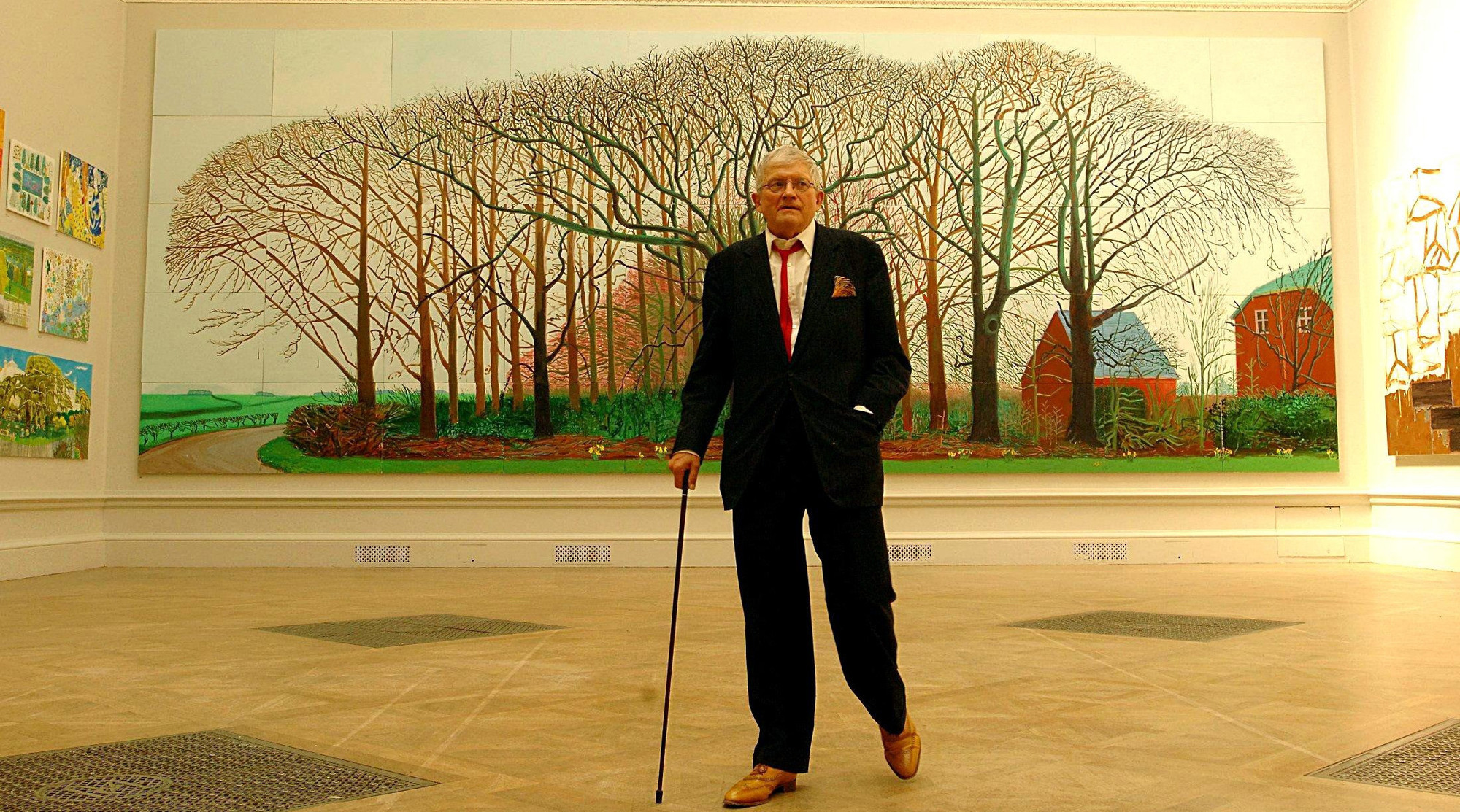
Artist David Hockney unveils his 'Bigger Trees Near Water', the largest picture ever to be displayed at the Summer Exhibition of the Royal Academy of Arts in London.

I once had a beautiful David Hockney print of a swimming pool painting framed in silver. It gave me great pleasure to look at it.
As you probably know, David Hockney, the celebrated British artist, died last week. Parsing Hockney’s art is above my pay grade. Others are doing that. A slew of panegyrics is being delivered in his honour, assessing his cultural impact.
Talent aside, he always stood out as a uniquely positive person who went his own way. You could say that his work draws our attention to the art of noticing, which was at the heart of Hockney’s personal philosophy, to be present in the world.
He was born into a working-class Yorkshire family that he described as "radical". His mother was both religious and vegetarian, and his father was an anti-war campaigner and an inveterate opponent of smoking, which is amusing in that Hockney was a famously lifelong fan of smoking.
As an aside, with offspring, and this goes to the heart of my parenting philosophy, we are better off not saying: "I am very opposed to that", because what the parent reviles the child may likely embrace.
Read More
A 1977 painting of his parents, Laura and Kenneth, is a visual confession of love. His father counselled him and his siblings never to care what the neighbours think, which is sound advice. Right from the beginning of his career, Hockney seems to have been engaged in the art of living.
He said: "I think the world is beautiful to look at, but most people don’t see it." He also said: "I don’t reflect too much, I live now. It’s always now."
The point is that the destination is not key; it’s the act of seeing and getting there that counts, because he also believed in the necessity to keep going.
Sometimes, keeping going is harder than at other times. If too many problems come together, even though individually prosaic, they can drive you over the edge.
That happened to me last week when it felt like the trip switch had gone up on the fuse board. In one day, my car and computer went permanently dead.
I’m not a fan of toxic positivity. You must deal with reality, such as the financial implications of buying a car and a computer.
Although frazzled (an understatement) and forced to find practical workarounds, I found that reading old articles about Hockney reminded me that you are never free from challenges, which is why you have to take a breath, look around and say, "I am alive".
To ask who and what I am connecting with, how I am spending my time, and how that is affecting my state of mind.
Both my colleagues, Esther McCarthy and Jennifer Horgan, have recently written articles about the dangers of hyperconnectivity and asked what is lost by doomscrolling.
As Esther wrote, the time that disappears when you don’t intend it to, and as Jennifer wrote, the loss of an interior life. When you lose the latter, it’s pretty easy to become decentred.
My reaction to losing my computer felt like a warning. I was like a wild-eyed cartoon character, flattened like roadkill, forced to do deep breathing exercises. It is legitimate to feel inconvenienced and to fear data loss.
But when the laptop went to the big graveyard in the sky for computers, I realised that, at some level, emotional dependence on laptops and digital life is markedly unhealthy. The loss of the laptop also forced me to lift my head and consider who and what was around me.
A radical, new experience. Hello, world.
As the tech guys worked on it for 48 hours, I wrote out work letters longhand in biro before dictating them over the phone. It felt like all I was missing was the quill and an abacus.
For about a year after I started work, we didn’t have personal computers. We dictated into a dictaphone, then brought our letters out to the secretary’s pit and didn’t find it odd. When we got PCs on our desks, we found them wondrous, though we quickly adjusted and, as a result, became entirely reliant on them.
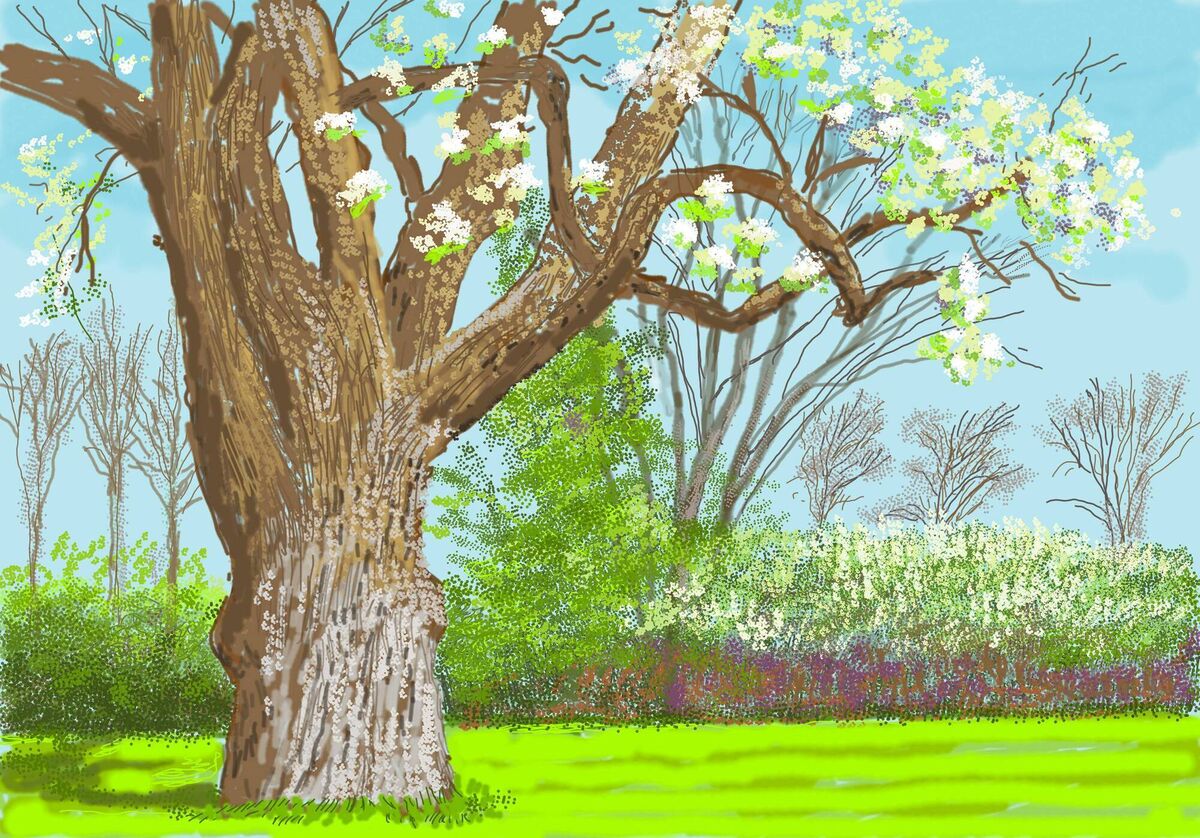
Hockney used technology extensively in his later career, but it seems doubtful that he was ever enslaved to it. One art curator commented about Hockney that he was "particularly engaged with what he’s going to do next rather than what he did in the past."
He was always puzzling out the next step, keen to explore new ways of making art as a master reinventor of himself, but you got the sense that, as he tried new things and reached forward, he also remained rooted in the present.
He could never have produced the work he did without doing so.
In the week that Hockney died, it seems fitting that I was finishing an international best-selling book called by Allen Levi. It’s a slow-burning, literary, character-driven novel with Christian undertones.
God isn’t for everyone, obviously, but this book is described as "a story of giving and receiving, of seeing and being seen", which is very Hockney in the sense of connecting with the world and its people.
A character in says: "We all walk roads of various descriptions in life. The long and winding road. The road to ruin. Easy Street. The road less travelled. Along the way, there are questions, there is news, there are concerns and fears and uncertainties that furrow our brows, trouble our souls and break our hearts.
"Death terrifies many of us. But God in his sublime goodness has always sent others, mysterious others, to walk with us —prophets, preachers, friends, teachers, artists, storytellers, wives and husbands, children, songbirds and rivers, even hardship and loss-to help us see clearly.
"They are ones who make our hearts burn within us, who call us out of our indifference, our lethargy, our death and defeat. They call us to be fully alive, or at least more alive than we were before we met them."
In the end, cars break, and computers die. Technology is useful, but staring at glowing rectangles is not a way to live.
Hockney shows us the world is far more beautiful than we notice and asks us to reconnect with it.
Allen Levi turns that gaze inward, urging us to truly see people, help them recognise their worth, and perhaps our own in the process. In both, attention is not courtesy; it’s almost a moral act.
I don’t know about you, but I have work to do in this area and must stop permanently, saying: "I have to go. Yup, great, sounds interesting. Sure, sure, tell me later, or will it hold" while my back is halfway out the door or my head is back over the screen?
We never have the answers. But we can keep noticing, remain curious, stop abandoning our lives mid-sentence and stay alive to the quiet miracle of being here at all.
CONNECT WITH US TODAY



Be the first to know the latest news and updates