Jennifer Horgan: Complexity is the natural state of things — we should embrace it
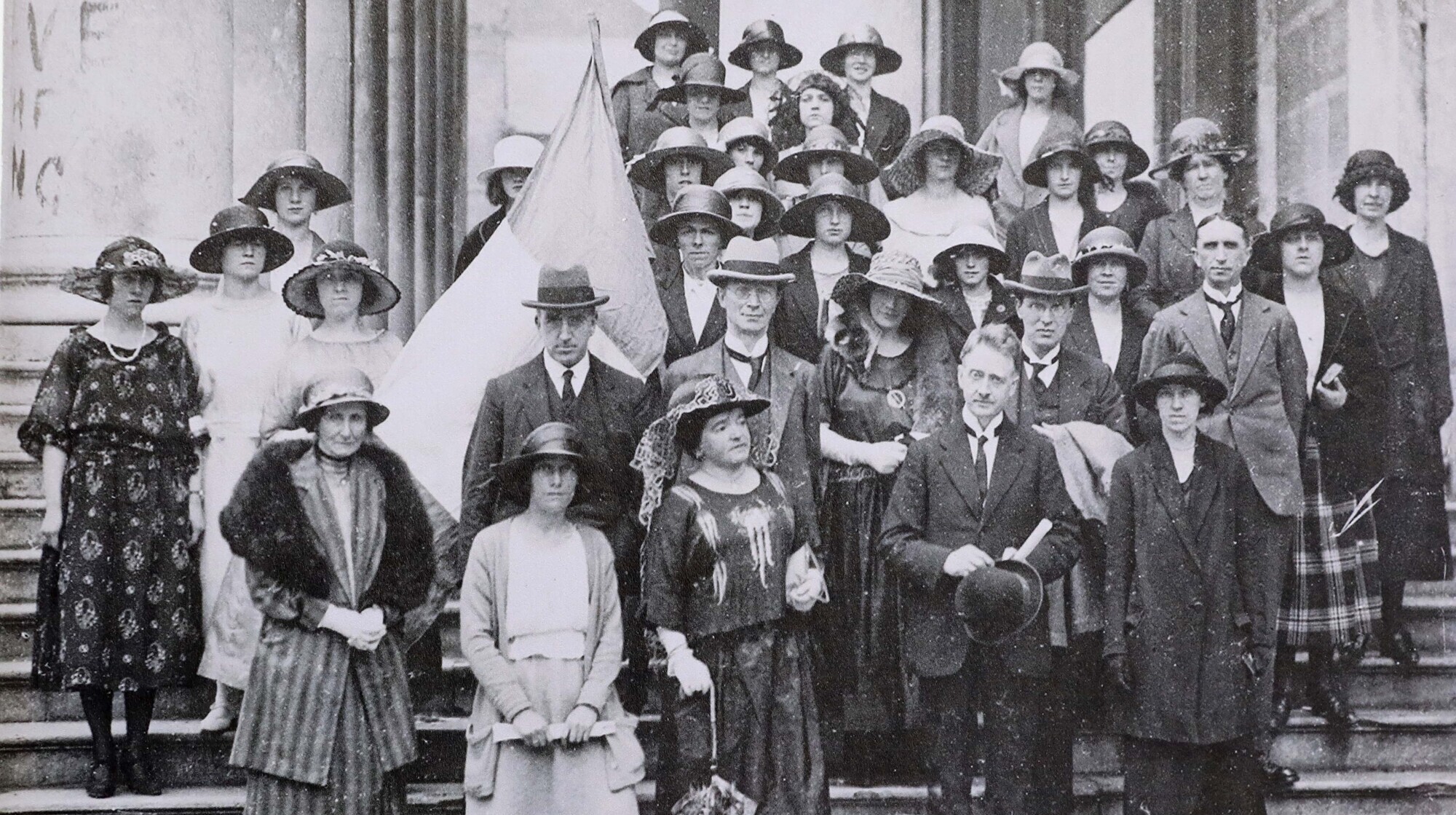
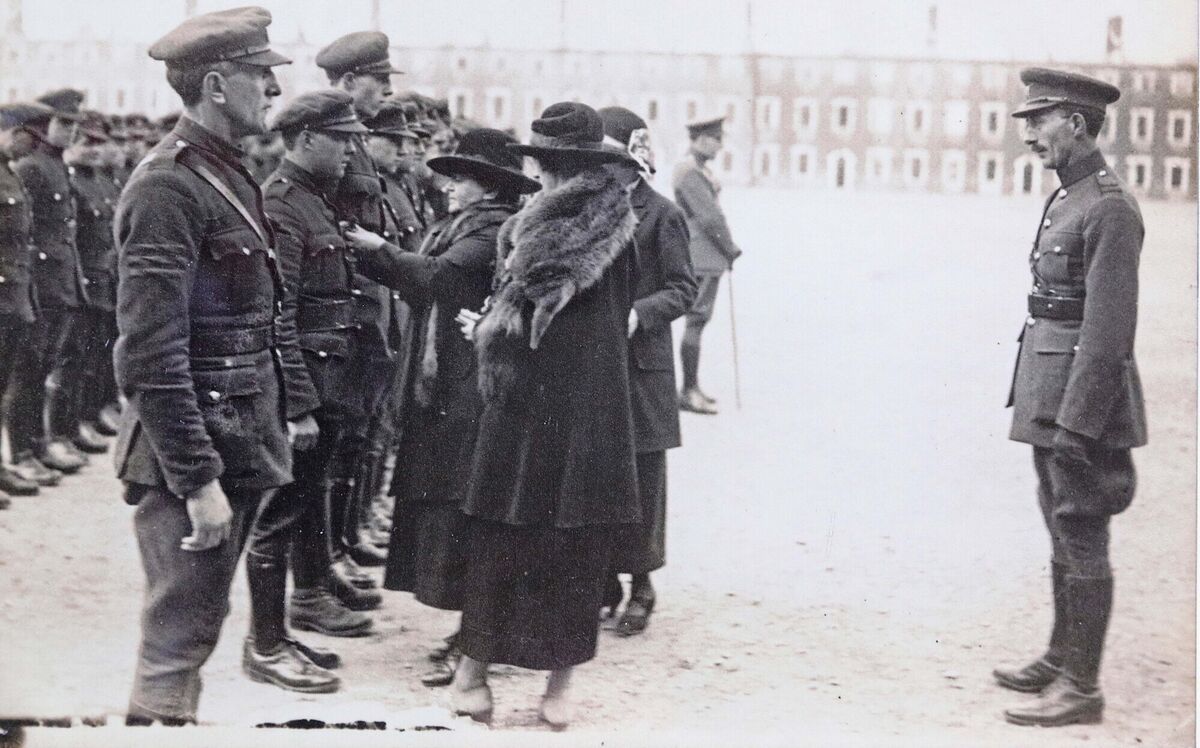
Cumann na mBan with William T Cosgrave and members of the free state government on the Cork Courthouse steps in August 1923. Picture courtesy of the Cork Public Museum

“No, I’m going to Fota,” I tell the man at Kent station shepherding stragglers towards the Dublin train. I’m going to Fota, not Dublin, not rushing to a conference or talk.
I’m heading into the green, into chirping birds, roaring Howler monkeys in trees. Into a circle of women, a writing workshop with poet Lani O’Hanlon. Sometime later, our heads dip as we write beneath gilded frames, ornately plastered ceilings.
Lani reminds us of our animal bodies, how if we weren’t trained into smiling and drinking coffee we might slink past one another, sniffing, circling, growling. I smile, knowing the truth of it, relieved to be in the company of someone practised in the art of looking at things differently, as Emily Dickinson wrote, someone used to "telling it slant".
I don’t read online responses to my column but last week my husband sneaked a peek. Apparently, by questioning "angry" men, I’d betrayed the people who lost their lives securing my freedom.
Read More
I think about this as I sit among women in Fota House. It’s true, I don’t feel an immediate allegiance to those men and women. From primary age I was taught to worship revolutionaries and despise the British but it never stuck.
I feel great sympathy for my ancestors. Looking through the newly released 1926 census is an emotional act. I feel sadness for the loss of life in their recent past. I feel protective of the young ones especially, the teenage boys who were plumped up, injected with the poetic rhetoric of older men and women, persuaded into sacrificing themselves for glory. I feel this way about all soldiers.
Tom Creed’s excellent production of in the Abbey recently reminded me that O’Casey felt it too. It’s an opinion most people resent. O’Casey’s play ended in riots in 1926.
Even now it’s difficult to say anything nuanced about the Rising or its aftermath. Still, I’ll say it, because it’s difficult to have uncomplicated feelings towards the people who fought for independence when that independence did more to harm women than champion them.
As early as 1922, in the early months of the Free State, Cardinal Logue criticised young women and girls involved in “a wild orgy of violence and destruction” around the country. The violence permitted in previous years would no longer befit a woman of the Free State.
He ordered them to be pious, pure enough to protect the basic unit of Catholic Ireland — the family. What started off as a socialist, feminist project very soon became a betrayal of everyday Irish women. O’Casey is brilliant at highlighting this.
Yes, women were brutalised by the British before independence. Then they were brutalised by the Irish. Little changed for women. Our political representation has always been flimsy, and we have continued to be harmed, institutionalised, controlled.
A new report comparing Ireland's justice system to other countries released earlier this year shows the average number of sexual offences reported in Ireland between 2019 and 2023 was 43% higher than the EU average. Northern Ireland is the worst place in the UK to be a woman.
Indeed, women had made plenty of gains peacefully while under British rule, pertaining to education, motherhood, and property. One significant example is the The Matrimonial Causes Act of 1878, which allowed women to obtain a protection order from a magistrates’ court against violent husbands.
In terms of suffrage British women only had to wait an extra six years to gain the same electoral rights given to us.
Female emigration to Britain rose significantly during the 1930s. England was blighted with the same rotten attitudes to unmarried mothers but they had better social assistance and laws that offered more supports than here.
The National Council for the Unmarried Mother and Her Child was founded there in 1918. The legalisation of adoption was introduced in 1926. Many Irish women travelled, had their child adopted there and returned home with flat bellies and uneasy smiles. Thousands of women have made similar journeys since.
England, for many Irish women, has been a refuge, an employer, and a supporting hand, as well as an oppressor. This assistance was recognised early on. In an annual report from the Catholic Protection and Rescue Society of Ireland, adoptive services which could be sought in England were described as an "easy means of disposing of children of Irish unmarried mothers".
Jennifer Redmond has noted that "sexual behaviour and its regulation became a national obsession in the post-independence era in an effort to prove decency, respectability and capability in governing Ireland as an independent nation". Our marriage ban was far more State-driven and uniformly applied here than there, our freedoms more heavily curtailed.
So, I don’t look at 1916, or at independence, in an entirely positive light. Too many tricolours flying in our country today present Irish history as simple and romantic.
Such nationalism is ramping up: Gerry Adams has just released a song with musician Davie Furey; Sinn Féin is calling for our violent anthem to be revived in primaries; a new footbridge in Cork is being named after Cumann na mBán.
But nationhood is never simple. I view our tricolour as a complex thing. My allegiance to my country is similarly complicated.
This all swims in my head as I sit in what was once the music room in Fota House. Our group is lucky to be joined by Martina, head curator, who talks us through the many women who designed and ran the estate over the centuries.
Women like Lady Mary Frances, then Elizabeth Post, who was influenced by the palace at Versailles, then the eccentric Dorothy Bell, the last private owner who painted the ceilings grey and filled the rooms with fresh flowers.
She reminds us of the women in the kitchen, bedrooms, women opening the shutters in the room where we sit. Mrs Kevin, the housekeeper. Mrs Maureen Hogan, the kitchen maid.
Around 200 of these beautiful homes were burnt down in the fight for independence and Irish people are working hard now to restore them. They take a reversibility approach, Martina explains, never adding anything that can not be taken away in time.
This is yet another kink in the straightforward narrative of independence, as is the Cobh train I travelled to get to Fota, once part of a vast network of trains we lost in the last century.
The complexity of everything strikes me as we wander the grounds. The beautifully glossy lemon trees in the glasshouse, its bark covered in long nail-like spikes for protection.
The dark firepit, like something from the underworld, that once worked to provide steam to heat glasshouses. The sumptuously wine-dark aeonium with its ugly, looping bark. The gingko tree offering medicine for the mind, bearing fruit smelling of dog vomit.
Nature guides us towards complexity. Nature might invite us to look at our tricolour too, regard it in a way that is not so simple.
When I argue against "angry men" it might not be that I am betraying them. It might be the other way around. It might be that any worthwhile conversation happens somewhere in between.

CONNECT WITH US TODAY



Be the first to know the latest news and updates