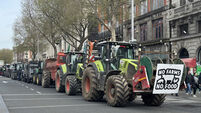
Gareth O'Callaghan: The voices you didn’t hear during the protests are the ones that matter most
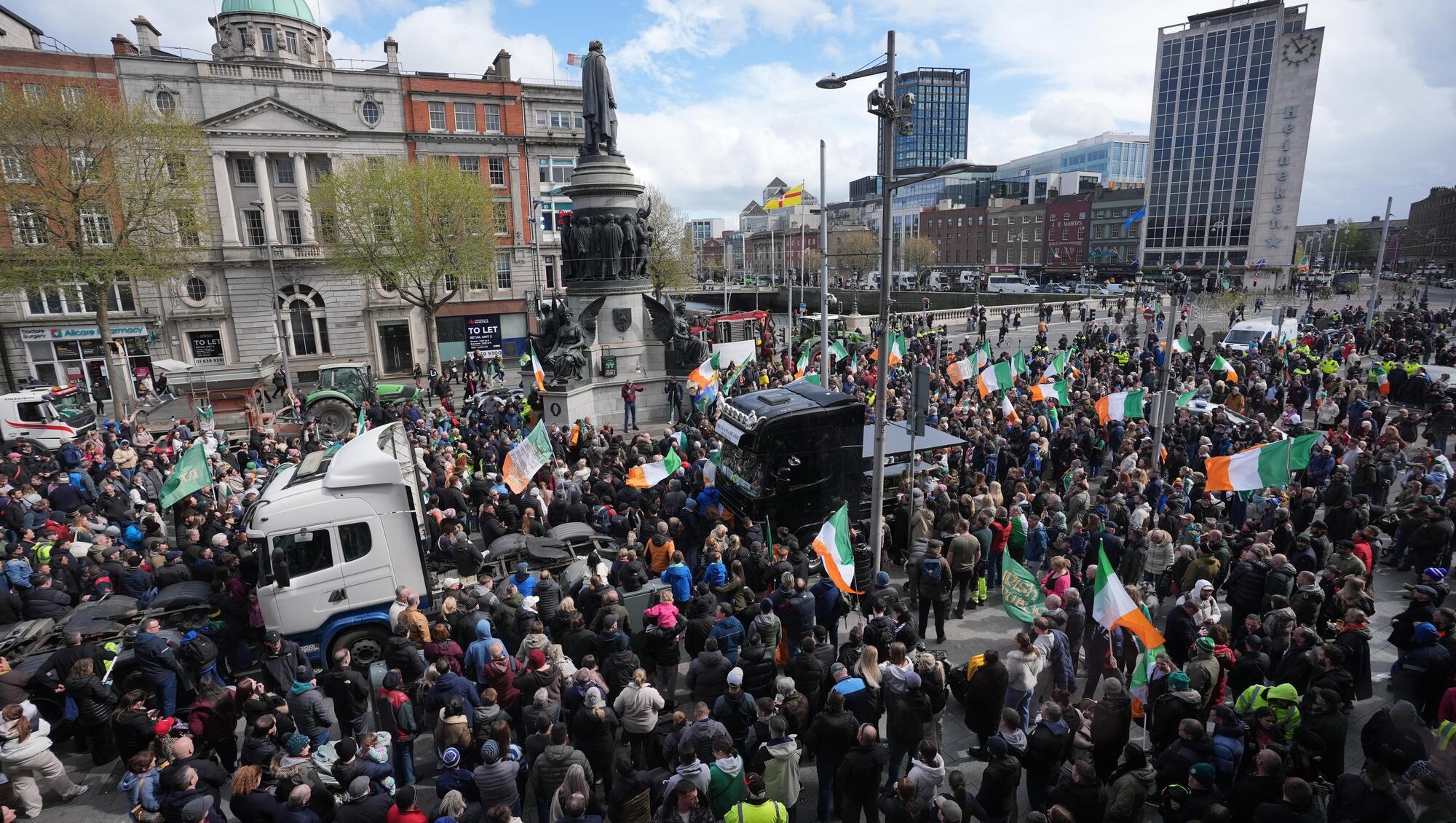
Personal stories reveal the emotional and financial toll of illness, inequality and rising costs beyond headline-grabbing protests
Gareth O'Callaghan: The voices you didn’t hear during the protests are the ones that matter most

Protesters listen to speeches on O’Connell Street in Dublin on the sixth day of fuel protests last Saturday. Picture: Niall Carson/PA
The man sitting opposite me on the Dublin train said: “I’m running out of courage to exist.”

His name was Tom. All of the main arteries into the city were clogged with trucks and tractors. The train was the only reliable way to travel.

His daughter was undergoing treatment in Crumlin Children’s Hospital, and he was making the journey to be at her bedside so his wife could return to Cork for chemotherapy treatment the following day. He had to change plans, abandon his car at Thurles and board the train. Now his wife would have to take the train back, which neither of them could really afford, and pick up the car enroute.

Tom had also just been diagnosed with cancer, but couldn’t bring himself to tell his wife as she was dealing with her own illness and their daughter’s.

They couldn’t afford private healthcare, had little savings left due to mounting medical bills, and, like many others, were living month to month.

Tom was a chef, and it would only be a matter of time before he would have to step back from his work. “I don’t know who I am supposed to be, and I miss who I was,” he said.

Later I found out that his words are from a novel by Victoria Schwab, called Our Dark Duet, the second of two young adult books she wrote which examine themes of humanity, identity, and the consequences of our choices.

I’ve learned more about life from listening to other people’s stories about their own lives. Such conversations have been humbling and enlightening, and at times deeply upsetting.

Last week’s protests along with all the media attention they received lifted the lid again on one of the great tragedies of modern society, namely the individuals who don’t have a voice, who don’t have a hope of being listened to for all the silent pain they deal with, while battling a cost of living crisis that’s not of their making and that is slowly grinding down their will to live.

Humanity, identity, and the consequences of our choices were themes that loomed large in what felt like urgent conversations.

Lives that are steeped in a brew of personal suffering that would usually go unspoken were shared more publicly in recent days than I can ever recall.

I’m not talking here about the protestors, but the individuals whose health was compromised by the severity of the protests. Why should seriously ill patients be forced to cancel hospital appointments and treatments because of the moral disengagement of others?

Perspective and balance were well-trodden words by the end of the week as the country struggled to come to terms with what could only be described as a sea change.

A fuel protest demonstration marching through the main street of Youghal last Monday. Picture: Howard Crowdy

That old lament “making ends meet” that many have laboured under for so long suddenly became manifest as a conceptual revolution.

The little people clearly were making their voices heard, and now they aren’t so benign or little anymore.

These weren’t people driving tractors or trucks; they were individuals who suffer in silence because there’s no one listening, who cast their vote but rarely get anything in return. Suddenly they were talking, and they had so much to say that needed to be heard.

Yes, there’s a lot of anger being aimed through loud voices in recent days at this government, but what will it do? It’s an unfortunate truth that a cost of living crisis can’t just be struck out with a ten cent reduction in fuel prices, so what else can be done? For now, it would seem, not much.

It certainly doesn’t help the pain when the Taoiseach trots out the words “I don’t think people out there perhaps realise the gravity of the situation” on RTÉ’s News at One last Friday week. Most people affected by the excesses in price increases in recent months won’t agree with him. They feel it where it really hurts.

He used the word “unconscionable” three times while being interviewed by Áine Lawlor to describe the blockades and protests around the country.

What he hasn’t called unconscionable is how the new children’s hospital has experienced 18 delays in the 10 years since the sod was turned and is unlikely to open before the autumn of 2027, with costs so far exceeding €2.2bn.

Is it not unconscionable that seriously ill cancer patients have to resort to the online fundraising platform GoFundMe to find the money for the miracle drug Pembrolizumab, known here as Keytruda, that costs €8,086 per dose and is not available on the public system?

Is it not unconscionable that someone gets to play God in such a life and death situation?

It’s no longer sufficient to simply call what hundreds of thousands of households are struggling to cope with a cost of living crisis. It’s far worse than that. If you’re experiencing feelings of despair and uncertainty whenever you think about life in general, that’s what’s known as existential dread.

When you no longer feel in control of the choices you make, or which direction to take, or if anything you do even matters anymore, then you’re in the grip of existential dread.

It’s not so much unpleasant as terrifying.

War in the Middle East, Israel’s genocide of Palestinians and its annihilation of what was Gaza, Russia’s ongoing war in Ukraine, and most recently Donald Trump’s AI-generated picture of himself as Jesus Christ are all deeply unsettling to anyone who places any moral weight in the importance of conscience and the sense of right or wrong.

When the moral compass central to decency and respect for others’ lives and beliefs is broken, we quickly find ourselves lost at sea; and that is where the world is right now — aimlessly adrift.

It certainly doesn’t help the pain when the Taoiseach trots out the words 'I don’t think people out there perhaps realise the gravity of the situation' on RTÉ’s News at One last Friday week. Picture: Leah Farrell/RollingNews.ie

It’s called an existential crisis. It manifests itself as existential dread — something that is extremely difficult to manage when you’re struggling to make ends meet, raising a family and driving around for hours looking for diesel while trying to put into perspective a farming contractor telling a crowd of protestors that “we have the country by the balls”.

I often remind myself that the world I live in is bigger than my grievances and that no one person or group has this country by the balls.

It would be easy to get swept away by the recent protests and to fall into the populism trap just now, with its thin-centred ideology argument of ‘the pure people’ versus ‘the corrupt elite’.

The world doesn’t care what I am owed or how angry life makes me at times. I remind myself that life can’t be held to account. Anger just burns up precious energy that I could otherwise use to focus on what’s actually good and beneficial in life.

Former BBC correspondent Fergal Keane’s words on last week’s Late Late Show, when he said “we all have rights, but we all also have responsibilities”, were both salient and timely.

This government’s leaders, just like its predecessors, will fade away in time, eventually becoming the subject of anecdotes and comparisons; its achievements and failures consigned to oblivion.

However, right now they have a responsibility to lighten the load of those who can’t cope during this crisis.

Moral antagonism has no place in a peaceful protest, in the same way that moral objectivity sounds rich coming from a government that many people believe is out of touch and has failed consistently to reach out to those whose courage to exist is shattered because their elected politicians have ignored their suffering.

All each of us will ever be remembered for is our humanity, identity, and the consequences of our choices. And that includes this government.

More in this section

Revoiced

Newsletter

Sign up to the best reads of the week from irishexaminer.com selected just for you.

Cookie Policy Privacy Policy Brand Safety FAQ Help Contact Us Terms and Conditions

© Examiner Echo Group Limited