Clodagh Finn: The countess who issued her own coinage to pay her workers
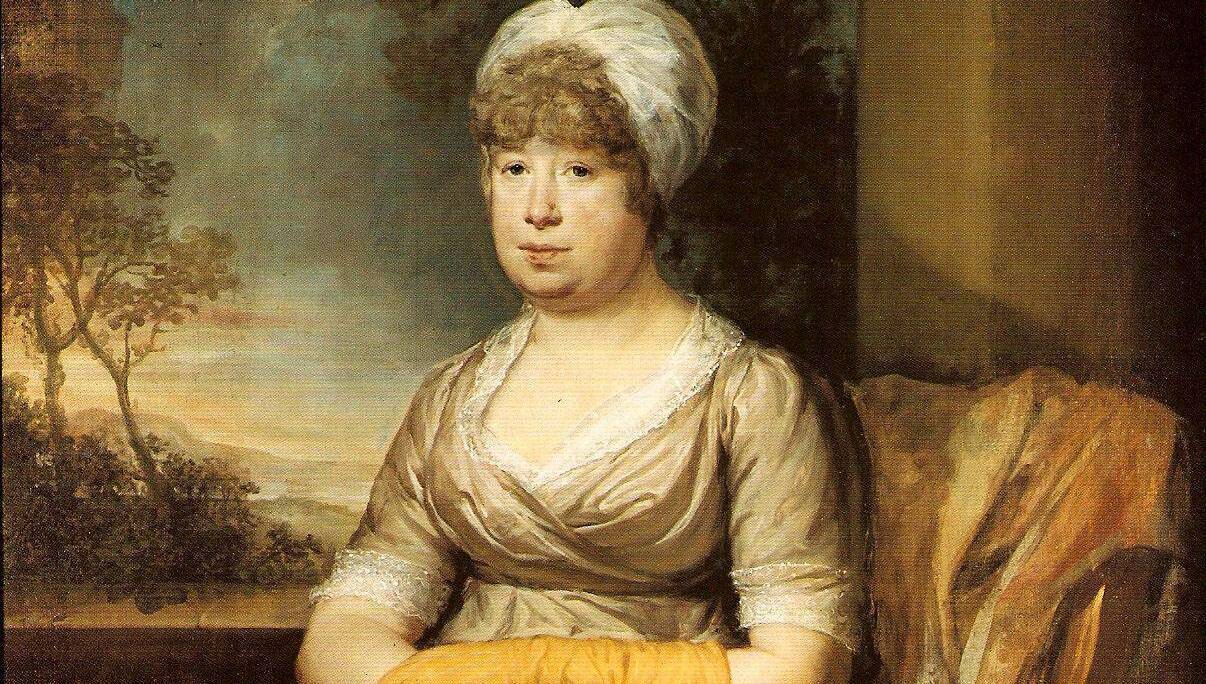
A portrait of Anne Wandesforde hangs in Kilkenny Castle.
What do you do when you have workers to pay and no money? Well, if you have the ingenuity and business savvy of Anne Wandesforde, 18th-century countess and mine-owner, you issue your own currency.
Then, as now, war and political turmoil were playing havoc with inflation. The price of silver was falling and currency was in short supply, yet the miners at Castlecomer, Co Kilkenny, had to be paid.
Lady Anne, countess of Ormonde and Ossory and estate owner, made sure of that. She was already a woman with a reputation for looking after the local community.
She became a countess at the age of just 15 when she married John Butler, of the pre-eminent Kilkenny family, but she was independently wealthy. She inherited the Wandesforde family mines and her father’s vast estate of over 20,000 acres when he died in 1784.
But the Irish Rebellion of 1798 had taken a toll. The rebels attacked Castlecomer in June of that year and burned the Wandesforde’s manor house and large parts of the town. Lady Anne would go about rebuilding it, but right now cash flow was the pressing issue.
HISTORY HUB
If you are interested in this article then no doubt you will enjoy exploring the various history collections and content in our history hub. Check it out HERE and happy reading
As a woman of means, she had considerable reserves in the form of Spanish dollars, silver coins known as "pieces of eight" because they were worth eight Spanish reales. They were in wide circulation at the time, acting as a sort of international currency.
Long John Silver, the pirate captain of fame, even taught his parrot to squawk “pieces of eight, pieces of eight!” when he spied treasure, but in the Ireland of the late 1700s, that form of booty was losing its worth.

Lady Anne had an inspired idea; she would countermark the coins for use in Kilkenny. She had each one stamped with the words “Castle Comer Colliery, 5 shillings and five pence” and then she put them into circulation in the local economy.
It worked to great effect. The miners were paid in tokens (there were two different stamps). They used them to buy goods from traders in Kilkenny who, in turn, exchanged the coins for coal at the pits.
While Lady Anne did not come up with the idea — others in Northern Ireland and Britain took similar measures — the Castle Comer tokens were the only example of a currency issued by a private commercial undertaking.
The crisis passed.
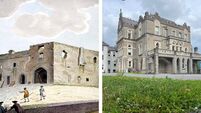
She then put her energy, and resources, into reconstructing the town. She rebuilt Castlecomer House, which was said to be even more imposing than its predecessor. There were 365 windows, one for each day of the year.
In 1802, Mason gave this verdict of her work: “Castlecomer has 211 houses; many of them good and slated. It has been rebuilt in a handsome manner; the principal part of the town is one very broad street well built.”
Much was said of Lady Anne herself too.
When she contributed £1,000 to the cost of a new road from her collieries to Carlow, Richard Griffith wrote (in 1814): “I am happy in having this opportunity of expressing my admiration of the liberal manner in which this lady at all times supports every project which may tend to the benefit of the country."
Another contemporary writer gave this gushing assessment: “To make her neighbours and tenants comfortable and happy and to improve the surrounding country by every means in her power, appear the noble and patriotic boundary of Lady Ormonde’s wishes and exertions.”
There was only one bum note which came from the pen of memoirist and judge Sir Jonah Barrington. In 1827, he suggested the “lady of the castle” placed too much faith in her own importance, mistaking pride for dignity. Although he did say he may have been mistaken.
By the 1960s, SAH Whetmore, writing about her singular coinage in the , came to the conclusion he was indeed mistaken, and offered yet more proof of a remarkable woman who used her position and means to help her workers and the district.
It is interesting to see that, even then, the harmful effects of the fumes from burning coal were noted. The Lord Lieutenant of Kilkenny, William Tighe, said they were “somewhat obnoxious” and particularly “offensive to asthmatic persons”.
A Dr Ryan of Kilkenny advised taking cold baths to counteract the effects.
By the time Anne, or to use her full name Susan Frances Elizabeth Wandesforde died, aged 75 on April 3, 1830, she had transformed Castlecomer and had done much to contribute to the lives of the people who lived there.
She was not forgotten, not locally at least, although historian from neighbouring Waterford James Doherty says she never really got the attention she deserved.
“She was resourceful and remarkable. She ran the family estate in Castlecomer for a considerable time and was very much concerned with the health and welfare of the workers in the family colliery,” he says.
Her spirit, though, is still in the ether. In 2019, when Keith and Carmel Boyle opened a restaurant in the Creamery House, the 18th-century Georgian house in the centre of Castlecomer which she rebuilt, they called it the Lady Anne Restaurant.
“It was a homage to her. We could not have called it anything else,” Boyle tells An Irishwoman’s Diary.
A portrait of her by Kilkenny (and Dublin-based) artist Jane Willoughby hung on the walls. A much earlier portrait, reproduced here, hangs in Kilkenny Castle.
The restaurant has since closed but Lady Anne’s legacy and that of the Wandesforde family who first came to Ireland from Yorkshire and opened up a number of coal seams in the mid-17th century is still very much remembered.
Their history is told at Castlecomer Museum, along with the region’s long mining history and the story of the discovery of ancient amphibian fossils by miners in 1865.
Errol Delaney, local historian and the museum’s curator, says Lady Anne had a reputation for being extremely charitable. Indeed, as landlords, her family are remembered as fair people who provided huge employment in the mining of coal and iron ore in the area until the late 1960s.
“It’s fantastic that women like Lady Anne are remembered,” he says. “Some of them could run the country if they were bothered to try.”
Her coins still occasionally come up for auction, reaching up to €15,000 per token, but coin experts warn potential buyers not to buy from unreliable sources as a few modern forgeries are also in circulation.
So, if the parrot on your shoulder starts shrieking “piece of eight, piece of eight”, proceed with caution.