Clodagh Finn: Lessons in the extraordinary power of forgiveness

Una O’Higgins O’Malley was a woman nearing 60, with a long record of peace activism, when she discovered the names of the men responsible for killing her father
Clodagh Finn: Lessons in the extraordinary power of forgiveness

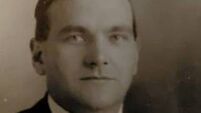
Una O’Higgins O’Malley when she worked briefly as a solicitor for Arthur Cox. Picture: Courtesy of Iseult O'Malley

Fr Paul Murphy might be “in the business of forgiveness”, as he put it, yet it was still deeply affecting to read how he forgave and later hugged the 17-year-old boy who stabbed him multiple times at Renmore Barracks in Galway last August.

If you have a moment, read his victim impact statement; it offers an insight into the extraordinary power of forgiveness and its potential to offer hope even in the wake of an appalling crime.

Indeed, hope was a theme in his statement, as this line illustrates: “In this, the Church’s Jubilee Year of Hope, my hope and prayer is that you will use whatever resources are put at your disposal, in prison or beyond, to learn a better way of living and that you will use your energy and your talents to make our world a better place for all people to live.”

He later hugged the accused, who said that he was sorry.

Fr Murphy’s words and deeds reminded me of a woman who chose to do something equally extraordinary when she discovered the identity of the three men who assassinated her father, Kevin O’Higgins, justice minister and vice-president of the Executive Council of the Free State, on his way to Sunday mass on Cross Avenue in Dublin on July 10, 1927.

Una O’Higgins O’Malley was just five months old at the time.

She was a woman nearing 60, with a long record of peace activism, when she discovered the names of the men responsible for the lifelong grief that left her with “this great hole, a vacuum filled with pain like the hollow that is left when a large tooth has been removed”.

In the mid-1980s, when she found out that one of them, Archie Doyle, reportedly did a triumphant dance on her father’s grave, she was filled with rage like “a huge black lava” which “blotted her out”.

It hit her on Holy Thursday — timely to recall this Easter Saturday — and she felt consumed by bitterness. As she said in one interview: “I got seized with this awful, awful unforgiving cloud, that I hadn’t ever felt as badly before. I couldn’t stop it, it was like this lava pouring from a volcano…

“That happened on Holy Thursday and I thought, ‘So much for Holy Thursday and Jesus Christ and all that’. I wanted to throw the whole thing out there and then. But on Good Friday, I made my way back to the church somehow and as I put my foot on the church porch, I had this thought: ‘Have a Mass said for them all.’ And that was when I felt normal again.”

Una O'Higgins O'Malley had a mass said for her father's killers. Picture: Courtesy of Iseult O'Malley

Una O’Higgins O’Malley put notice of a memorial mass for her father and the three men named as his killers — Tim Coughlan, Archie Doyle and Bill Gannon — in a number of newspapers in 1987, the 60th anniversary of her father’s ambush.

Seeing it, Roger Gannon, Bill’s son, got in touch to relay the story his father told him during his final illness.

Una recounts it like this in her memoir From Pardon and Protest: “I learned that my father, with eight bullets in him, had actually managed to speak to his attackers on the roadside, telling them that he forgave them and that he understood why they had done it, but that this must be the last of the killings. Bill Gannon told his son that, afterwards, his whole life had been haunted by this happening.”

The killings and reprisals during Ireland’s civil war haunted many families but the O’Higgins had to try to come to terms with two murders.

In 1923, Thomas O’Higgins, a doctor and coroner in Co Laois, was shot dead in front of his wife and daughter during a raid on their home in Stradbally, Co Laois. He was targeted simply because he was father to Kevin O’Higgins, minister in a government that had ordered the execution of four IRA leaders, including O’Higgins’s own best man Rory O’Connor.

Even though Una O’Higgins O’Malley had no recollection of her father and never met her grandfather, she was deeply affected by both deaths.

As a child she recalled being “infiltrated by something approaching Lady Bracknell’s idea of carelessness” — “to lose one parent, Mr Worthing, may be regarded as a misfortune; to lose both looks like carelessness” to recall the imperious character’s famous line in The Importance of Being Earnest.

The young Una would take herself “away privately and weep — and weep”. The depth of her grief, however, was tempered by the family’s repeated pursuit of forgiveness.

Her grandmother, she wrote, immediately insisted on it after Dr Thomas O’Higgins’ murder, and said there were to be no reprisals. Una also recalled the courage of her teenage aunt, Patricia “who struck the gun out of the hand of one of the killers before cycling five dark February miles into Stradbally in search of a priest and a doctor.”

Four years later, when her own badly wounded father was taken back to the family home, Dunamase in Booterstown, he too insisted on forgiveness before he died.

The devastating effect of grief rippled on but, as Una O’Higgins O’Malley later explained, the “aching and weeping” impelled her to become a founding member of the Glencree Centre for Peace and Reconciliation. She wanted to help children on both sides of the political and sectarian divide who, like her, were “fathered only by photographs”.

Her work for peace is well-known but her drive for justice also propelled her into a whole range of projects. The sweep of that work was outlined by her daughter Supreme Court judge, Ms Justice Iseult O’MaIley, at the inaugural annual Una O’Higgins O’Malley lecture in 2018.

Her work, she said, went from “helping to get Meals on Wheels going in the Mater Hospital, to trying to do something about the appalling state of housing or the conditions of Travellers in Dublin, to running as an independent in the general election of 1977 on a reconciliation and social justice platform, to campaigning for the Irish Council for Civil Liberties, to assisting in the production of the MacBride Commission report on penal policy”.

And that’s not even a complete list, although the woman herself was self-effacing about her own contribution describing it “as a small token of compensation for my privileged, sheltered upbringing”.

Before she died, she was rocked by another unsettling revelation when, in 1996, the existence of intimate letters between her father and Lady Hazel Lavery were detailed in historian Sinead McCoole’s biography of the woman who featured on Ireland’s banknotes.

Though deeply upset, Una came to terms with it and took the astonishing step of acknowledging the pain to Lady Lavery’s daughter caused by an earlier incorrect account.

She issued a statement to the Sunday Independent to set the record straight. In it, she said Terence De Vere White’s 1948 biography of her father had mistakenly claimed that Lady Lavery had herself inserted romantic passages into letters she received from admirers.

“In the case of my father (not then known about) this is not true. I am aware of the pain experienced by Lady Lavery’s daughter and family arising from this misapprehension and I regret the pain caused.”

The same spirit of reconciliation runs through her considerable body of poetry. The last lines of her 1999 poem Twentieth Century Revisited urged opposite sides of the political divide to “gaze into the faces of their children and not their ancestors while planning for the future”.

Her call remains as urgent in this century as it was in the last although, as Fr Murphy has shown us, there is also reason to hope.

More in this section

Revoiced

Newsletter

Sign up to the best reads of the week from irishexaminer.com selected just for you.

Cookie Policy Privacy Policy Brand Safety FAQ Help Contact Us Terms and Conditions

© Examiner Echo Group Limited