Fergus Finlay: Let's give Ireland's older generation the respect that they have earned
I'm one of the lucky ones. But look around at the resilient people who helped make Ireland a better and more progressive place, and you'll see many who are not faring so well
Fergus Finlay: Let's give Ireland's older generation the respect that they have earned

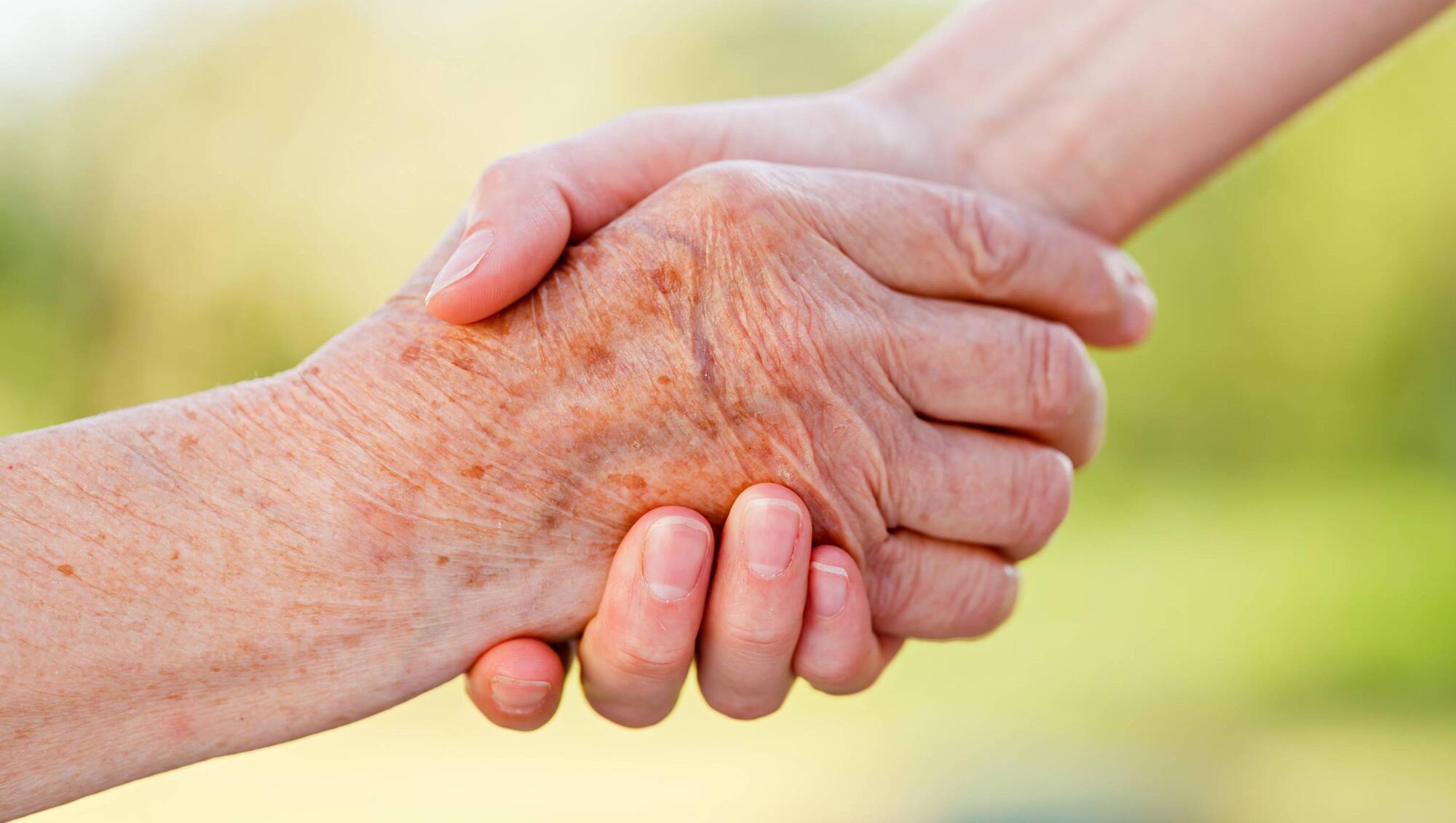
Progress has happened because the older generation — the ones whose votes really mattered to them — expressed intergenerational solidarity by weighing in behind the needs of younger people. Stock image

I’M here to tell you. Old age isn’t for wimps. Not that I’m admitting to old age, but I can’t deny that I’m getting older. 71 for Pete’s sake! And, they tell me, crankier.

Now, as you’re reading this (and I hope you are) I’ll be opening my favourite birthday present. I have children and grandchildren and close relations who are fond of me — or put up with me — and I can always look forward to lots of kindness and good wishes on my birthday, which is today. But there is one gift above all that I look forward to with keen anticipation.

I’m told I was born lucky, at least in astrological terms. My twin sister Finola and I (happy birthday Finola!) were born as twins under the star of Gemini, and slap bang in the middle of the Gemini star sign period. I’ve always been assured that that’s a guarantee of good luck throughout your life. You probably didn’t know that Geminis are also famous for their charm and for their intellectual gifts as well. And of course for their modesty.

My favourite birthday present

Anyway, back to my favourite birthday present. I look forward to it every year, and by now I have a collection of them. It might surprise you to discover it’s only a birthday card.

But it’s no ordinary card. My lady wife, among her many other gifts, is an accomplished cartoonist. Every year for the last 40 years she has done a cartoon of me for my birthday. I love opening them first thing in the morning and, over the years, I’ve treasured each and every one of them. They make me laugh out loud, and visitors to our house can see them hanging on the walls. Which is not to say they’re always the most flattering. 

Let me put it this way. Some years ago, to celebrate one of our wedding anniversaries, our daughters prepared a little book of family photographs, capturing some of the big events over the years. Alongside the photographs they wrote funny verses. Under ‘Birthdays’ (always a big occasion in our house) one of the verses was as follows:

Every year without fail Dad got a card

Keeping straight-faced was frequently hard

Flattering to MumBut exposing Dad’s tum

And more than a couple of inches of lard.

You get the message. These cards are designed to amuse — but also to improve me. It’s one of the ways I’m lucky, married as I am to a woman who hasn’t fully accepted yet that I’m a lost cause.

Along the way to my venerable age, I’ve lost my hair and some of my teeth. I’m blind as a bat without my glasses, I have 40% hearing loss, I can no longer hit a golf ball very far (or sometimes at all), I wake up stiff every morning, and I’ve had to have a couple of medical procedures (most of them related to a lifetime of bad habits).

But that’s it. 

One of the lucky ones

I think I’ve gained a few things along the way too. After 40 years of paying a mortgage, I own my own house now. I hope I’m a bit wiser than when I was younger. I’m reasonably open about expressing how I feel about stuff — much more so than I used to be. I miss some of the people who have gone already, some of them a lot, but I still have an awful lot of people in my life who bring me happiness. Without wanting to push my luck, I believe there’s a lot to look forward to still. But that’s me. 

I’m one of the lucky ones.

Old people have paid their debts

I said earlier that old age isn’t for wimps. For too many people, old age brings with it a lot of vulnerability, and sometimes a high degree of dependence. And there’s something terribly cruel about that.

Old people have paid their debts. If you’re of a certain age in Ireland, you probably raised and educated
a family. If you did, you did it through the oil shocks of the 1970s, the crisis-driven economy of the 1980s, the currency crises of the early 1990s, and the terrible recession when the Celtic Tiger came tumbling down. In all those decades, there were times when families struggled to keep their heads above water, to keep food on the table, and the rent or the mortgage paid.

Older people changed Ireland for the better

But that generation of Irish people — the ones we call old now — didn’t just do all that. Along the way, they changed themselves. None of the progressive things that have happened in Ireland in recent years would have been possible if the older generation — the ones whose votes really mattered to them — hadn’t weighed in behind the needs and desires of younger people.

We came out of each recession stronger because of the determination of that generation of old people. The thing that motivated them most was the need to ensure that, whatever happened, they’d leave something better behind for their children. We didn’t get it all right — of course not — but in any social or economic history of Ireland, the generation born in the 1940s and ‘50s will be seen to have played a major role in the building of a country to be proud of.

We suffered most in the pandemic

Then when a pandemic came, it was the old people who suffered most.

Helpless in the face of a blind and wanton disease, many died. And died often alone, with families that couldn’t grieve for them the way they would have wanted.

Those who didn’t die were locked up — cocooned was the polite word — and forced to live away from loved ones, for fear of the virus that roamed their neighbourhoods and seemed to attack them more viciously than anyone else. 

There’s another cruelty — if at the end of a productive life you want to survive, the price you have to pay is loneliness and isolation.

Even without the pandemic, and despite the fact that the financial supports for old age in Ireland are pretty good, relatively speaking, we don’t do nearly enough to respect the contribution that older people have made. Our systems are frequently bureaucratic and lack empathy. The little things that can make life supportable — especially for those who struggle to live independently — often seem beyond the imagination of a hide-bound state.

Losing respect isn't natural

Old age can bring trouble with it. Physical and mental decline can bring people to a position where — especially if they’re alone — they need a lot more help than we’re sometimes willing to give. Almost by definition, old people are people who have given everything they have for their families and their country. But, in the process, they become a burden.

How is that? How is it possible that the older you become, the more you have contributed, the more likely it is that your citizenship gets chipped away? Different labels start to be applied — you’re a bed-blocker or a service-user. Your condition is chronic and ultimately hopeless.

We need to rethink all that. Old people have done their bit, and they’ll go on doing it as long as they can. Decline is inevitable — it’s part of life. The loss of respect shouldn’t be. They deserve better than that.

x

More in this section

Revoiced

Newsletter

Sign up to the best reads of the week from irishexaminer.com selected just for you.

Cookie Policy Privacy Policy Brand Safety FAQ Help Contact Us Terms and Conditions

© Examiner Echo Group Limited