Arsenal’s Bible brothers and the quiet faith powering Arteta’s title push
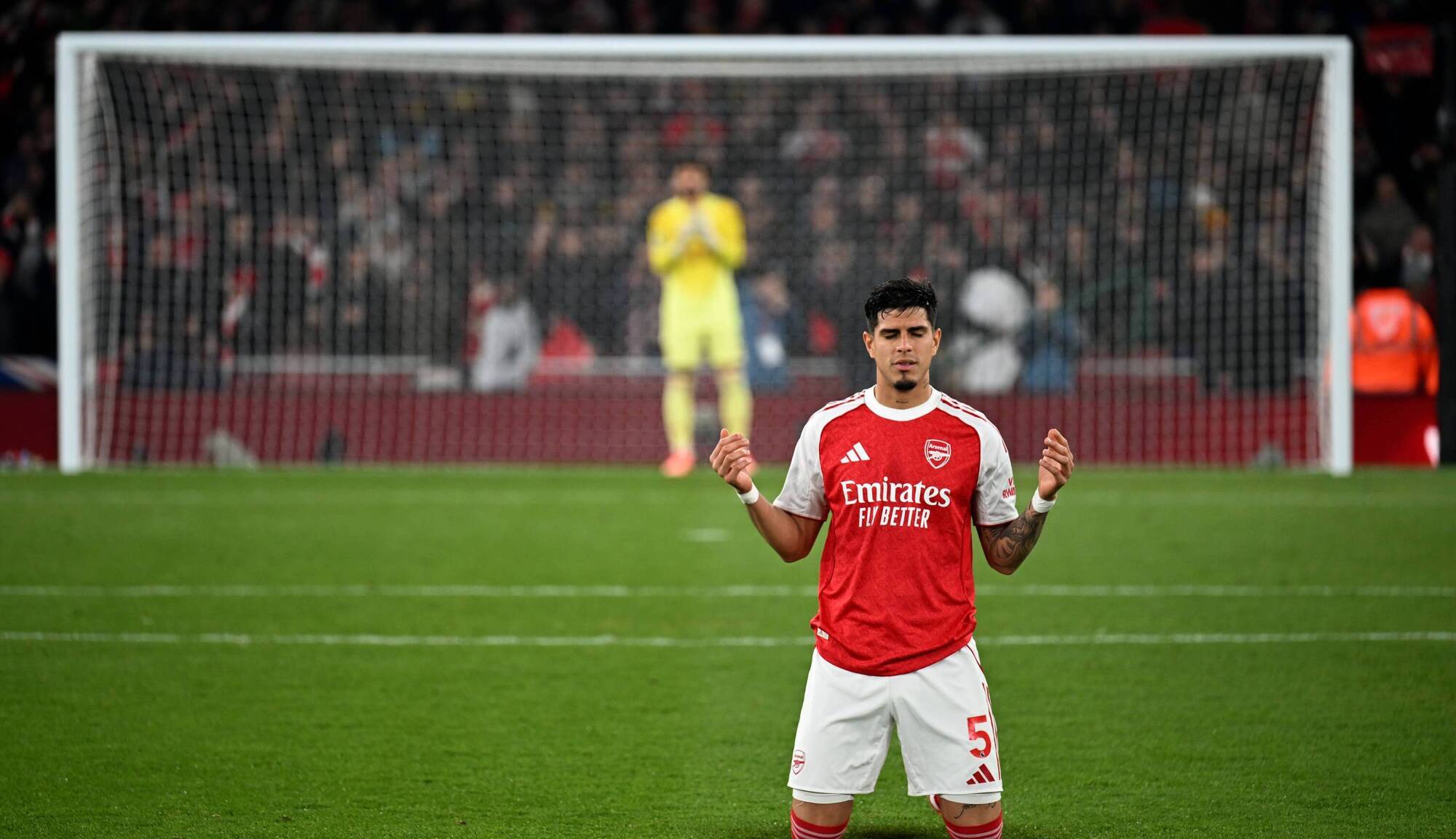
Ecuador's Piero Hincapie before Arsenal's north London derby against Tottenham Hotspur in November Pic: Stuart MacFarlane/Arsenal FC via Getty Images
When Gabriel Jesus ripped off his shirt after scoring against Aston Villa on Tuesday, the moment felt like more than a goal. Beneath the red of his Arsenal kit was a vest that read simply: “I Belong to Jesus.”
It was an act of unfiltered conviction, spiritual as much as sporting, and one that captured a quietly powerful undercurrent at the heart of Mikel Arteta’s Arsenal. This is a team bound not by boozy bravado or late-night bonding sessions, but by something far more personal: faith.
Jesus’s strike in the emphatic 4–1 win marked his full return after nearly a year sidelined by a devastating ACL injury. The months of rehabilitation were long and isolating, and for the Brazilian striker, the turning point came not in the gym but in belief.
“I felt so good,” Jesus told me in December, after his first comeback appearance as a substitute in Arsenal’s Champions League win away to Club Brugge. “First of all I want to thank Jesus, my saviour. If it wasn’t for Jesus, I would not be here strong the way I am now, so all the glory for Jesus.” The injury, suffered in January, cut deeper than previous setbacks in a career already littered with physical misfortune. “The first question was: why?” he admitted.
“Every single day, the first two or three weeks, I asked why it happened to me now. I’d just started to score goals and play well again.”
What followed was a renewed closeness to scripture. “I needed to be closer to God, to read the Bible. It helped me believe I could come back. If I didn’t hear the Bible every single day, I’m 100% sure I would not have believed I could come back stronger.”
Now firmly in contention to start away to Bournemouth on Saturday, Jesus’s return is emblematic of an Arsenal squad increasingly unashamed to express belief, even as Christianity continues to decline across Arsenal’s UK fanbase. The 2021 census revealed that fewer than half of the population in England and Wales identified as Christian, while those reporting “no religion” rose sharply, particularly among younger generations.
Inside Arsenal’s dressing room, however, faith is flourishing and not confined to one creed. The club provides a prayer room for players and supporters at the Emirates Stadium, located in Lower Tier Block 8 and Club Level Block 48, and it is well used across denominations.
Nearly two years have passed since former midfielder Mohamed Elneny opened a new multi-faith prayer room for players. “I am so proud to have opened our player prayer room at Emirates Stadium,” Elneny said. “Having this space to contemplate and pray will change the lives of future Arsenal players.”
Arsenal’s religious faith is diverse. Muslim players such as William Saliba, often seen performing du’a’ before matches, continue a tradition that includes Mesut Ozil, Elneny himself and other past figures such as Abou Diaby, Sead Kolasinac and Shkodran Mustafi. Ramadan is accommodated by the club as part of a broader commitment to wellbeing.
Alongside them sits a sizeable Christian core, dubbed the “Bible Brothers” by supporters. Their shared rituals have become part of the club’s rhythm. Among the most prominent is full-back Jurrien Timber, affectionately nicknamed “Pastor Timber”, who regularly posts Bible verses on social media before matches.
“For me, it is a way of life,” Timber said. “We pray before games because we have a few Christians in our team, which is amazing. It brings unity and understanding because you kind of live the same life.” If Timber is the organiser, then Noni Madueke is one of the most vocal advocates of collective belief. Speaking after scoring his first Arsenal goal, a Champions League strike against Bayern, Madueke’s first words were not about form or vindication.
“It is an amazing feeling,” he said. “I want to thank God for giving me the opportunity to play today and keeping me fit, and giving me a goal, and most importantly our team a win.”
Madueke later posted a photograph of teammates captioned: “Thank you God for this brotherhood that you have created.” He has since explained how around ten players pray together before matches and at team hotels, reading scripture, checking in on one another and offering support. “We believe it gives us such a massive boost,” he said. “It just brings us closer together.”
One of the most powerful expressions of that belief sits in Eberechi Eze. Released by Arsenal as a child before forging his career at Crystal Palace, Eze returned to the club this summer as a fully formed international and a key member of the prayer group. His goal celebration, forming a cross with his index fingers, is a heartfelt expression of faith rather than a rehearsed gesture.
Speaking on his summer return, Eze reflected on the moment he was let go as a youngster. “I remember the day I got released; my mum said a prayer. She was praying that this reverse would happen. So for me, this is a realisation of a prayer that we prayed 20-odd years ago. This is deeper than anyone can understand. I can see God’s hand in it, so I know it’s meant to be and I can only thank God for the opportunity to be here. I just feel so blessed.”
Eze’s journey resonates deeply within a group that includes defender Christhian Mosquera, Bukayo Saka, who has spoken about reading the Bible nightly, and a South American contingent of Gabriel Martinelli, Gabriel Magalhes, the aforementioned Jesus and Piero Hincapie, for whom faith has long been culturally ingrained as well as personally sustaining.
Captain Martin Odegaard is more private, but faith is firmly embedded in his family life. Speaking to Norwegian newspaper Dagen, his father Hans Erik said that “faith is the foundation” on which they have built their lives, adding: “I am sure that it is good for his career.”
For Arteta, the embrace of belief marks a striking contrast to Arsenal’s past. Where once Arsene Wenger navigated the infamous Tuesday Club, an all-day drinking culture among senior players, Arteta now oversees a squad more likely to gather in quiet rooms than pubs.
Asked about the role faith plays within his group, Arteta said: “I love it because I think it connects them more. Some of them share the same beliefs, or strong beliefs, and that helps their well-being, the mental side, and what it brings to them as human beings. I think it’s phenomenal.”
Added Saka this week: "2026 is here. I place it in your hands Lord, let your light shine in our lives and make it the best one yet." It may well be.
Faith alone does not win titles. But in a season where margins are fine and pressure relentless, Arsenal’s unity, spiritual as much as sporting, feels like an edge. As they walk out at Bournemouth, chasing a first league crown in over two decades, Arteta’s team do so bound not by pints or platitudes, but by belief in each other, and in something beyond themselves.

CONNECT WITH US TODAY



Be the first to know the latest news and updates