Paul Hosford: People living in hotels long-term should have the homes we let to tourists

Short-term lets have their place. But 16,000 people are homeless in Ireland and it’s right to question if leaving homes empty for much of the year is a choice we can stand over
Paul Hosford: People living in hotels long-term should have the homes we let to tourists

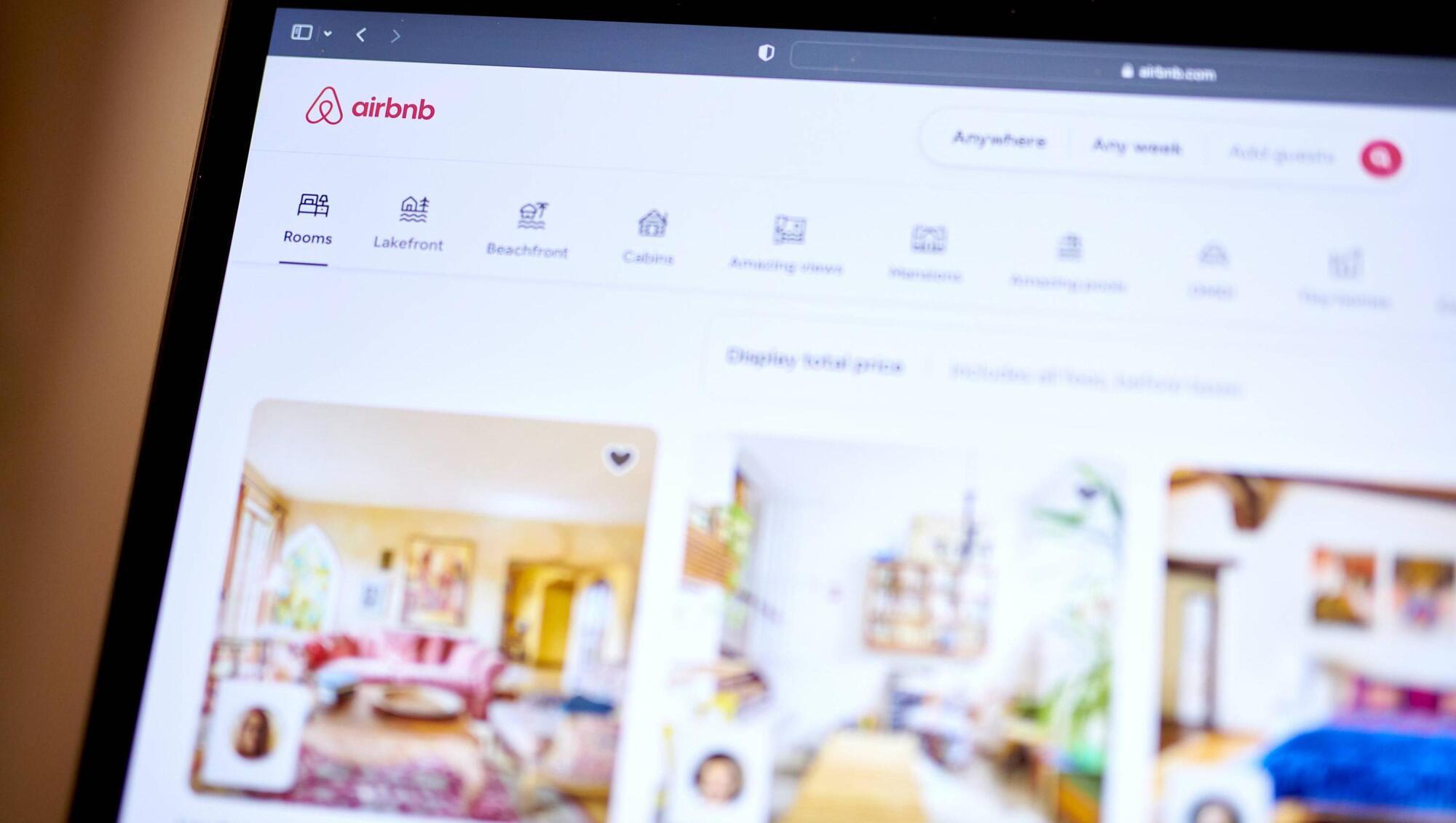
As the 'Irish Examiner' reveals today, Saturday January 3, three quarters of short-term rental properties advertised on platforms such as Airbnb are vacant at any one time. Picture: Gabby Jones/Bloomberg

By now, it is common knowledge that thousands of people will have spent the festive period in emergency accommodation.

The housing crisis has become Ireland’s newest chronic and acute crisis. Just add it to the pile along with health and disability.

At the same time, statistically speaking, it is more than likely that thousands of homes which people regularly live in sat empty.

A freedom of information request by my colleague Louise Burne published in the Irish Examiner today shows that, at any one time, three quarters of all short-term rental properties advertised on popular platforms are vacant. 

The documents prepared for enterprise and tourism minister Peter Burke’s officials, say that there is a “significant loss of opportunity” as most properties advertised are “intermittently occupied or underoccupied”.

In June, of 4.6m bedspaces, 862,000 nights were sold, or 18.75%. This continued to grow throughout the summer months, increasing to 24.13% of beds being sold in July, and 27.75% in August. August marked the highest occupancy rates in the entirety of 2024.

Visitors can rent 20,000 entire homes 

According to a report by housing charity Threshold last year, there were more than 20,000 entire homes advertised as short-term lets across Ireland, compared to 2,300 homes available nationwide in the private rental market. 

Research from the Economic and Social Research Institute (ESRI) found there were 28,169 Airbnb listings in Ireland as of September 2023, with two-thirds of these listings (18,638) being entire properties rather than just spare rooms. 

These figures reveal a stark economic reality: Thousands of homes that could house long-term renters are instead being used to accommodate tourists.

During a Seanad session on housing in April, it was Fianna Fáil’s Mary Fitzpatrick who crystalised the issue: 

At a time when families are living in hotels and bed and breakfast accommodation, there are tourists living or staying in family homes. It is wrong and has to be stopped. 

The Government is planning to address the issue through the Short Term Letting and Tourism Bill, which will introduce a register for all short-term lets from May, with Fáilte Ireland in charge of implementing and managing the register. 

Hosts offering accommodation for periods up to 21 nights will be obliged to register and hold a valid registration number. This must be displayed when advertising their property.
90-day rule may not be enough

The legislation will restrict short-term lets in towns with populations of more than 10,000 people. However, people in these towns will still be allowed to rent out their primary residences for up to 90 days and one would wonder if the income from that 90 days could make leaving the building empty for the other 255 days a year worth it.

Of course, proponents of the short-term model will say that this just simply isn’t true. That a 2022 report found that the average Airbnb host earned just over €5,600 in that year and that spending linked to the platform accounted for €500m in tourism spending, no small chunk of change. 

Airbnb-related economic activity in Dublin was valued at €152m, accounting for 30% of the total nationally, but this was closely followed by activity in South-West counties of Kerry and Cork which was valued at €107m.

Hotel's purchase of former hospital

Meanwhile, as Christmas-time news goes, the sale of a HSE building to the operator of a hotel was interesting to those who were interested, but hardly likely to have stopped people in their yuletide tracks. 

To catch you up: a couple of days after Christmas, the Business Post revealed that the former Baggot St hospital site would be sold to the operators of the five-star Dylan Hotel.

The operators of the five-star Dylan Hotel on Eastmoreland Place off Upper Baggot St in Dublin are set to buy the former Royal City of Dublin Hospital on Lower Baggot St.

The site has been largely empty since 2019 and was proposed to be part of the State’s response to the refugee crisis but was put on the market by the HSE in October.

That a hotel group would want the building is no surprise — it is a short walk to Dublin city centre, near the Aviva Stadium, and in a part of the city with a number of bars and restaurants.

Then, there is the need. In a “hotel concentration report” by McGill Planning as part of an application for a 40-bedroom hotel planned by John Malone’s MHL Hotel Collection on Drury St and William St South in the city centre, Dublin City Council was told that the capital needs 1,725 new hotel beds by 2030 to keep up with demand.

The Baggot St site was deemed unsuitable for the delivery of affordable housing by the Land Development Agency due to “a number of challenges to the development of this building for affordable housing”.

A statement from the agency to The Journal added: “The building is a protected structure and it is located in a conservation area. The LDA’s assessment concluded that significant investment would be required in order to deliver a residential scheme within this building, which would make it unviable for the delivery of affordable housing.”

The various factors involved mean that there’s no major controversy around this particular sale — it’s just the market reality.

But surely the demand for hotel rooms could be addressed by moving some of those living long-term in hotels to readily-available housing which is being used to accommodate tourists?

Airbnb, Uber... What am I missing?

This seems so obvious that I find myself wondering what I am missing, but I get the sense that I miss a lot when it comes to the big innovations of Silicon Valley. 

An app that allows workers enter a black market economy to deliver pizza, an app that allows anyone be a taxi driver regardless of impact on that sector, an app that makes itself a revenue-sharing middleman in transactions that didn’t need or want it, an app that lets your house become a hotel.

Last May, the Irish Examiner reported that 64% of the 34,000 houses advertised on short-term letting platforms offered people the “entire” property. In comparison, there were between 1,600 and 1,800 properties available for renters seeking long-term accommodation on Daft.ie. 

In Dublin, some 3,850 (55%) of 7,010 properties available for short-term let offered the entire property.

In response, junior minister Michael Healy Rae suggested that people who have excess properties were not, in fact, the solution to the housing crisis and should not be “hounded out of business”.

Short-term letting has its place

“People involved in catering short-term, people who have farmhouses that they’ve rented out or flats that they’ve rented out on a short-term basis, they didn’t create the housing crisis in Ireland. Neither are they the solution to it.

“If you’re the person who is presently at short-term accommodation, they shouldn’t be hounded out of that business. No way in the world. Those people should be allowed to continue what they’ve been doing in the past.”

But the fact is that we now know that these homes — and they are homes, not units or lets — lie empty in either large numbers or for large chunks of the year. 

Short-term lets have their place, particularly in parts of the country underserved by hotels. That genie is out of the bottle and there is a tailored solution to be found.

But 16,000 people are homeless in Ireland and it’s right to question if leaving homes empty for much of the year is a choice we can stand over.

More in this section

Revoiced

Newsletter

Sign up to the best reads of the week from irishexaminer.com selected just for you.

Cookie Policy Privacy Policy Brand Safety FAQ Help Contact Us Terms and Conditions

© Examiner Echo Group Limited