We’d do better to study the good guys rather than the deviants
There’s the probability that the unprecedented publicity payoff delivered to bizarre killers will provoke others, writes .
You have a man who sticks a camera on his forehead to live-stream him killing 50 or more people, including children, in a mosque in New Zealand. You have a man who publishes his crazed “manifesto” on social media before he goes into the mosque. You have pictures of the man’s face, taken by him and uploaded before the crime.
Taking all of those into consideration, it is puzzling why mainstream media, over the past few days, blanked out the face of Brenton Harrison Tarrant when he appeared in court to be charged with the first of his 50 murders, dressed in what looked like a paper dress. No doubt some rule has been developed about proper use of photographs by mainstream media to protect the innocent, but how that squares up with all of the other identifiers richly present over the weekend beats me.
Let’s not — yet — go to social media, where the platform chosen by the murderer for his self-publicity made a big deal of taking it down after the event and urging the platform users not to do what the platform has carefully and profitably trained them to do: Share what should never be shared, including the massacre of little children.
Over here in mainstream media, the picture editors were working hard to digitise out Tarrant’s face from the pictures of him in court. Perhaps this was to frustrate him reaching a wide audience with what the papers described as his “smirking” expression. Perhaps it was protect his identity and his innocence until proven guilty. Weird, then, to have those blurry photos run in the papers in some cases right beside pictures identifying him beyond doubt — positioned beside, over or above headlines including the phrase “Mosque killer.” Who are we kidding, here?
Maybe if we were newspaper readers in New Zealand, this farcical protection of identity might make some sense, but over here in little Ireland, letting us see his face is hardly going to subvert the course of justice on the other side of the world in Christchurch.
Not that I am pleading for pictures of this man to be shared by anybody on any platform at any time. Rather the reverse. It has to be argued that some form of censorship on the news sites, mainstream and social, that reach billions of global consumers, should be considered in cases like this, where personal validation through publicity around a vile act is clearly an objective. It should be considered because of the probability that the unprecedented publicity payoff delivered to bizarre killers will provoke others. Even death, which was not delivered to this particular killer, would be worth it to some spree killers who knew they would go down in history because of the contemporaneous coverage.
Some of Saturday’s international papers, while blurring out his face, made something of a hero of the killer by presenting him in their front-page headline as more or less a digital pioneer of sorts.
It would be unfair to attribute admiration to the reports in media all over the world registering Tarrant as the first mass murderer to play out his entire crime on social media. The reports were not written admiringly.
But here’s the reality: The tone was that we reserve for writing about the first human to conquer an unclimbed peak or reach some other unprecedented goal. The tone made of this man a nearly admirable exception. A breakthrough artist of death.
So, on the one hand, pictures of the man sat side by side by blurred-out pictures of the man, the latter made even odder by the fact that some newspapers put a circle around his manacled hands to drew attention to them. The forefinger of his right hand was touching the thumb of the same hand in the circular gesture ordinary humans use to indicate “Ace!” “Well done!” “You nailed it, right there!” The newspapers running the shots explained that this gesture is now understood to be an indicator of solidarity with white supremacists. To which they — the newspapers— had drawn attention.
The mass murderer, in other words, was allowed to use mainstream, not just social media, to declare his membership of a terrible tribe and to encourage others to join that tribe. Maybe it’s time we questioned whether the informational value of open disclosure in this case, which delivered, to the uninvolved, a moment’s unsurprising confirmation of the man’s sympathies, should be weighed against the propaganda value of a gesture creating reassurance and solidarity among the dangerously involved. Makes no sense to put an individual uniformed guard outside a mosque in Dublin to protect against potential copycat killers while at the same time allowing our media to be used to intrigue and recruit precisely those copycats.
Of course it’s an inevitable part of the What, How, Where, When, Who, Why sequence journalists have been trained to follow since God was a girl and since reporters hung a cigarette on their lower lip and a pen over their right ear. We go “What?” when the early news flash pings on our phone. We go “Where?” to sort out the level of personal threat.
We go “Who?” to figure out whether it was an act of war or an individual atrocity. In the case of the New Zealand killings, if we happened to be on Facebook at the time, we didn’t need to ask “How?” because the killer showed us his methodology by means of his streamed footage.
The next inevitability in our reaction to such a story is to try to understand what factors in the background or upbringing of this killer led to him becoming the kind of man who could exterminate people en masse when they were peaceably going about their prayers. That need to understand is a fundamental reflex. We are quick to condemn but quick, too, to wonder at the makeup of those we condemn. This is why one of the most durable forms of non fiction is the hardback or paperback account of a true crime.
We want to understand. Through better understanding, we create the comforting possibility of prevention. Leaf through every account of spree-killing, and, although a number of commonalities emerge, they don’t add up to prevention. Such accounts show that peaceable integrated people don’t “suddenly snap” and do violence to those around them. Prior warnings were always present and disregarded. Such accounts show that now and again, a perpetrator like the one who mowed down students in a college quadrangle from a clock tower had a brain tumor, albeit one unlikely to have caused his mass murder. Such accounts show that the family is the transmission belt of pathology.
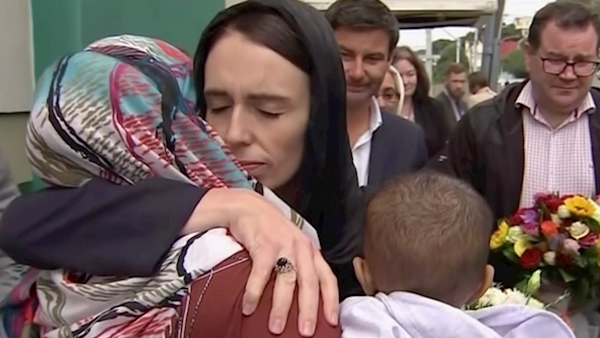
Studying deviants to prevent deviance is a singularly pointless exercise. We’d do better to study the good guys. To learn, for example, from New Zealand’s prime minister that it is possible, within minutes of unprecedented evil, to respond with grace, generosity and a firm re-statement of essential values.

CONNECT WITH US TODAY



Be the first to know the latest news and updates