Stephen McPhail ready for the next lap after career reboot
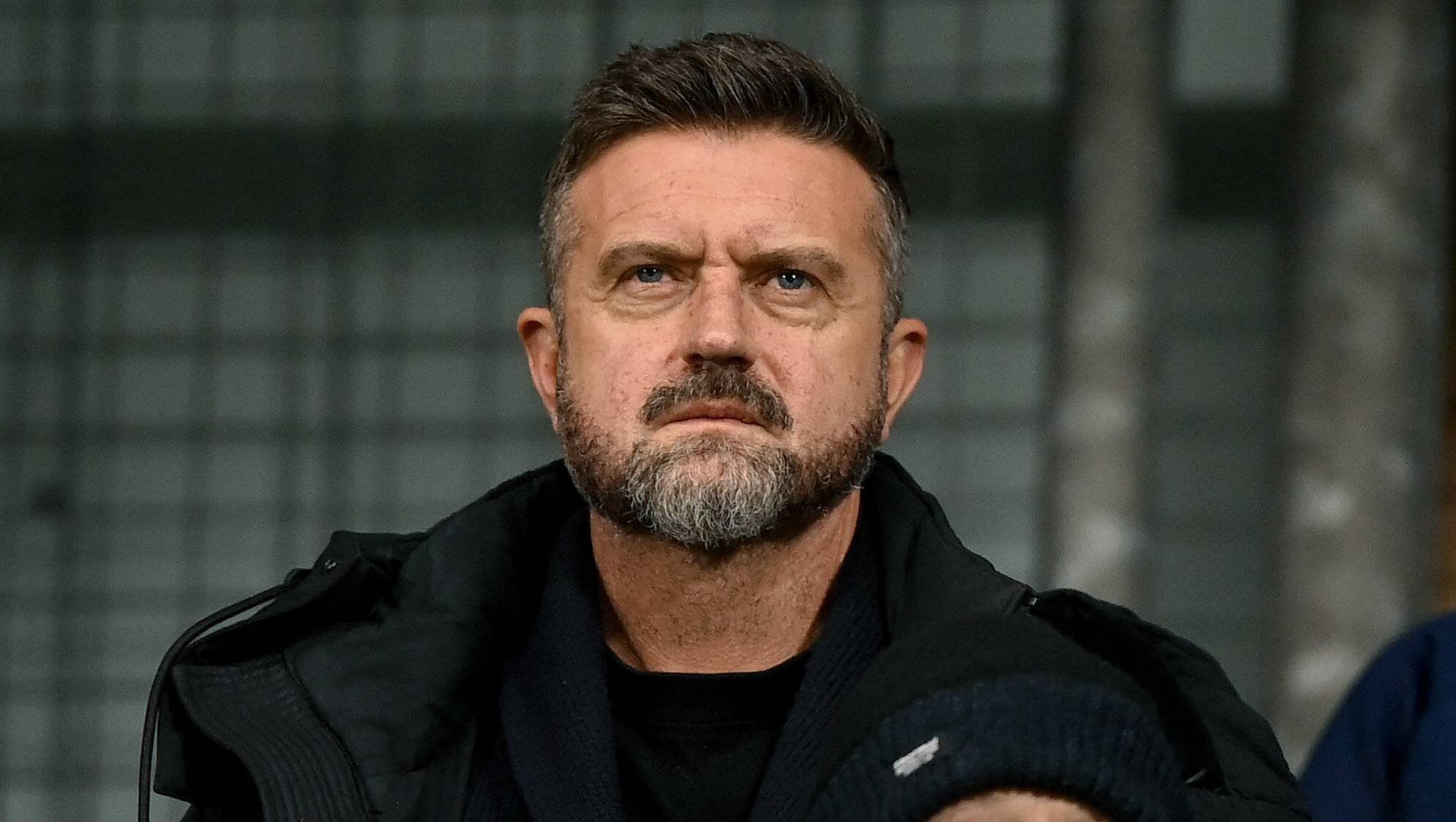
Stephen McPhail in attendance before the SSE Airtricity Men's Premier Division match between Shamrock Rovers and Drogheda United at Tallaght Stadium in Dublin. Photo by Stephen McCarthy/Sportsfile
Having paused a marathon career in football, Stephen McPhail felt the next best thing was to embark on a mini version.
The first half of 2026 had served its purpose of decompressing after ending his nine-year stint as director of football at Shamrock Rovers last December.
A different form of exhilaration, in different company, appealed.
McPhail and his former teammate Gary Kelly returned to pound the streets of their first professional club, Leeds United, by running the half-marathon.
Accompanying them were their daughters.
Read More
“It was something I really enjoyed doing,” says the 46-year-old.
“Because our son plays football, my 19-year-old daughter didn’t see so much of me when I was working.
“We even trained together for a few months in the run-up to the event. I would never have got that time previously.
“I’d been going 31 years flat to the mat, between playing and my role at Rovers, so it was time for a break.”
Shock abounded when McPhail quit, for Rovers had just won their fifth title in six years as part of their first double since 1987.
In trademark fashion, there was no fanfare, slipping out after the final game of their European run, with only a couple of confidants given a few weeks’ notice.
He’s kept a low profile since, steering clear of the punditry carousel but almost a year on feels vindicated in his choice.
“I didn’t want to overstay and go stale,” he said, speaking near his home in north county Dublin.
“I also leant on past experiences. I didn't have many moves when playing. I was at Leeds United for nine years and around the same at Cardiff but afterwards felt that I should have left both earlier.
“That wasn’t going to happen this time. I’m quite old school that way. I could have continued but wouldn’t have done anyone justice. I wasn’t exhausted but definitely tired.
“It does take its toll but I was glad to leave on good terms and with the club in a strong position.
“That’s all I wanted from the start. I was thrilled that the fans recognised it with a sign in the crowd for this season’s first home game”.
His near decade at the helm produced unprecedented success domestically and in Europe but only after a rocky start.
When invited by the Rovers board to assume the newly-created position within a week of retiring in 2016, the first task was to select a permanent manager.
Stephen Bradley had been in caretaker charge for four months.
Compared to his predecessors Pat Fenlon, Trevor Croly, Stephen Kenny and Michael O’Neill, the 31-year-old was a novice. Still, McPhail spotted a manager-in-waiting during that interim period.
“I didn’t know Stephen at all before that year but saw how strong that he and Glenn Cronin were as a management team,” he outlined. “I knew the right person was in front of us but was also aware patience would be required. We were all inexperienced in our new roles.”
That patience was tested as the first two seasons ended trophyless.
“Back then, it was touch and go for 18 months,” he points out. “Everyone remembers the banner going up.”
Infamously, as the Hoops fell to a 5-2 drubbing by Dundalk, a section of the home support unfurled a sign that read: "It's Not Working Out, Enough Is Enough.” Undimmed, McPhail remained convinced, even as others waned.
“I remember going to a couple of board meetings and the chat was about changing things,” he said.
“I was hitting home to them that Stephen was the right man. It was always in our head that it would take a few years for success because Cork City and Dundalk had been dominating.
“Major things had to be changed, such as the culture and most of the squad. That’s not easy and takes time, a lot of time. The board deserves credit for sticking with it and the turning point came in 2019.”
That was the FAI Cup win, a precursor for their monopolisation of the Premier Division.
He’s protective of the story behind the success despite being no longer part of Rovers.
Only last week, he was tempted to go against his better judgement by ringing into a radio show.
“They were fearing Rovers running away with next year’s league by buying the league’s best players. That was never the model.”
He namechecks Pico Lopes, Lee Grace and Gary O’Neill as recruits that weren’t being chased by the heavyweights at the summit.
Indeed, when the new broom was installed a decade ago, the directive from upon high was for a couple of sales per year to balance the budget.
That mission ultimately fell on the director of football.
Gavin Bazunu was the first export to realise marketable value in 2018.
Before accepting his new role, McPhail had spoken to contacts he’d developed in the UK and visited clubs around Europe, swiftly learning how and why countries of similar size to Ireland net higher fees for their promising talent.
Manchester City, where his former Leeds United teammate Jason Wilcox was involved, were prepared to pay €460,000 for the then 16-year-old in the pre-Brexit era. That haul mushroomed for Rovers as the goalkeeper progressed through his career and netted a sell-on slice upon his transfer to Southampton.
Victor Ozhianvuna’s deal to Arsenal demonstrated that Rovers were being taken seriously.
He was also 16 when McPhail opened negotiations on a package that guarantees the Irish champions an upfront fee of €2m.
“Ten years ago, there were hardly any fees for our young players,” he reasons.
“Countries around Europe were so far ahead of us in terms of facilities, staff and structure that we needed to be trusted by clubs.
“That came from inviting them into our set-up, showing how we operated and trained.
“They could see from that professionalism that we weren’t to be messed about when it came to the value we placed on a player.”
Yet, for all the structure developed and silverware accumulated, the sense of disunity at board level grew. McPhail was dealing with the fourth chief executive of his tenure by his departure.
The chasm between the private half of the ownership and the other 50% controlled by the fans was evident when 25% shareholder Dermot Desmond publicly accused certain unidentified non-executive directors of “persistently seeking to have the first team management replaced.”
Bradley didn’t dispute that claim, even if the members' side did, but it made for an unseemly sight in contrast to the triumphs on the pitch.
McPhail was the conduit in between, acting as peacemaker at times while constantly seeking to preserve the first-team as a priority amid what he describes as an ‘arm-wrestle’.
“I was never told that directly, only heard some things second-hand, but I didn’t overthink it,” he said about the bizarre notion of the management being unwanted.
“It’s hard to describe. The set-up can be difficult with a three-way board. It took us time to work out why things weren’t going our way.
“There were frustrations when the quick decisions we wanted weren’t coming.
“I remember having the conversation with Stephen about letting them sort it out. Our job was to challenge the club to keep pushing on.
“Things were said but I knew it wasn’t personal. There’s no bad blood with anyone at the club and it all seems to have settled down now.”
He settled, too, into a rhythm.
Aside from devoting more to his family, the time to enjoy his hobbies of gardening, golfing and reading afforded a period of reflection.
Some opportunities to resume into a fresh project either came too soon or didn’t fit but he’s ready to rejoin the treadmill.
Pictures of him at a Cardiff City game in September provoked giddiness within the fanbase about a comeback but they were just one of the former clubs he’s visited to reassimilate.
Although it’s 14 years since his Bluebirds manager Malky Mackay predicted a migration into management for his player, being the front-of-house gaffer wasn’t on the wishlist.
It still isn’t but he’s open to discussing proposals.
As he sits and stares through the tall windows out into the Irish sea, the prospect of broadening horizons isn’t discounted either.
“I’d be interested in something here but also abroad with the right opportunity because my family life is in a position that the kids are at good ages,” he confesses.
“I’m not thinking that loads will come my way. I know how football works. For such a large industry, it can be quite condensed.
“The important thing for me in recent months was getting around the scene because the game is evolving.
“I’ve made 10 trips to England, some back to my former clubs where I’ve been given access into the training ground and meetings.
“Management never appealed. I did my A license quite young to see if I liked coaching and at the time felt well out of my comfort zone.
“But I loved the Rovers job because it gave me the best of both worlds. I’d be on the grass at training and part of the decision-making during matches but still did the other stuff with contracts and dealing with agents.
“There was probably too much to that, which is why it’s since been split between Ronan Finn and Seán Kavanagh after I left, but something similar would be ideal.”
There’s a special satisfaction to watching a signing soar, especially one plucked from beneath the radar, and McPhail has found himself visualising that responsibility during the downtime.
“I try to watch a game per day now, either in person or on television,” he says.
“The World Cup last summer was great because I was able to observe without overanalysing. It’s still nice to identify players. Recruitment fascinates me.”
In that respect, he admires Brian Barry-Murphy. McPhail was invited to Cork, where Cardiff were staging their pre-Championship season camp at Fota Island and got a sense they were on the trail of Jack Moylan.
McPhail had been aware of that player’s availability when released by Bohemians in late 2021 but didn’t begrudge him the strides he made under his former teammate, Damien Duff.
“Shelbourne could offer Jack gametime we couldn’t due to the attacking players in our squad but I’m delighted he’s doing so well for Cardiff and Ireland,” he said.
“Cardiff has a long history of Irish players. Graham Kavanagh contacted me when I came to the club, so I felt it was right to do the same with Jack this year. I know that they love that type of exciting player there.”
Moylan’s mentor, Duff, fled the League of Ireland circuit last year with enmity towards Shamrock Rovers still lingering.
There were spats with Bradley over handshakes and music blaring out of the Tolka Park dressing-room but McPhail didn’t immerse himself into the rancour.
“When you’re competing and battling, relationships go out the window,” he surmises.
“You don’t speak to them, stay away from them and then there’s heat of the moment stuff.
“Damien and I grew up from 15 playing on the same Ireland teams. I’ve the height of respect for what he’s done in the game, both here and this season at Brentford.
“I bumped into him a few months ago and everything is fine.”
Chances are they’ll cross paths again, possibly before they both reach 50.
All in good time, too, as the next phase resembles a marathon, not a sprint.
CONNECT WITH US TODAY



Be the first to know the latest news and updates