We’re not yet beyond our limit to be shocked at Brexit events
How will British historians record the behaviour of its political establishment during the great Brexit crisis?

We’re not yet beyond our limit to be shocked at Brexit events

How will British historians record the behaviour of its political establishment during the great Brexit crisis?

Even the most loyal among their ranks, proud to document the events of significance in a country that includes the word ‘Great’ in its name, will be challenged to portray the period as anything other than a shameful mess.

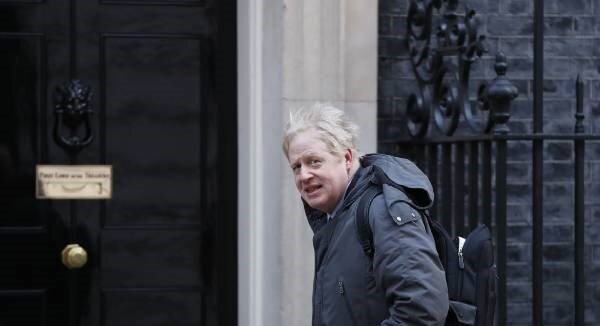
Following Tuesday’s series of House of Commons votes, Boris Johnson was insisting that Prime Minister Theresa May was able to now go to Brussels and ‘get the freedom clause that the UK needs’. Picture: Peter Byrne/PA.

Sky’s deputy political editor Beth Rigby put it best in an exchange with Boris Johnson on Tuesday night, just after that series of votes in the House of Commons.

Boris was insisting that prime minister Theresa May was able to now go to Brussels and “get the freedom clause that the UK needs”.

But Rigby, a woman who has been reporting first hand on all this Brexit-related lunacy, and appeared to be approaching the end of her tether, responded by conjuring up unicorns. Ms May was riding off on one to Brussels, she said, and looking down at her phone, she told Boris the “reality check” had just landed with a notification of the EU saying the withdrawal agreement is not open for renegotiation.

“You lot are deluded, it’s not happening, it’s not happening,” Rigby told him, speaking for all of us watching at home.

When Theresa May isn’t riding them to Brussels, unicorns are what are being chased all over the place by the vast majority of British politicians.

You’d imagine that at this point in time we would have gone way beyond the elastic limit of our ability to be shocked at unfolding Brexit events over there.

But no.

MPs voted for “alternative arrangements” on the backstop, as vague and as a woolly a phrase as you can conjure up, with no specifics on how a hard border might be avoided.

Let’s jump on that British fantasy train for a few moments and imagine that Brussels did come up with a varied offer. The bite of reality on our national backside would doubtless hit just hours, nay minutes later, where the British would manage to immediately set their faces against whatever the new thing happened to be.

There is nothing that will satisfy this demented Brexit beast.

They spend all their time telling us what they don’t want, with an expectation that the EU should come back with alternatives (to what they negotiated in the first place) and yet how can they expect anyone to have even a smidgin of trust left in them.

Not to put too fine a point on it, Ireland is now in an abusive relationship with the UK, and it would appear we have to keep coming back for more. We must keep “faking it ’til we make it”.

It was in that atmosphere — with the shock of the previous night’s events — that Tánaiste Simon Coveney gave a ‘State of the Union’ address to the Institute of International and European Affairs on Wednesday.

Needless to say, it was a full house listening to his sombre and thorough analysis as he pointed out that with less than two months to go to the March 29 deadline, “we are quite simply running out of road”.

To a packed house, with many diplomats present, including the French and German, Romanian and Hungarian ambassadors to Ireland, he painstakingly laid out all that has gone on in relation to how the backstop evolved.

At one point, he said that personal relationships between Irish ministers and their British counterparts were actually very good, given that a closeness has built up as a result of the amount of time they now spend speaking to each other.

That is almost impossible to imagine — unless you had endless supplies of patience.

In fact, I’d have loved to have known what the speech bubble in the Tánaiste’s brain was actually saying as he calmly told the audience it would be wrong to dismiss all Brexiteers as populists and “yet the Brexit debate has become a stunning example of all that can go wrong when more attention is paid to slogans and soundbites rather than policies that are properly thought through and properly costed”.

Ah the understatement. Either the Tánaiste is possessed of an unnatural calm or he spent a long session with a punch bag in a gym that morning. He even quoted a Fianna Fáiler, although in this case a Corkman — which almost neutralised the effect — recalling how former taoiseach Jack Lynch had warned about populism as early as 1972.

This was during the debate in the Dáil on our accession to the then EEC.

He said: “the extraordinary thing is that the most vocal opponents of membership have shown boundless confidence in our capacity to survive and prosper on the basis of an alternative relationship with the Community, the terms of which are not known.”

Unsurprisingly, that drew an ironic laugh from the crowd.

The laughs are badly needed. While the latest developments in the House of Commons were shocking, I fell into an increasing depression listening to Guardian journalist John Harris talk about an experience he had in a Wetherspoons pub in Portsmouth.

Harris has been travelling around the UK “taking the Brexit temperature” and called in to listen to a talk from the pub chain owner Tim Martin, a major Brexiteer. Martin was apparently visiting three of his pubs each day and making a speech on why a no deal was best.

It was 10.30am on a Friday morning and Harris said he thought, in his innocence, no one would be there.

“I was wrong. The pub was packed with men mostly, quite a lot of them with pints. Some local Lib Dems (Liberal Democrats) came to ambush and disrupt it somewhat, and it all got very, very testy, with people on the brink of violence on occasion.

"It was quite a thing to see. I’ve never seen people go hammer and tongs on trade tariffs before they have even had lunch. It was a bit much, but it was fascinating.”

Opinion polls, Harris pointed out, show that for about 25% of people no deal is a favourite outcome, a kind of “let’s leave with a capital L, I’ve had enough of this”, and swirling around all of that he sees “sorts of cultural and national things about Britain standing alone, the perfidious Europeans and little entrails of empire… It’s an expression of some version of identity politics to some extent.

"It’s quite male… quite testosteroney sentiments I guess… I felt quite uncomfortable in that pub.”

What a horrible picture he painted. In his opinion though, the English are not the type of people to go out and express their dissent by “burning things”. Hmm. There is a lot happening with the English these days that none of us would have expected previously — whether it is in the House of Commons or a local Wetherspoons.

It is frightening to think where any of it could end up.

Meanwhile, we must simply sit and mostly bite our tongues.

More in this section

Revoiced

Newsletter

Had a busy week? Sign up for some of the best reads from the week gone by. Selected just for you.

Cookie Policy Privacy Policy Brand Safety FAQ Help Contact Us Terms and Conditions

© Examiner Echo Group Limited










