When it comes to childcare, Ireland is closer to America than Europe
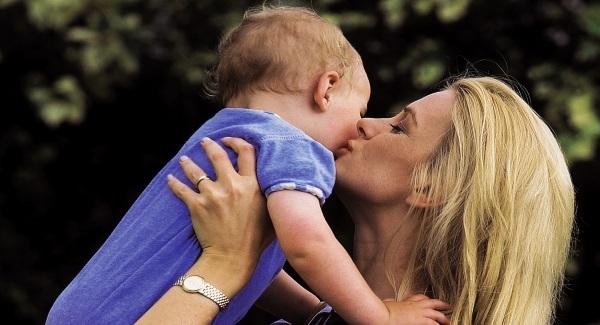
Two-thirds of crèches nationwide have vacancies... 20,000 cots and tubby chairs which need to be filled, writes Victoria White

When it comes to childcare, Ireland is closer to America than Europe

THIS country is beginning to feel more and more like the rogue European state where US companies have more of a say than people.

We are seventh from the bottom of the OECD league when it comes to spending on maternity and parental leave, with only Greece, Israel, Chile, New Zealand, Korea, and Turkey behind us, while the US doesn’t feature at all. Countries at the top of the league, Luxembourg, Norway, Estonia, Finland, and Sweden spend six or seven times as much as we do.

The European countries which offer three years of parental leave include Austria, France, Estonia, Poland, Germany, Spain, Lithuania, Slovakia, Hungary, Finland, Sweden, the Czech Republic, and Norway (if each parent takes a year).

Even the UK offers a legal right to part-time work after a year’s maternity leave. But the only paid option in Ireland for the care of your baby from six months to three years is a place in one of Katherine Zappone’s crèches.

We’re just not European. We’re designing our childcare system to suit American multi-nationals. America is the only country in the OECD which has no statutory maternity leave at all and American employers don’t like those long parental leaves one little bit.

Nor does the OECD which did lots of tut-tutting about Austrian womens’ slow pace of return to the workforce after their three years off in their study, Babies and Bosses (2005). The terrible effects of all this slouching around are there to be seen in Austria’s child poverty rate of 8.7%, something of a contrast with the US rate of 23.1%.

The European Commission isn’t too happy about long parental leave either, if you can judge from their pronouncement under the Lisbon Strategy that one third of the under-threes should be in out-of-home childcare — a target arrived at without any reference to any child psychology of any kind. Clearly, Europe wanted to compete with China and India and the US, all places where maternity and parental leave rights are much poorer, and the only way of growing the workforce without letting in people with black faces was to order European mothers out of their homes.

But the European Commission does not determine what Europe is. You can see other values at work in the European countries which have long parental leaves. You can certainly see “pro-natalism” born of an insecurity about low birth rates.

You can see the relics of old Communist social systems. But you can also see the understanding that a child under three requires the kind of intense one-to-one care which is often best provided at home and can’t be provided more cheaply anywhere else.

Nearly all the European countries with three-year leaves pay the parent who stays home. In Norway you get about €670 per month until your child is two if you don’t use State childcare. In Germany you get €390.50 per month until your youngest is three if you have more than one child and you don’t use State childcare.

You can use the leave part-time with a reduction in your allowance or share part-time home care leave with your partner. You can work part-time with your allowance reduced.

Even in Spain where there is no payment you get your job or an equivalent job back at the end of the three years. Your vital work in caring for that tiny child registers on government computer systems.

Unlike here where the parents who care full-time for more than 60% of the nation’s under-threes do not officially exist.

Some of these parental leave regimes long predate the recent wave of international research which stresses the vital importance of that one-to-one care while the brain is forming.

The finding that young babies and toddlers who start in large crèches early and for long hours tend to engage more in anti-social behaviour than home-reared kids in wide-ranging research studies such as EPPE and FCCA (UK) and NICHD (US) made headlines.

But million-selling child psychologist Steve Biddulph is among the few who have tried to explain to the average mutt why this might be in his 2006 book Raising Babies.

Babies are not born with developed brains and those brains only develop optimally in the constant presence of a loving care-giver, it seems.

During the first year the baby’s brain doubles in size and the “Prefrontal Cortex” which regulates behaviour is installed.

During the equally crucial second year the baby learns to store the disapproving face of the loving care-giver and bring it to mind if necessary to stop himself acting on impulse. Or acting “anti-socially”, if you will.

In Ireland we are building our childcare infrastructure in the context of these new research findings and could avoid the mistakes other countries have made. But we’re intent on making those mistakes anyway.

We’re determined to build a vast crèche system long after more civilised European countries long ago started funding parental care and supporting well-resourced childminders for babies and toddlers.

No, sorry, we have already built the crèche care system and it is has failed the market test so we are going to massively incentivise it. During the Celtic Tiger years, from 2000 to 2010, we spent €1 billion on developing crèches, of which over half went to the building industry.

“We got a structure which is not sitting comfortably with the Irish people, centre-based care which a lot of people don’t want”, childcare expert Professor Nóirín Hayes told me in an interview for my 2010 book, Mother Ireland.

In 2001 planning guidelines aimed to force builders to create a childcare place for every 75 houses to facilitate their parents to work.

Crèches were to be built “in the vicinity of concentrations of workplaces such as industrial estates, business parks or any other locations where there are significant numbers working.

The site location and layout of facilities should optimise the opportunities for safe and efficient journeys to and from the workplace of parents/guardians.

This may be achieved by locating the facility close to the entrance to the business park/industrial estate so that parents/guardians would not have to detour past their workplace in order to drop off children.”

Irish parents had different priorities and have continued to favour home care, childminder care or the small, local crèches which are just maxed-out childminders. The Intergovernmental Panel’s report to Government says two-thirds of crèches nationwide have vacancies, amounting to nearly 20,000 cots and tubby chairs which need to be filled.

Zappone’s Single Affordable Childcare Scheme is a massive incentive to a failing industry. Most of the savings young parents make will end up in the pockets of landlords and house-builders, not the builders of babies’ brains.

More in this section

Revoiced

Newsletter

Sign up to the best reads of the week from irishexaminer.com selected just for you.

Cookie Policy Privacy Policy Brand Safety FAQ Help Contact Us Terms and Conditions

© Examiner Echo Group Limited










