General election 2016: Economy rebuilt but more to do
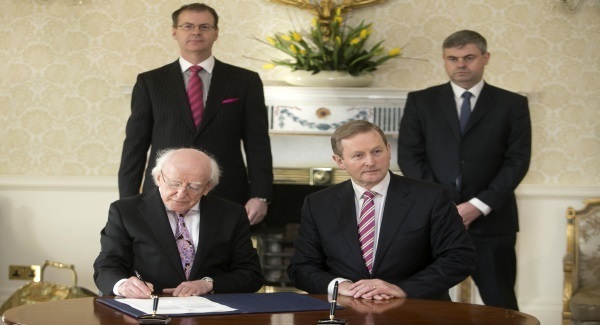
Whether Mr Kenny used the opportunity of his visit to Áras an Uachtaráin to discuss the President’s suggestions on a more ethical society, one focussed on improving public services rather than cutting personal taxes, is not recorded. That may have been a missed opportunity because in a society determined not to relive the boom-and-bust nightmare, that dilemma, that conflict between the individual and society, should be the battleground over which this election campaign is fought.
The evidence pushing this dilemma to the top of the agenda is all around us: college graduates who can barely read or add; HSE child protection services that condemn vulnerable people to a living hell; a housing crisis making ever more people destitute and making it impossible for young families to follow a well-established, motivating life path; a two-tier health system, and this society’s absolute inability to hold the forces that shape it to account — a weakness highlighted by the banking inquiry and one that will limit any inquiry into the foster care home scandal. Those are some of the unresolved issues and there are many, many more — universal healthcare is one — but there have been some spectacular, transformative achievements too, and the coalition is more than entitled to expect that they be recognised and rewarded.
The economic rejuventation, even if it was helped by cheap oil and exceptional money rates, is almost unprecedented. It was certainly unimagineable in Feburary 2011 when Mr Kenny and Mr Gilmour led their parties into Government to rescue a country tottering towards collapse. The next Government will have to be exceptional if it is to surpass that achievement, one that involved the recapitalisation of banking, setting up two pillar banks, new, more humane bankruptcy laws, and the reduction of the unemployment rate from 14.5% to just below 9%. This represents the creation of 140,000 jobs since 2012, an achievement even the most optimistic could hardly have expected — especially in an environment defined by the the bail out bill — €67.5bn — and Europe’s intransigence on the idea of burning bondholders.
It is easy to list the achievements of an administration and balance them with failures but it might be better to judge a Government on its capacity to learn. Two significant issues stand out in this regard. The majority showed they realised water is not free and decided to pay up despite the embarassing slapstick around the establishment of Irish Water. Another transformative moment was the same sex marriage vote. These issues suggested this society is far more willing to embrace change than Government imagines.
One of the changes the next Government must pursue relentlessly is the re-establishment of credibility in our public services. If that can be done then arguments about improving public service funding will be far easier to win and make it easier to further transform a society pulled back from the brink during this lifetime of the outgoing Government.