Western Europe experienced hottest June-July on record 
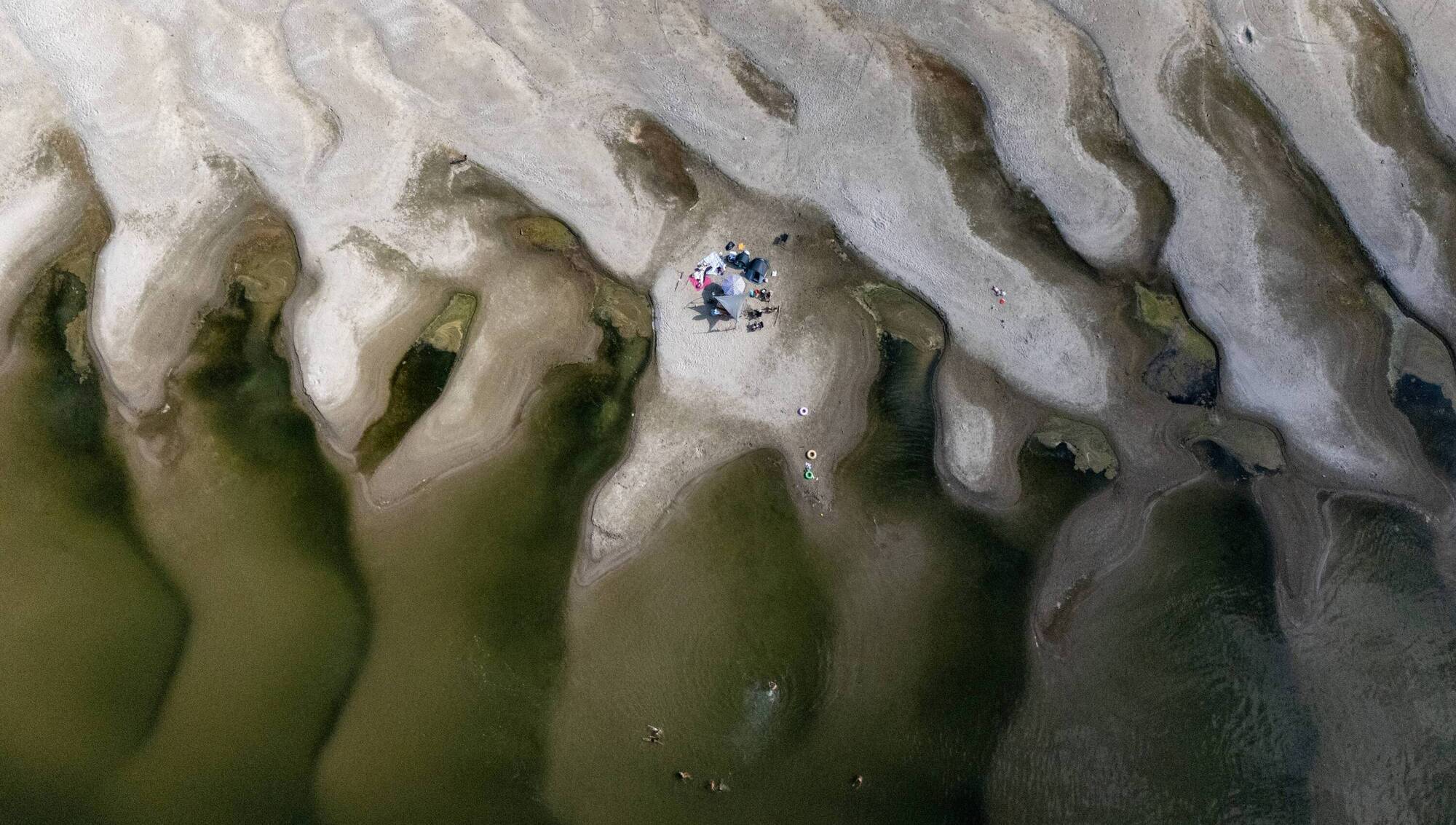
A family with umbrellas on a sandbar uncovered by receding water on the Danube River near Ilok, Croatia, earlier this month. Picture: Marko Perkov/AFP/Getty

A family with umbrellas on a sandbar uncovered by receding water on the Danube River near Ilok, Croatia, earlier this month. Picture: Marko Perkov/AFP/Getty

Western Europe experienced its hottest June-July period on record, and July saw the third and fourth heatwaves since May, marking an exceptional run of extreme heat this summer.

That is according to the latest report from Copernicus, the Earth observation part of the EU’s space programme.

The report said exceptionally high temperatures were also recorded across a large part of the tropical Pacific, where El Niño conditions are present and forecasted to strengthen further in the coming months.

“Around Europe, record high [global sea surface temperatures] along the Atlantic and western Mediterranean were associated with widespread strong or severe marine heatwaves, affecting coastal communities and ecosystems,” the report said.

The average global sea surface temperature for the extra-polar ocean was the highest on record for July, at 20.96C. This surpassed the previous July record of 20.89C, set in 2023.

The global average surface air temperature for the month was 16.9C, which was 0.67C above the 1991-2020 average for July and 1.47C above the estimated pre-industrial average for 1850-1900.

Over Europe, last month was the 11th-warmest July on record, with an average temperature of 20.49C. This was 0.66C above the 1991-2020 average for the month.

The centre said that the average temperature for June and July in western Europe was the highest on record, at 21.62C.

This was 2.79C above average and surpassed the previous record set in 2022, reflecting the exceptional persistence of heat since the start of summer.

Western Europe also experienced its third and fourth heatwaves since May last month, with the report describing the period as “an exceptional run of extreme heat this summer”.

“Much of the region also saw the widespread dryness observed in May and June persist and intensify, with exceptionally low rainfall and/or soil moisture reported for France, Spain, parts of Germany, and the UK,” it said.

River flows were much lower than average, or exceptionally low, across the affected regions. The Seine, Rhine, and Danube were particularly impacted, affecting water supply, irrigation, and energy production in several countries.

National agencies in France, Spain, parts of Germany, and Britain also reported exceptional to record deficits in precipitation and/or soil moisture.

In western Europe, moisture levels were significantly lower than those recorded in July 2022. That was the last summer in which the region experienced severe drought.

The wildfire in Niebla (Huelva) on August 8. More than 4,000 hectares  have been affected. Picture: Clara Carrasco/Europa Press/Getty

“The dry conditions coincided with widespread heatwave conditions across much of western Europe and were conducive to exceptional wildfire activity in western Europe, in terms of burnt area and emissions,” the report said.

“Other drier-than-average regions included parts of southern Scandinavia and a large area to the east of the Caspian Sea.”

Copernicus atmosphere monitoring service director Laurence Rouil, said climate change “is increasingly bringing the kinds of hot and dry conditions that favour large, high-intensity wildfires in southern Europe while extending the fire season northwards”.

“Larger fires produce more smoke and inject it higher into the atmosphere, meaning it can travel further and impact air quality not only locally, but across the wider region,” said Mr Rouil.

“Countries that experience relatively few wildfires may be increasingly impacted by long-range transport of smoke, even if they are thousands of kilometres away.”

Samantha Burgess of the European Centre for Medium-Range Weather Forecasts said persistent high-pressure systems which “trapped heat over western Europe” led to extreme temperatures which “amplified widespread drought”.

“As soils dry out, they lose their ability to provide natural cooling, allowing heat to build more readily. This is a clear example of how climate change is intensifying heat extremes, with heat and drought increasingly reinforcing one another.”

Check out the Irish Examiner's WEATHER CENTRE for regularly updated short and long range forecasts wherever you are.

More in this section

Lunchtime News

Newsletter

Get a lunch briefing straight to your inbox at noon daily. Also be the first to know with our occasional Breaking News emails.

Cookie Policy Privacy Policy Brand Safety FAQ Help Contact Us Terms and Conditions

© Examiner Echo Group Limited