Plenty of hoopla about Hoopoes as they treated birdwatchers in 2015
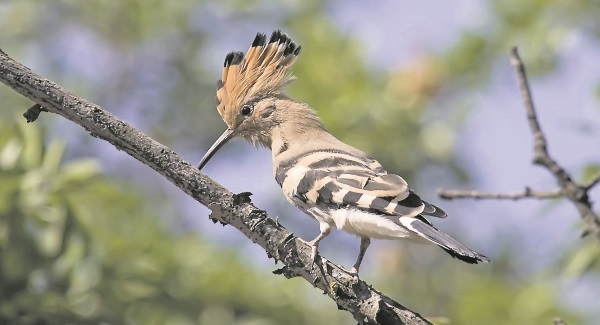

Birdwatchers will remember 2015 as the year of the hoopoes. 
Plenty of hoopla about Hoopoes as they treated birdwatchers in 2015

A few of these glamorous birds turn up here annually but, this summer, they arrived in force. Not since 1965 has there been such an invasion. The birds probably got lost while migrating from Africa to mainland Europe. Having overshot the runway, some landed in Ireland.

Hoopoes tend to be loners. Reports of two or three birds together raised hopes that some of the visitors might nest, adding an exotic new species to the Irish breeding list.

With the onset of global warming, hoopoes may soon find our climate more to their liking. They nested in Cornwall in the late 1960s and in Sussex in 1971. In 1934, a pair took up residence near Cappoquin, in Co Waterford, but no nest was found. A juvenile was reported shot that autumn but the carcass wasn’t shown to anyone competent to identify it.

Alas, no reports of nesting have surfaced this year, nor have any youngsters been seen on autumn passage. For now, the hoopoe remains a ‘vagrant’ to Ireland.

With its Native American-type head-dress, zebra-like black and white striped wings and a curlew-style downward curving bill, the hoopoe rivals its distant relative, the kingfisher, in the glamour stakes. The fluttery flight, on large rounded wings, gives the impression of a starling-sized moth. It’s highly manoeuvrable, however; so conspicuous a creature must be a skilled acrobat if it’s to evade its enemies.

The bird’s song is a repetition of its name ‘hoo-hoo-hoo’. Low-pitched, though not loud, it still carries well. Though wary, the hoopoe is not that shy of people; visitors to rural France, Spain or Italy will know the bird. I encountered one, which had lost an eye, in a French campsite. Creeping up on its blind side, I caught it. The bird stood little chance of evading the local sparrow-hawks and cats, so I considered bringing it home to keep as a pet. As customs officers at Rosslare might not be keen on the idea, I left the poor creature to take its chances.

Holes in trees and in the walls of old farm buildings are favoured nesting sites. Untidy birds, the area around the nest becomes a mess and the pale blue eggs soiled. The bird has a chemical weapons system; the preen glands of the mother and nestlings swell up with a foul smelling liquid which is sprayed, skunk-like, at intruders.

The hoopoe is popular with Europeans but its habit of probing dung for creepy-crawlies has not endeared it to the Arab world. It is listed there as an ‘unclean’ animal. The ancient Egyptians and Minoans thought otherwise, however; depictions of this crested bird adorn their temples and monuments.

Just why the hoopoe should be so gaudily attired is something of a mystery.

It belongs to an order which includes bee-eaters and rollers, some of the world’s most colourful creatures. Drakes and male finches are conspicuously marked so that the females don’t choose a member of the wrong species at mating time. Peacocks and roosters are glamorously attired because males compete for the favours of females, who reward the best dressed suitors. There is no risk of hoopoes breeding with the wrong species; there’s nothing remotely resembling them around. Nor is male vanity likely to be an issue; both sexes dress up.

Perhaps being conspicuous is a defensive measure. The bird’s flesh may be distasteful or slightly poisonous. Wasp-like, the colourful plumage might warn off would-be predators. Hoopoes fan their crests immediately on alighting, which may be a signal to potential enemies in the vicinity.

We should be cautious, however, of such interpretations. A behaviour once thought to be directed at birds of prey, proved to be incorrect; a hoopoe will lie on the ground with its wings and tail-feathers spread out conspicuously. The bird isn’t displaying; it’s sunning itself, absorbing as much heat as it can.

More in this section

Revoiced

Newsletter

Sign up to the best reads of the week from irishexaminer.com selected just for you.

Cookie Policy Privacy Policy Brand Safety FAQ Help Contact Us Terms and Conditions

© Examiner Echo Group Limited