Power has gone to President Erdogan’s head and Turkey suffers consequences
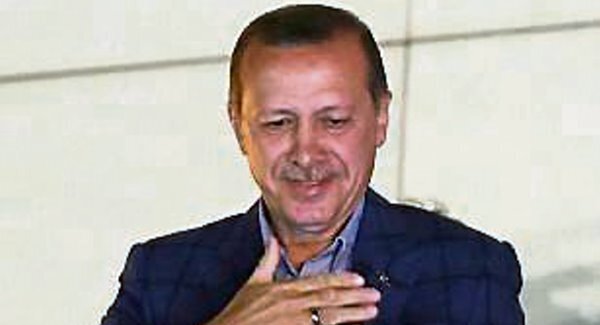
DON’T believe a word I read about Turkey in the Western press anymore. And there’ll be lots of them this weekend as the G20 kicks off on in the Turkish coastal resort of Antalya. The country is on the frontier of some of the biggest humanitarian and security challenges the world faces, after all. It has also just elected into office to rule alone the AK Party whose reviled face in the West is President Recep Tayyip Erdogan.
To read some of the liberal Western press you would swear Erdogan was an Islamic fundamentalist who had dragged a progressive, secular republic into the dark ages. “Turkey’s going the way Egypt went”, announced one of my friends a while ago. It was a telling comment, particularly as the West supported the coup against the democratically elected Egyptian government of the Muslim Brotherhood. You can have too much democracy, after all.
My trendy leftie friends think Ataturk was a hero because he founded a “secular” Republic in 1923. A republic so secular, friends, that its founder is described in the Turkish Constitution as “immortal leader and unrivalled hero”. It doesn’t really matter who or what you are in the Middle East if you serve Western interests. Ataturk’s repressive, militarist republic was successfully spun in the West as a bastion of liberalism because his army protected European borders.
But his state was in truth so “secular” that it was illegal to insult Ataturk or his legacy. It was on the basis of this law that Nobel Prize-winning novelist Orhan Pamuk was indicted in 2006. The AK government supplies him with a bodyguard because the dangerous side of 70 years of a brutal military regime still linger.
It was Erdogan’s government who diluted this “blasphemy” law in 2008 making it a crime to insult the Turkish nation rather than Turkishness itself. That’s just one example of the many ways in which Erdogan represented a decisive break from the past for Turkey. But none of that mattered in the West because he wasn’t their patsy and so he was lambasted for being a Muslim.
Ataturk’s republic was defined by a concocted Turkish ethnicity, despite the diversity of the population. It had that similarity with other 20th century regimes from Stalin to Hitler and Franco. This is why the Kurds have suffered so much under the republic. They were even described as “Mountain Turks” and one military manual apparently explained away their name “Kurd” as the sound which boots make on the snowy mountains. After the military coup of 1980 the repression intensified and this led to the foundation of the PKK in 1984.
Recognition of Kurdish identity and language, which began in the 1990s, has been ramped up under Erdogan. In 2009 a TRT 6, a national TV channel in Kurdish, went on air. Since 2009 Kurdish has been taught in universities and in 2012 it can be taught in schools if there is enough demand.
Yes, Erdogan caused a massive furore by instituting the teaching of Ottoman Turkish in religious colleges for would-be imams and making it optional in schools. He said: “They will say we are teaching our children how to read gravestones. But a history and a civilisation is lying on these gravestones.” He was right. Ataturk had gone at the Turkish language with a crowbar, cutting out the Arabic and Farsi words and substituting them with French and German. The Arabic alphabet was replaced with the Latin one making it impossible for Turks to read their recent past.
Erdogan began to make it OK to be a Muslim in Turkey, a country which is 95% Muslim. Under the republic the UN had reported cases of women with headscarves being denied medical care. Under Erdogan the human rights abuse which was constituted by barring Muslim girls from high school and college if they wore a headscarf was lifted in 2011 and from last year girls over 10 years old can cover their heads in high schools. The ban on head-scarves in State jobs was lifted in 2013, though it still applies in the military and the judiciary.
There is a strong whiff of early Fianna Fáil in Erdogan’s early rule in that he empowered a class which had never before had any power. And there is more than a hint of Lemass in the economic turn-around which has happened in Turkey under AK. I am strongly aware of the rise in Turkey’s fortunes because as a teenager I rocked up in Izmir in the wake of the 1980 military coup and found it a wonderful but primitive country run by goose-stepping soldiers with braided epaulettes. The contrast with today is astonishing — and makes Erdogan’s re-election on November 1 less than astonishing.
The power seems to have gone right to his head. This week I canvassed many of my former contacts in Turkey and they all described him as “autocratic”. Veteran professor of literature, journalist, and a voice of the Gezi Park protest Murat Belge says Erdogan is “off his rocker”. This former Marxist, who was imprisoned under the republic, says he supported many of Erdogan’s reforms until the crackdown on the Gezi Park protest. Now he thinks the man has an acute “superiority complex and inferiority complex” which we agree wasn’t difficult to achieve growing up a poor Anatolian whose religion was virtually proscribed.
Sevgi Akarcesme, the independent-minded columnist with Turkey’s biggest circulation newspaper the Daily Zaman and its English-language twin, Today’s Zaman, describes the recent curbs in journalistic freedom as “unprecedented”. Two newspapers were shut down and two TV channels were shut down while on air. Asked if the election was rigged, she says you don’t have to rig the election if you silence your critics.
She lambasts German chancellor Angela Merkel for visiting Turkey on October 18 in advance of the general election and giving Erdogan legitimacy “just for the sake of Western issues”. Turkey’s initial response to the refugee crisis on its borders has been impressive but there are now 2m Syrian refugees in Turkey.
The EU’s only fear is that they’ll come west. Merkel pledged to re-activate Turkey’s EU membership application and visa-free travel between Turkey and Germany if Turkey acts as a buffer zone. So nothing has changed. Middle Eastern states only matter in terms of their service to the West. Ataturk’s brutal militarist republic was upheld because it patrolled its borders as part of Nato and could be sold to Western people as “secular”. Erdogan is condemned because his wife wears a headscarf... until the West needs him to get out with his gun to protect Western interests.
We can believe nothing we hear in the West because all we hear is what the West needs us to hear. This toxic, Islamophobic relationship has far more chance of sending Turkey into the dark ages than Islam ever had and snuffs out all chance of achieving a peaceful co-existence between East and West.