A parody of language and lexicon that literally gets on our nerves


HE HAD stripey knickers and wasn’t animated, so it was a miracle that Daithí Lacha was ever made into a TV series, but he was, in the 1960s.
The commentary to the series was in Irish, and so a generation of kids was forced to watch the frame-by-frame non-event that was David Duck’s life on the basis that it would render them bilingual, which it never did.
Nor, to be brutally honest, did it entertain them. Fine, this was the era of Mr Ed, so we’re not talking high art, here, but even with that caveat, the fact is that Daithi Lacha made Bosco look as subtle as a Chekov play.
The man behind it, Flann O’Riain, also drew newspaper cartoons under the name DOLL, and he maintained that whenever he ran out of ideas, he would pick up his paperback copy of The Devil’s Dictionary because, by opening it at random, he would encounter a word definition so skewed or amusing, it would jolt him out of cartoonist’s block.
He evangelised on behalf of the book, persuading me, when I interviewed him for a radio programme, to invest in a copy. I still have it.
The original Devil’s Dictionary started in 1881 as an occasional satirical newspaper series written by Ambrose Bierce, a soldier and writer born in Ohio. Known as Bitter Bierce because of the venom of his literary criticism, Bierce, having screwed up most of his relationships, set off for Mexico to cover the war there in 1913 and evaporated.
Nobody knows what happened to him or even precisely when he died. He left behind fine reportage of the wars in which he had fought and a considerable body of fiction which led to his attaining the reputation of finest short story writer of the 19th century.
The Dictionary has been in print for more than a century, despite doing an initial sales faceplant because the publishers, who were a small bit religious, felt they’d be singled out for a thunderbolt if they put Satan in the title.
Instead, it came out as The Cynic’s Word Book, which did it no favours at all, because it joined a bunch of books with “Cynic” in the title, a bit like the Dummies series more recently. None of the cynics series was any good, so it may be surmised that joining this literary dead march did nothing to sweeten up Bitter Bierce.
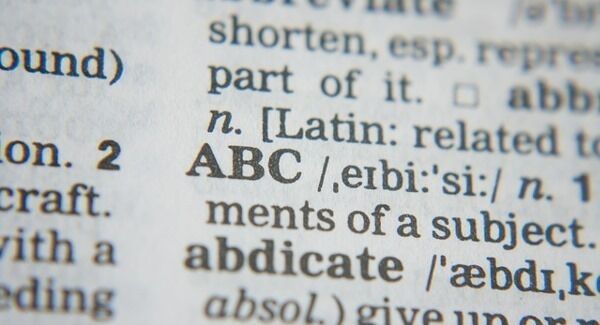
Some of Bierce’s definitions, read in the 21st century, are squirmingly embarrassing. Think racist, sexist, and ageist — but think most of all of a man of his time. What was correct back then has not always sustained its correctness. Some of the definitions he included, however, have taken on a life of their own, and are often assumed to be the work of that other great quote-meister, Mark Twain.
A “Bride,” for example, Bierce defined as, “A woman with a fine prospect of happiness behind her.” Similarly, his definition of a bore is relatively mild: “A person who talks when you wish him to listen.”
In his Dictionary, Bierce included great quotations from great writers and occasional parodies of their work. He also veered from extreme brevity to extreme length in his definitions. His negative cast of mind led to defining a politician as: “An eel in the fundamental mud upon which the superstructure of organised society is reared.
When he wriggles he mistakes the agitation of his tail for the trembling of the edifice. As compared with the statesman, he suffers the disadvantage of being alive.”
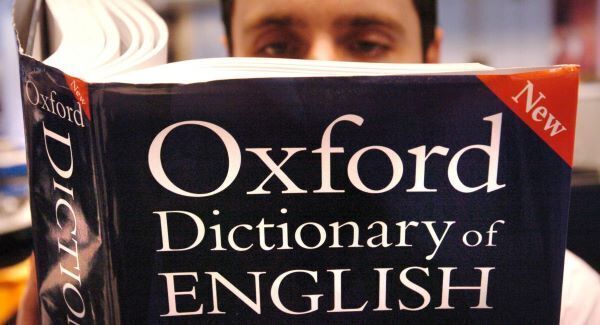
Since Bierce’s time, the lexicon has been so enriched by time and Irishness, putting together an Irish version was suggested to me about a year ago. The suggestion came in the main from people driven nuts, either by new words they don’t know and don’t like, by old words being misused (think of the radio ad which repeatedly demands that we eat “samwidges”, whatever the hell they are), or by words or phrases they want to redefine because of the changing context.
Into the latter group goes the old nursery rhyme ‘Baa, Baa, Black Sheep’, which has attracted the attention of some nutcase who doesn’t want that B word used, even though it’s perfectly obvious in the nursery rhyme that nobody is showing any prejudice towards the dark sheep.
Au contraire, the one addressing the sheep wants its wool for three different, evidently cherished people, including a little girl who lives down the lane. But still, this anti-black-sheep looper wants the title and the line changed to ‘Baa Baa Pink Sheep’.
When I embarked on creating a new, Irish Devil’s Dictionary, I wanted to call it Baa, Baa, Bullshit, but my publisher said the booksellers didn’t like it. So, when it comes out before Christmas, it will have the milder title Baa, Baa, Pink Sheep. Look out for it. It will be the perfect stocking-stuffer and cheap at the price.
When it comes to words constantly misused, one of the most prominent, right now, is “literally”. If you say that you would literally die if you got to meet Hozier, you are wrong. You might metaphorically die if you met him, although I can’t see why you would.
Most people now say “literally” when they mean “figuratively” or “metaphorically”. The glorious exception happened just before the weekend, when Judge Tom O’Donnell quipped in court that it was “literally a case of money laundering” when he heard evidence of two guys being caught in the act by An Garda Siochana.
One of them was deploying a digger. The other was feeding the damp banknotes dug out of the soil into a spin drier, all the better to dry them off before shrinkwrapping them in plastic. Now, that’s money laundering. Literally.
Some of the words we’re used to have been discarded. Take “diet”. Nobody now talks about going on a diet. Instead, they announce, with lamentable grammar, that they’re now “eating healthy”.
And some of the words we thought of as positive have turned negative. The rescue cash provided to the poor by the rich? It’s a bailout, and used to be seen as being as welcome as a thrown lifebelt when drowning.
Now, however, it is interpreted as a method of imprisoning and humiliating nations that, without a bail-out, would have seen their civil servants walking the streets, their garbage uncollected and barter temporarily replacing commerce. You’d nearly smack someone offering you a bailout, these days.
Some of the definitions suggested to me reflect the century between Bierce’s time and our own. Pavement etiquette, for exmple, used to require men to walk on the outside of the pavement, nearer the road, in order to take any horse-kicked mud before it reached the woman they were protecting.
Today, the key tenet is: Do not read your texts/tweets while walking, because you endanger yourself and others and make the rest of us want to slap you.
The new book is nearing completion. We’re still open to brilliant definitions, which will properly be attributed and acknowledged. Payment, on the other hand, would be a moot point. As opposed to a mute point, which infelicity is already in the manuscript.
CONNECT WITH US TODAY



Be the first to know the latest news and updates