We don’t need another round of ‘disastrous’ Social Partnership
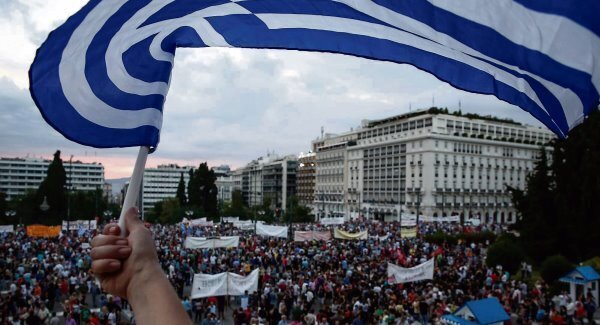

Today Ireland is gawking voyeuristically at Greece to see if it embraces enforced reform.
When the clock strikes midnight, it will either be signed-up or kicked out. The spectacle will be compelling, in the way watching people threatening to throw themselves from window ledges is.
Whatever about their day of history, today in hindsight will be seen as a day of reckoning here, or at least the eve of it. It is the moment when we imperceptibly, but irrevocably change course. Tomorrow a new era dawns. It won’t make much difference at first. Its workings will be hard to understand, and its influence barely perceptible. But it will make a fundamental difference for the worse. Sponsored by the Government supposed to lead us out of the mess, its predecessors allegedly engineered, it is an unlearning of the worst lessons of our own recent history. But that’s life. The more things change, the more they stay the same.
Tomorrow in Dublin Castle an embryonic monster is reborn. Named the National Economic Dialogue, it sounds like a perfectly respectable quango. But it’s not. It is, by any other name, the former, and by its end, utterly disastrous Social Partnership process. There is only 24 hours to go before we retrace our steps back over the Rubicon to a past we promised we would never revisit. What in hindsight, will crystallise tomorrow is the full, formal recolonisation of the public interest by the public service. In my definition of the public service I include the political classes as an adjunct. Social partnership, at the end of the day succeeded in facilitating the suborning of politics and public service, one by the other. It simultaneously ensured that both remained effectively unaccountable, in an unreformed system. Tomorrow that same, essentially unreformed system returns to basecamp at Dublin Castle, to begin again.
At the moment Greece embraces the most daunting reforms in its history, or disintegrates, we are abandoning the short-lived spurt of change that too briefly animated this country.
That much is explicit in the agenda for tomorrow’s gala re-opening. “It is hoped to have a genuine and robust dialogue which will examine the realistic options open to the Government within the available fiscal space of around €1.2 billion to €1.5 bn”. So there.
Government and unions, gather again for the divvy out. Public service unions have already received their first cut of largess. In a population where half of all private sector workers have no pension at all, and more are grossly under-provided for, they must before they can provide for any pension themselves, contribute an increase to retired public servants. It is a vortex where entitlement meets civic amorality.
The unfolding lesson of the banking inquiry, is how little people in positions of public power knew, commensurate to their responsibility. To-date, there is no evidence of wilful collusion, let alone corruption in either politics or the public service. The glaring wrong, over years, was incapacity, a lack of knowledge and omission. Partly down to an unfit institutional architecture, it was also due to prevailing culture. The embedded culture of politics and public servants, is to fulfil responsibility up to the line where blame can be avoided, and to simultaneously use that same line, as a readymade defence.
One of the insidious, least traceable legacies of the social partnership apparatus, was its shielding of power from responsibility. By grouping nearly all who exercised it, under a collective ‘process’ an already unclear demarcation of responsibility further eroded. That was accentuated by the access of trade unions, to the political and administrative leadership of the public service. That leadership benefited disproportionately from successive agreements on pay and pensions, while in theory their role was to represent the public interest. But over time, the interest of an insider caste, those on the public payroll, suborned the public interest and democratic accountability together.
In the past week politicians’ pensions have provided a comic episode. As part of the Lansdowne Road Agreement, an across-the-board increase to public service pensions is due, via a reduction to the pension levy. Ignoring that this levy reduction further increases inequality with private sector pensions, and that the vast bulk of expenditure on public sector pensions is on retirees far from the top of the scale, most media coverage focused on a handful of politicians. Like others at the top of the system, they benefit most, but are only a small proportion of the most handsomely rewarded pensioners. But they are known names.
Politicians of all stripes are held in low esteem. So why not have a go? Nothing to lose, except sight of the bigger picture.
Taoiseach Enda Kenny entered the fray and asked those few who happened to be politicians to hand back the increase, his Government had just awarded them. Some agreed, others gave the two fingers to his request. They were absolutely right. The Landsdowne Road Agreement, mutating from tomorrow into The National Economic Dialogue is designed to give preferential treatment to one class of pensioner, over another. Having made that a core electoral calculation, it’s a bit rich to try and deflect that fact, by demonising a few. No they shouldn’t be getting pension increases. But the issue is systemic. That the public conversation has fallen headlong into the lure of running after a political decoy, underlines our poverty of policy analysis. It also underlines the lack of knowledge as to how influence works. It is odourless, colourless and if inhaled in an enclosed space, is eventually deadly.
Our system is, after all we have been through, largely unreformed. The multi-seat constituency remains a key political driver of short-term, short-sighted policy. It works exactly like huge rewards for short-term gains, as distinct from long-term value did in the banks. The Constitutional Convention, which might have driven major institutional change, was a side show, and a failure. That fault is as much political as it was the conventions. But the moment has passed. The opaque relationship between ministers and senior civil servants, remains as murky as ever in terms of aligning personal responsibility, as distinct from pooling influence unaccountably, which is its hallmark. The introduction of Freedom of Information, a good thing, saw the virtual end of frank written advice to ministers. New and welcome lobbying legislation which comes into force on September 1, astonishingly exempts trade union negotiations from its scope. But that is where the big money is, and the real influence lies.
At the height of its pomp, Social Partnership not only replaced the national parliament as the seat of decision making, it insidiously undermined the constitutional role of the cabinet. In politics, over time, process always trumps either policy or personality. Establishing this process again, in a fundamentally unreformed polity, is reckless and will lead to profoundly wrong outcomes.


CONNECT WITH US TODAY



Be the first to know the latest news and updates