Colin Sheridan: Unexpected Cold War era book shows little has changed

The construction of the Berlin Wall in 1961. During the Cold War, Soviet communism, meanwhile, attracted many serious intellectuals precisely because the failures of capitalism and empire seemed so glaring during the 1930s and 1940s.

There are books you buy because everybody else is reading them. There are others you inherit. If you’re anything like me, there’s a stack, left unread, on bedside lockers for a decade because you were in your 20s and trying to become a person.
And then there are books that arrive in the post with no explanation at all. A few weeks ago, a small parcel came through my letterbox. Thin enough that it bent slightly in the middle. No note. No card. No flourish.
Inside was an old paperback: stained, sepia-toned, weather-beaten around the edges, smelling faintly of dust and attic air and the strange sweetness old paper acquires after 50 years. The spine was cracked and the pages had gone soft with age.
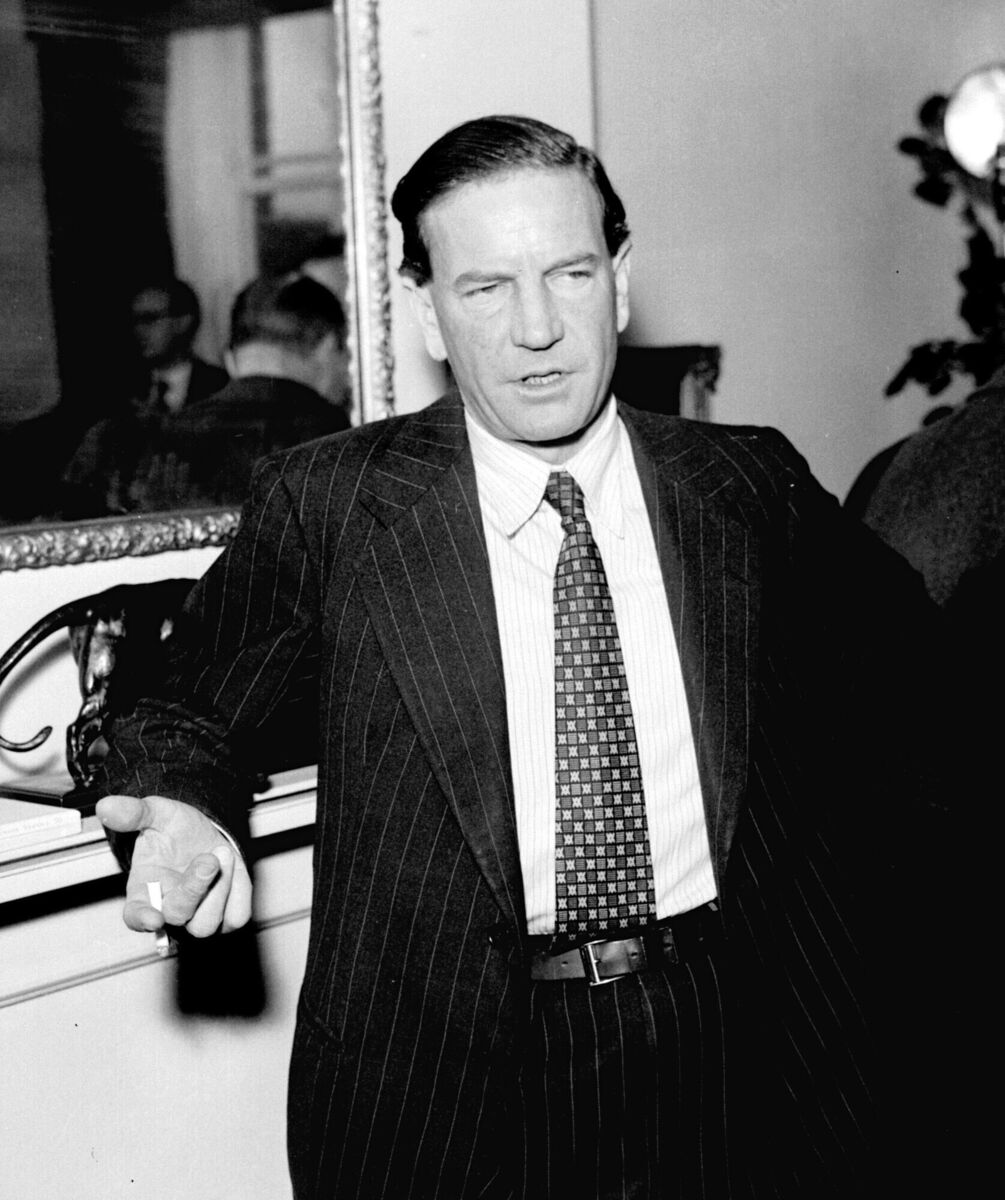
The book was by Kim Philby. I had never heard of him. But I knew immediately who had sent it. A friend of mine from Sydney, somebody with whom I had spent long evenings sipping beer talking about music and writing and our neighbour who didn’t care for their dog so well.
We talked about plenty of other things, too — bureaucracy, espionage, history, loyalty — things men discuss when they are really discussing themselves.
He had simply posted the book and left it at that. No demand for acknowledgement. No Amazon tracking updates. No digital friction whatsoever. Just the quiet confidence that a thing worth sharing could travel slowly across the world and eventually arrive in an old friend's hands.
We have almost lost that now. Everything today arrives announced. Every interaction is preceded by notifications, blue ticks, alerts, links, previews. Gifts are photographed before they are opened. Books are reduced to recommendation algorithms and screenshots and affiliate links.
But an unexpected book in the post still possesses a kind of old-world magic. Particularly an old book. Because old books carry evidence of previous lives.
Somebody else read this one on trains or in bed or in waiting rooms. Folded corners and a scribbled note. Somebody underlined passages. Somebody carried it through rain at some point and left a faint tide mark across the top of page 83.
And is exactly the sort of book that benefits from time. Philby, as I quickly discovered, was not merely some obscure memoirist.
He was one of the most notorious spies in British history: a senior British intelligence officer who spent decades secretly working for the Soviet Union during the Cold War. One of the infamous Cambridge Five. A man who embodied betrayal so completely that his name became shorthand for institutional treachery.
Yet the book itself is strangely calm. There are no grand confessions. No dramatic prose. No operatic self-justification. He describes espionage, deception, ideological warfare and geopolitical manipulation in the same tone another person might use to discuss bus timetables. And that is precisely what makes it so compelling.
The extraordinary thing about institutions — governments, newspapers, corporations, intelligence services, universities — is that from the inside they rarely feel dramatic. History imagines great moments as thunderclaps. But most systems actually run on paperwork, routine, meetings, HR and people trying not to create inconvenience for themselves.
Philby understood this perfectly. His great advantage appears not to have been genius but fluency. He understood the culture of the British establishment so intimately that he could disappear inside it.
The right schools. The right accent. The right clubs. Elite institutions often imagine themselves protected by intelligence when in fact they are protected mostly by familiarity.
It all feels uncomfortably current. Reading Philby in 2026 is eerie because so little has fundamentally changed. The ideological banners are different now.
The technologies are infinitely more advanced. The mechanisms of influence are digital rather than analogue. But the vulnerabilities remain remarkably constant.
The Cold War itself now feels oddly quaint in retrospect. There is something almost antique about the image of spies passing envelopes in European parks or coded radio broadcasts crackling through the night.
Compared to today’s world of cyberwarfare, algorithmic propaganda and mass surveillance capitalism, Philby’s espionage can seem almost artisanal.
And yet the underlying questions remain identical. What do people owe institutions that may themselves be morally compromised? How easily can idealism mutate into rationalisation? At what point does loyalty become blindness?
One of the intriguing aspects of Philby’s story is that he genuinely appears to have believed in something larger than himself. That does not absolve him, obviously. But it complicates him.
The Cold War was morally murky in ways contemporary re-tellings often flatten. Western institutions were hardly innocent. Soviet communism, meanwhile, attracted many serious intellectuals precisely because the failures of capitalism and empire seemed so glaring during the 1930s and 1940s.
Philby emerged from that world: a generation for whom ideology carried the emotional force religion once did.
Today we tend to imagine ourselves above ideology because our convictions arrive dressed as personal branding, cultural alignment or political temperament. But human beings remain extraordinarily vulnerable to systems that offer certainty, belonging and moral clarity.
That has not changed at all. Nor has the strange theatre of elite British life that runs through the book. There is something deeply familiar in Philby’s descriptions of committees, conversations, understated manoeuvring and institutional inertia.
Anyone who has spent years inside any large organisation will recognise it immediately. Real power often hides inside banality.
The most important decisions are rarely announced with cinematic music. They happen within conversations, in accumulated assumptions, in who gets trusted automatically and who never quite enters the room.
Philby’s genius as a writer is that he notices this. He understands that institutions are ecosystems of habits before they are structures of principle. And because he writes so plainly, without flourish or emotional overstatement, the absurdity becomes even sharper.
There is also, undeniably, self-mythology at work. Philby is managing his image throughout. You can feel him editing himself in real time, carefully curating his own historical afterlife. But oddly, that too makes the book more interesting rather than less.
Memoirs are always acts of concealment as much as revelation. What people omit tells you as much as what they confess.
And perhaps that is another reason the book feels so contemporary. We now live in an age where everybody curates themselves constantly. Everybody produces edited versions of their motives, loyalties and contradictions for public consumption.
Philby simply did it with more elegance than most.
By the end of the book, I realised the gift itself had become inseparable from the reading experience. A recommendation algorithm could never have delivered this properly. Neither could a podcast clip or a social media thread.
The physical object mattered. Its age mattered. Its silence mattered.
A friend saw something in a book written decades ago, carried that thought across continents, and eventually passed it quietly onwards.
That still feels like one of the most civilised acts available to us.
Not content-sharing, not discourse, and not measurable engagement. Just the simple human instinct to place a book in somebody else’s hands and trust that, eventually, the conversation will continue.

CONNECT WITH US TODAY



Be the first to know the latest news and updates