Ian Paisley: The bigot who died a peacemaker
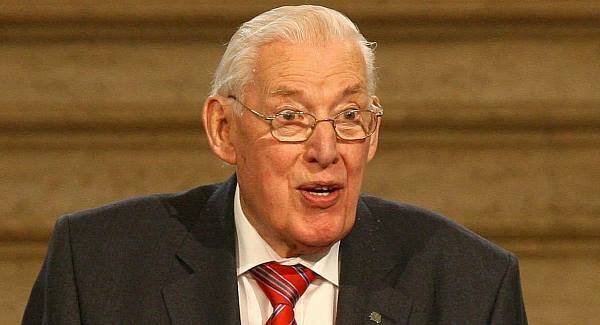
Nearly every society accepts that if a person recognises that they have done great wrong and that if they change their behaviour profoundly, they might be seen in a new light and ultimately forgiven.
In the last century there can hardly have been a person born on this island who seemed more certain of his rightness, of his cause, of his extreme beliefs, of his no-surrender political position and his hatred of Catholics and Catholicism than Ian Richard Kyle Paisley was for the great majority of his amazing, complex, and contradictory life.
He was, alternatively, a dangerous, proactive bigot, a rabid demagogue, a tyrant, a rabble-rouser and hate-driver. He encouraged and offered comfort to men of violence and must share responsibility for the bloody consequences of their actions.
He supported the intolerance and the fascist behaviour of some unionist-dominated local authorities that made it absolutely certain that the Troubles in the North would be prolonged, murderous, and almost intractable.
He was also the founder and figurehead of a fundamentalist church hardly at ease in the contemporary world, a position confirmed by his and his co-religionists’ homophobia.
He was also a fixture at the top of the poll in nearly every election he stood in. Indeed, he got the highest personal vote in all of Europe in one Berlaymont election. That he used that spectacular endorsement to attack Pope John Paul when he visited that parliament shows the very dark side of his populism. That embarrassing tirade, just one of so many, was an affront to the spirit and ultimate purpose of democracy. Like so many blind religious zealots, his behaviour contradicted the values and principles he imagined he was ordained — if not consecrated —to champion.
When his death, at 88, was announced yesterday it was easier, and probably more correct, to focus on the redeemed, avuncular, Chuckle Brother Ian Paisley, the man who, little more than a decade ago recognised that the society he and his opponents — some as hateful and dangerous as he was — lived in would never be at peace until enmity became cooperation.
Many people believe a near-death illness in 2004 was the catalyst for Mr Paisley’s utterly unpredictable about-turn, but whatever provoked it, and he always refused to explain it, it was central to the conclusion of the peace process and the relative stability this island enjoys today. No other unionist leader was at that time capable of leading that community to the peace talks table — or of keeping it there.
Indeed, that achievement was so great that it is interesting, and frightening in equal measure, to speculate what might have happened had Mr Paisley not been so very ill in 2004. Would his stubborn and destructive opposition to any kind of concession have mellowed or would it have remained a barrier and a driver of fear?
But the fact is his legacy remains unambiguous — he did change profoundly, he did concede, he did lead his tribe to a place better than the one they were in. He stopped roaring hate. He did play a decisive part in building the peace, but that acknowledgement must be tinged by an ugly reality — had he, and had many others on the far side of the peace process table, not turned their back on democracy and its great, undeniable power to change the world three decades earlier, then the need for the do-or-die peace process might never have arisen.
That shadow is deepened too by his reluctance, though he was offered the opportunity by several biographers and journalists, to express regret for the excesses of the early part of his career, excesses that often led to attacks on Catholic communities that were little short of pogroms.
It is a human tragedy that so many people with the force and charisma needed to lead, seem incapable of accepting that force and violence always end in either failure or talking. He was sadly another example of a leader who did not embrace rational, peaceful processes until a Pauline conversion convinced him permanent opposition means permanent isolation and permanent failure.
His life does offer hope, though maybe not in a way he might have intended or imagined. His deep, unbending and often intolerant conservatism is reflected right across this island but when he found the courage to step outside its shackles he realised the greatest public achievement of his life.
There is a powerful lesson in that for many of us.