Jennifer Horgan: RTÉ documentary shows Travellers are a complex and diverse bunch
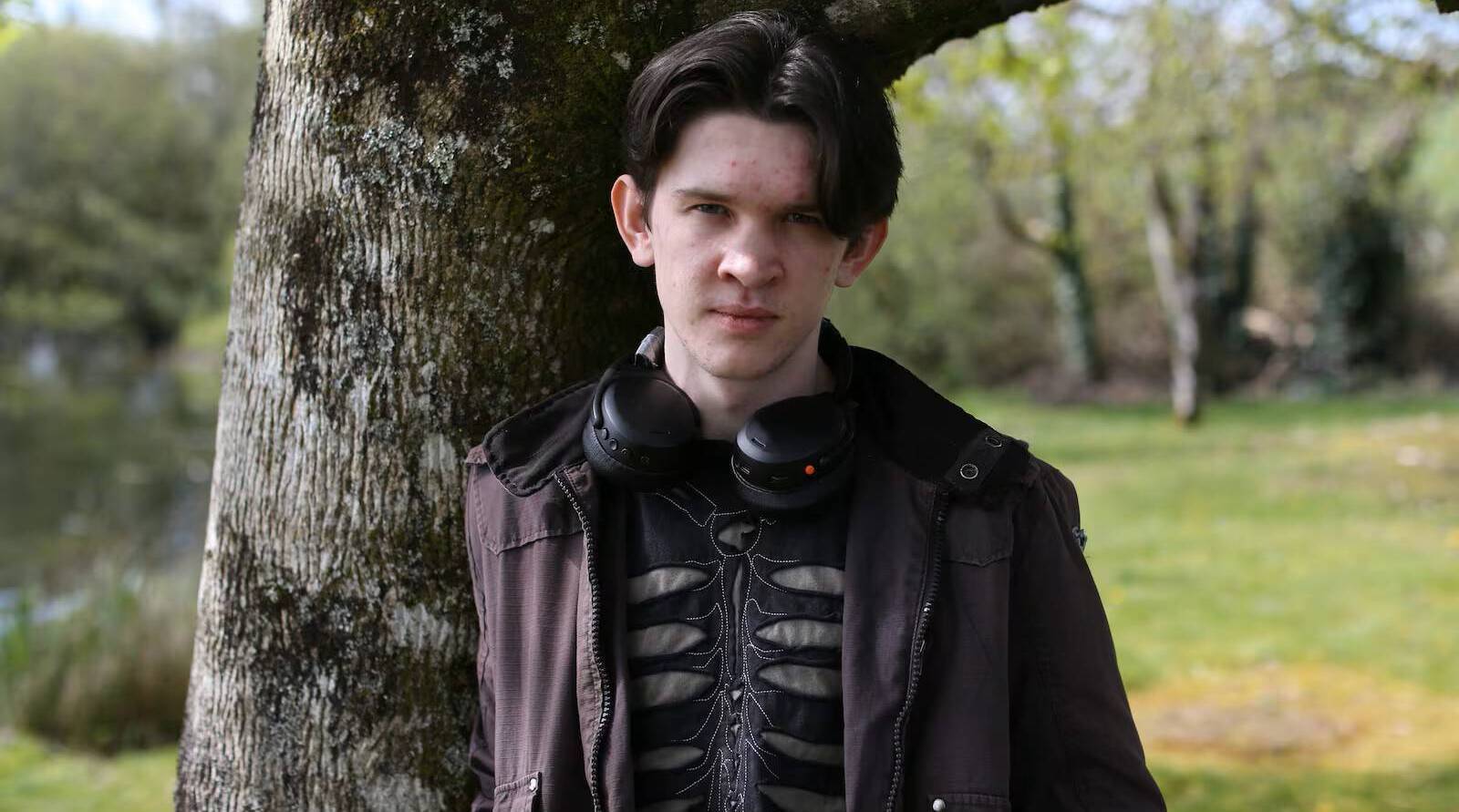
Johnny Collins from Alex Fegan's 'A Traveller Family' documentary. He has one foot in the community and one foot out, something he finds difficult. Photo: RTE
There is a convenient pause in traffic when I hear it. Clip clop. Clip clop. I don’t turn, let the sound of hooves come tumbling along Boreenmanna Road behind me. I luxuriate in the clean rhythm, imagining a city before cars. Not long ago they could have been anyone.
When I eventually glance over my shoulder the sight is far from romantic. Inside the small cart is a teenage boy and an older man slumped beside him. The boy, barely a teenager, looks hollow.
That morning, weeks ago, I made a mental note to write about Travellers in this column. If I had written it before now, before watching Alex Fegan’s documentary , it would have been different to what you’re reading.
It would have pleaded for compassion for their community, citing suicide statistics among others. It would have been about ‘them’ as distinct from ‘us’, including a section on their rich cultural traditions, their poetry and song, their language.
And it would have done them a huge disservice.
Fagen’s documentary which aired on RTÉ on Monday night refuses to reduce its subjects to one thing. They speak for themselves, within a family of four generations. At the top of the clan is Old James, a tinsmith who is filmed hammering cups outside a beautifully ornate wagon he built from scratch.
Next is his nephew and his wife, Michael and Catherine. Then there’s Christine their daughter, and Johnny their son, in many ways the focus of the project, and lastly, Christine’s children. Nobody in the documentary is simply a Traveller and nothing else, and plenty of the contributors interrogate what it means to be a Traveller today.
At one point Johnny shares that he is influenced by the Anglo-Irish writer Oscar Wilde, being a gay writer himself. “People have been killed for being gay in the Traveller community,” he tells us. “Gay bashing is a whole thing.” So, Johnny has one foot in the community and one foot out, something he finds difficult.
His mother guides him. “Culture is not static,” she explains. Even if Johnny doesn’t live on the side of the road or fish in the rivers for his dinner, as his father once did, he has been brought up with certain beliefs. She doesn’t diminish their Traveller identity but she happily acknowledges change, variety.
Being a gay Traveller is not the only example of identities crisscrossing in Fagen’s documentary. We see Christine, Johnny’s sister, chatting with her old primary school teacher, recalling the prejudice she faced in his school. Christine is a member of the travelling community and she was also a child in a national school, a different community.
Now she is a single mother. There is a touching moment where she explains that her autistic son is hard work but he is her hard work. Her son is a member of another community too, an identity that shapes their lives in ways that are profound and meaningful.
The Collins family made me reflect on the strengths and weaknesses of identity politics.
People must lean into their identity to secure basic rights and support. Single mothers like Christine come together through organisations like One Family, for instance, a service that helps people parenting alone.
There are other examples of support for Ireland’s community of single mothers. I came across The Old Knitting Factory in Connemara this week — a creative retreat that allows single mothers time and space to be artists. These are both wonderful, tangible communities of care.
But the women who might develop their art in Connemara or pick up a phone for support from One Family are not the same in every other respect. Just as Travellers are not the same. This is the point made by Fagen’s documentary and it’s a point we would do well to apply more generally.
People gather under banners all the time, by race, gender, sexuality, age, political persuasion. But we make a mistake when we forget the diversity within every group.
To give just one example, in the LGBT+ community, sexuality and gender may be different things but gay, trans and other groups all need a community of support, and solidarity is crucial. Their fight is not over, evidenced in Portugal’s decision to ban the flying of the LGBTQ flag in public spaces last month.
But a person can never be represented by one banner alone, not fully. Identity is too complex for that, with loops and crossovers, lines that spiral and intersect.
This point is also made by actress Simone Ashley on the latest season of the Louis Theroux podcast. Ashley stars in the second season of , a show that re-invents Regency London as a place in which race plays no part.
An actress with Indian roots, she explains that she enjoyed the role and doesn’t always want to play parts about her heritage. She is a person with Indian roots. She is also an actress.
As I experienced it, Fagen’s documentary highlights our tendency to oversimplify communities, to keep them in boxes away from us. Prejudice causes us to stereotype but our defence against prejudice can involve stereotyping too.
Travellers, and other minorities, get reduced to the statistics used to highlight their oppression. Both Johnny and his father voice this. Johnny in particular is tired of being asked to represent a community.
Not that he enjoys the more traditional stereotypes.
Johnny addresses his little niece with great care when she says she has other things to be “bothered about” besides Traveller history. He offers a counter point: “It’s a lot more normalised in Irish culture as a whole to be racist towards Travellers.”
As wonderful as we are, and we are wonderful, Irish people must accept the truth of Johnny’s statement. Without a thought, Travellers are routinely depicted by Irish people as dirty, untrustworthy, half-formed. Sure, they’d “wreck a place” if you let them anywhere near it.
This racism is one of our biggest blind spots — along with the practice of running sacramental preparation in state schools. The latter is not a matter of belief; it is an infringement of children’s rights.
I’m delighted to see collaborations between ETB and Educate Together in ethical education, but we’re still a generation away from widespread change. As for the former, I don’t know if we’ll ever stop being racist towards Travellers.
What I do know, having seen this documentary, is that too often people like me speak for Travellers. We argue that Travellers are a traumatised group in need of compassion, people who should be respected for their art and literature. Respect and compassion shouldn’t come with so many conditions.
Travellers are human: you’ll find peaceful ones and aggressive ones, happy ones and not so happy ones, creative ones and not so creative ones.
The horse and cart I saw on Boreenmanna Road a few weeks back held two human beings. They were also Travellers. I’m glad now that I didn’t try to speak for them.