Coalition parties tread warily as European and local elections loom
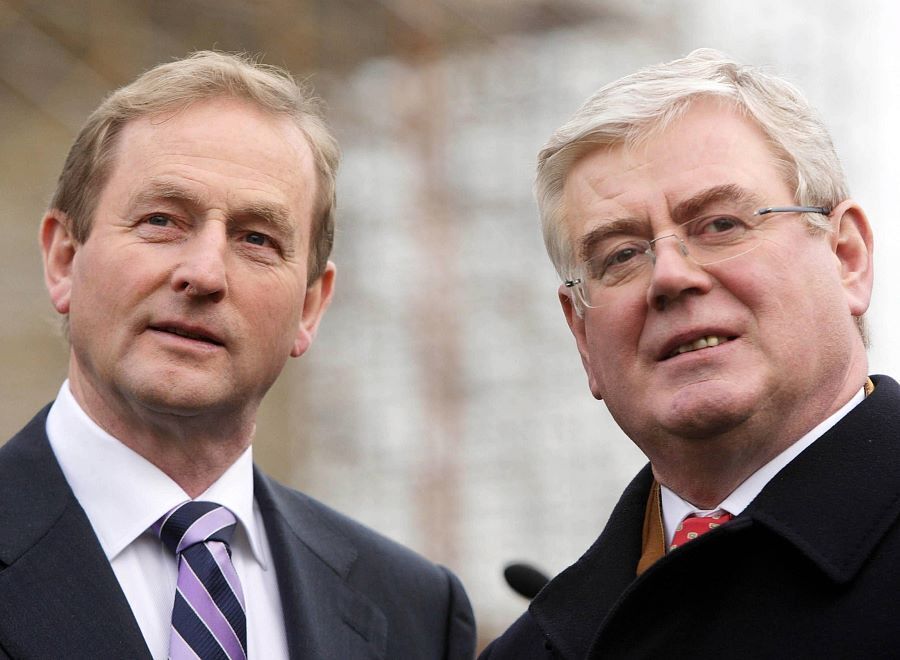
TAOISEACH Enda Kenny seems to think that punctuality is for the proletariat. Yet his “people” will tell you that this is a politician without an ego.

Coalition parties tread warily as European and local elections loom

There’s a contradiction there. Anyone can be prone to tardiness, and go through spells of being late, depending on where they are at in life. But our Taoiseach is a man who, since taking power, seems to make a point of not turning up to things on time.

It’s not like he is the first taoiseach, or minister for that matter, who falls into the notion that people should be kept waiting — it’s a condition that often afflicts those who find themselves being driven around in a state car.

But the Mayoman has made a fine art of non-punctuality. He’s behind schedule for absolutely everything, and has no problem making people wait, including his Tánaiste Eamon Gilmore. According to one source this week the reason he runs late from one engagement to the next is that he “can’t bear to leave people”. Indeed.

It could also be construed as a rather crude way of showing people just who’s in charge, especially if you’ve made a fine art out of presenting yourself as a really low key kinda guy, and indeed, as mentioned previously, one who has no ego.

Enda’s failure to turn up on time is a relatively small thing, commented on by the Labour side of the Government intermittently over the past two years. But as the sands shift under this Coalition — post-troika exit — it’s just one of the irritations, some rather more significant, between the Coalition partners.

It’s noticeable talking to each side about the other that they are rather more tetchy and less inclined to be conciliatory. Self interest, that all too common political phenomenon, did not disappear during the last few years, but the politicians were all too aware that the hard-pressed voters had no tolerance of hearing about fighting or wounded egos.

The parties pulled together. They worked for the sake of the national interest. On many occasions they swallowed hard rather than allow political annoyances, or what might look like pettiness, spill over into the public sphere.

In fairness this was a harder ask on Labour than Fine Gael, the smaller party has been to one to suffer far more for decisions taken by the Government since it came into office in 2011.

As Labour went through their long phase of languishing in the polls some of the Fine Gaelers would rather patronisingly comment in private that they must do what they could for the junior coalition partners. In other words, they felt little threat from Labour. They were happy to see them in their place, as it were, but realised it was necessary to keep them at least afloat.

But the dynamic has begun to change since last October’s budget. In the end Labour were seen to succeed in getting their way on the level of the budgetary adjustment necessary, as well as the introduction of free GP care for children aged 5 and under.

Labour went on to have a successful party conference, where there was much talk of the party having “turned a corner”.

Then came the time to bid farewell to the troika. It turns out that the two coalitions parties felt the stage was already too crowded without having to make room for the crowd from the EU wanting to get in on the farewell action.

Enda Kenny got to make a broadcast to the nation, as it happens so did Fianna Fáil leader Micheal Martin, but not Eamon Gilmore.

The mood has begun to sour. We’re hearing more of the spats and rows and bruised egos. There is claim and counter claim about who is stirring the pot. Fine Gael think that Labour is self-obsessed, while Labour thinks that Fine Gael is spreading stories about them in order to make them look petty.

Labour doesn’t rate Health Minister James Reilly, Fine Gael thinks that Minister for Social Protection Joan Bruton hasn’t felt the squeeze as tightly as she should in her departmental budget. There are tensions over how to deal with the Garda whistleblowers at the Public Accounts Committee. On it goes.

As one FG source said to me this week: “It’s all about Labour, Labour, Labour. You won’t have heard the Taoiseach mention Fine Gael in a long, long time, nobody wants to hear about the party politics now, it’s still all about the country.”

While a Labour source said that traditionally the smaller party in a coalition is the one which has to make space for itself, and issues like the unhappiness over the state of the nation address was “normal stuff, elbows flying, but presented by others as us being overly demanding.”

As an aside, the other dynamic about to change within the Coalition is the almost certain departure of junior minister Brian Hayes for the European Parliament.

Hayes has been the face of Fine Gael since they took office, the man that explained things to the public, and who almost had residency in RTE at weekends, where he seemed to be almost permanently available to put forward his party’s position. He also managed, on most occasions, not to be too irksome to Labour when he did so.

As junior finance minister he did much of the heavy lifting for Finance Minister Michael Noonan. Without doubt he’s the type of heavy hitter the party could do with in the European elections to win a seat in Dublin, but to my mind it’s a curious, and possibly petty decision on the part of the Taoiseach, to send one of his best and brightest off to Brussels.

HAYES obviously weighed up the options and realised that if he was being called on the run then his chances of becoming a full minister in the upcoming reshuffle were slim. His boss — the man without an ego — clearly has not forgiven enough or forgotten Hayes’ part in the attempted heave against him, to have him around the Cabinet table. No one is indispensable, and as Hayes showed in that heave, his personal political judgement is not entirely sound, but still this is a curious decision.

In general, of course, you can look at the emergence of politics as usual between the coalition partners as a good sign. It indicates we are emerging from the acute phase of our national economic emergency.

With the upcoming local and European elections we are likely to see even more of this and have that sense of déjà vu we had hoped not to expect from the “new era, new politics” government.

On the one hand you’d wish that the troika had been in situ until after the May elections, to save us from our old ways. But all that might have done is simply delayed our return to politics as usual.

So be ready for the mutterings about each other from the coalition partners about to involve far more than chronic punctuality issues. Hopefully they won’t lose sight of the bigger picture.

More in this section

Revoiced

Newsletter

Had a busy week? Sign up for some of the best reads from the week gone by. Selected just for you.

Cookie Policy Privacy Policy Brand Safety FAQ Help Contact Us Terms and Conditions

© Examiner Echo Group Limited