G20 summit-Syria divides world’s leaders
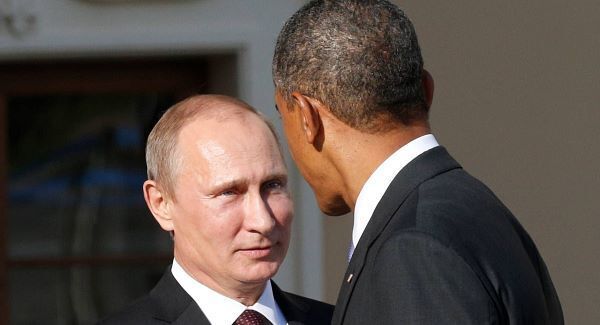
US President Barack Obama appeared to go to the summit with a somewhat strengthened political hand after the Senate foreign relations committee’s decision authorising him to use military force against Syria.
Eamon Gilmore, the foreign affairs minister, stated in an RTÉ interview that he agrees something must be done about Syria, but he clearly feels that other options should be seriously explored before the US resorts to military intervention. Mr Gilmore called for those responsible for the chemical attack in August to be brought before the international criminal court. He emphasised that what is happening in Syria is a great humanitarian disaster. More than 100,000 people have been killed in the civil war, and over 6m people have been driven into exile or displaced within Syria itself.
Despite recent reports that Russian President Vladimir Putin was supporting the government of Bashar al-Assad, Mr Gilmore obviously considered it a hopeful sign that the Russian leader would be amenable to an agreed approach that might be taken by the UN Security Council.
The security council has, essentially, been impotent when tackling any issue, unless there is unanimous support among permanent members. Both Russia and China would undoubtedly use their veto as both are opposed to US military intervention in Syria. In an interview with the Associated Press a couple of days ago, Mr Putin stated that it was “completely ridiculous” to blame Syrian forces for the recent chemical weapons attack.
There would appear to be little prospect for agreement over Syria between the Russian and US presidents, because their body language and the diplomatic choreography between them has been distinctly cool. Mr Obama, who is reported to be planning to hold private discussions with President François Hollande of France, has no plans to sit down with British Prime Minister David Cameron.
There are obvious efforts to persuade Mr Obama to drop plans for military intervention in Syria. In a message to the summit, Pope Francis urged the leaders to “lay aside the futile pursuit of a military solution”. Opponents of military intervention are apparently hoping to use the summit to secure an agreement to establish an international peace conference on Syria.
The formal agenda for the G20 summit focuses on promoting economic growth among the nations that control most of the world’s economy. The Americans are also anxious to get the different leaders to tackle tax avoidance by individuals and multinational companies through the standardisation of disclosure requirements.
Those issues were highlighted earlier in the year by allegations that some multinational companies were avoiding tax in Britain and the US by claiming to be based in Ireland. This country was not promoting tax evasion, but the British and US laws were facilitating tax avoidance.
Whatever is decided at St Petersburg could have both direct and indirect implications for this country.