A wolf in a sled dog’s clothing
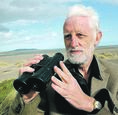
In 1983, he trekked in the Arctic, using traditional transport, such as dog teams. His adventures resulted in books, films and photographic essays. Few of us experience the polar regions, but Vanier offers a taste of ‘la nature extrême’ at an eco-camp he has established high on the Vercors plateau in the foothills of the Alps.
The camp is run on a carbon-neutral basis. Visitors stay in Mongolian yurts or Indian tepees. Electricity comes from a windmill. This is no haven of peace and tranquillity; there are 49 boisterous canine residents.
Vanier uses dogs to pull his sledges on treks up north. Their breed is a cross between Greenland and Siberian sledge-pullers. The animals must be trained and this is the main function of the centre.
Le Vercors is snow-covered from December to March, when sledges are an ideal mode of transport. During the rest of the year, the dogs have to be exercised and training must continue. Visitors are encouraged to help out, so, on a recent visit, I joined them.
Travelling with dog-sledges was not a new experience for me. On a winter visit to Lapland, for radio’s Mooney Show, some years ago, we used them to cross the frozen lakes. Noisy skidoos have become the usual mode of transport there, but some people still use dogs-teams. These, I was told, are safer. During our visit, a local man drowned when the ice gave way under his skidoo. Dogs, apparently, can detect slight movements in thinning ice and won’t venture onto it.
In Lapland, the animals were tethered to stakes on open ground, each one having its own kennel. They were treated as working animals; petting or playing with them was forbidden. In Vanier’s camp, the atmosphere is much friendlier. The dogs are kept communally in compounds and housed in sheds. Fraternising with them is allowed. Training commences when a pup is about six months old.
The dogs went wild with excitement at the prospect of being taken out. Five animals were selected for the trek. The disappointment among those not chosen was palpable.
The bitch assigned to me was named Darrant. An experienced animal and now a lead-dog, she had towed sledges in Siberia.
Each animal was fitted with a leather harness. To my surprise, I had to don similar tackle and the dog was tethered to a long lead attached to a steel ring on my belt. Then we were off, in convoy, through the pine forest and out onto the heather. Commands were shouted by the ‘conducteur de train’. Darrant, I was told, understood more than 20 instructions.
I could feel her immense strength as she pulled me along, her assistance being especially welcome when moving up the steeper slopes.
But the dog I really wanted to meet wasn’t Darrant, but a distant cousin of hers; the wolf.
Domestic dogs are thought to be the descendants of wolf cubs captured thousands of years ago. The wild species and their domestic relatives can still interbreed. Wolves roamed all of Europe until comparatively recently. As in Ireland and Britain, they were hunted to extinction in France. Then, in 2002, wolves reappeared on the Vercors plateau where Varnier’s camp is located. Great travellers, who can cover enormous distances, it’s believed that the ‘immigrants’ came from Italy. A recent census found 17 individuals.
A section of the plateau has been sealed off; the ‘Reserve integral des hauts plateux du Vercors’ is the largest fully protected location in France. Vehicles may not enter, no disturbance is allowed and hunting is prohibited.
Its area is 1,750 sq km, 17 times the size of Killarney National Park. I was told that it would take three days to walk from north to south.
But even by making such a trek, one is unlikely to see wolves. These animals are shy and elusive and with good reason.
CONNECT WITH US TODAY



Be the first to know the latest news and updates