Regeneration is the new buzz word
But, rather than simply closing down such estates or totally demolishing them, the thinking now is that they should be given a complete facelift, upgraded and improved in many different ways. Regeneration is the buzzword.
For starters, it would be cheaper than building new houses in greenfield sites. Regenerated houses are more environmentally friendly as they are better insulated and use less energy.
Regenerating local authority housing estates is the best affordable social housing investment opportunity for Ireland at present, according to Clúid Housing Association, a not-for-profit organisation that develops and manages housing for people on low incomes and those with disabilities.
Brian O’Gorman, chief executive of Clúid, says that despite the economic crisis, local authorities and the government must focus on regenerating estates that have fallen into decline. His argument is that, as a country, we can’t afford not to invest in social housing programmes because, without some spending, social problems multiply and ultimately result in magnified costs to the exchequer.
Regeneration costs less than supplying new social housing units from scratch. Also, many run-down estates are conveniently located close to town centres, near public transport networks, water and power supplies, local schools and shops.
Some of these estates mushroomed in the 1960’s and 1970’s when there was a building boom for social housing. Unfortunately, the estates lacked many support services that are now taken for granted by urban communities, which sowed the seeds for social problems that have stigmatised such areas.
Many did not have basics such as shops, green spaces, meeting halls and play schools. Mr O’Gorman says now is the time to invest in regeneration, rather than reaching a stage where people can no longer live in estates because of physical and social deterioration.
“This would resolve the issue of ‘problem’ estates; represent better value for taxpayers’ money, and result in jobs for people in the immediate area. It would also be compatible with the government’s sustainability agenda because it involves using existing properties, rather than building on green-field sites,” he points out.
According to Clúid, regeneration offers opportunities not just for major urban centres, but also for many of Ireland’s smaller towns. Almost everyone has heard of the regeneration projects in Ballymun and Fatima in Dublin, and in Southill and Moyross in Limerick. However, there are housing estates in towns throughout the country that would benefit hugely from regeneration.
A recent example is work carried out in St Patrick’s Estate, in Ballina, Co Mayo, while work is ongoing on a major regeneration project in the Mitchels area, Tralee, Co Kerry.
For far too long, families remained living in poor conditions. Regeneration enhances the life chances for people living in such estates, it can change public attitudes and removes negative images. It can also bring a new social mix into an area, as new tenants move into regenerated houses.
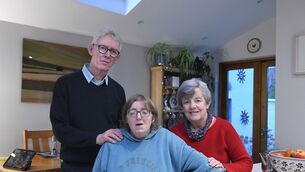
Jean Brown, chairperson of the residents’ association in the Ballina estate, says the work will benefit not just the estate, but the town.
“This process was long and not without its challenges, but when you see the first phase being opened, and visit the beautiful new houses on the estate, you realise just how worthwhile it was,” she says.
“As residents, we’re the experts on the estate and also the people with most at stake in the regeneration project. We lived here down through the years, as the reputation of the area got worse and our living conditions deteriorated. When the regeneration project began, we were best placed to identify problems and solutions to these problems.’”
The Ballina estate always had a strong community network and Cluid worked closely with the residents who now have a new community centre and a new park. For years, nearly half the houses on the estate were empty. Now there’s a mix of house types, including houses specifically suited to older people, people with a disability, or families of various sizes.
The transfer of social housing stock from a local authority to a voluntary housing association is often the best approach for regeneration projects, Clúid believes strongly. This facilitates access to additional funding sources and lessens the pressure on local authorities’ already-overstretched resources.
Mr O’Gorman says regeneration projects rely heavily on partnerships between the residents, the local authority, the voluntary housing body and other local groups. Unless all key stakeholders are involved, regeneration projects will fail, he stresses.
CONNECT WITH US TODAY



Be the first to know the latest news and updates