Drug intimidation 'pervasive' across all counties – report
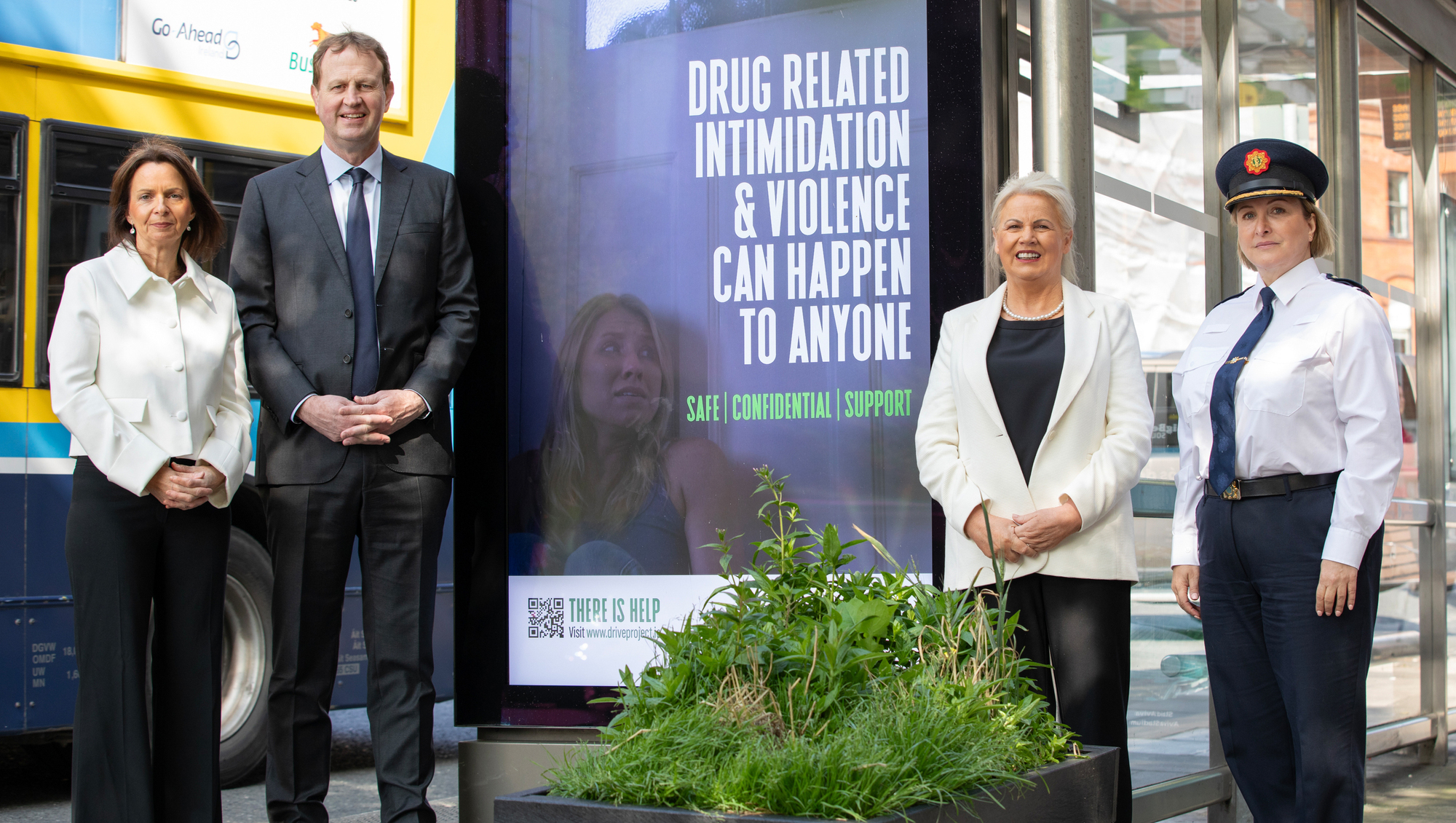
Drive (Drug-Related Intimidation and Violence Engagement) oversight committee chair Antoinette Kinsella, justice minister Jim O’Callaghan TD, junior minister with responsibility for the National Drugs Strategy, Jennifer Murnane O’Connor, and Deputy Garda Commissioner, Policing Operations, Shawna Coxon launching the Drive campaign report. Picture: Bryan Brophy/1IMAGE
The Government must increase policing and social supports in communities to combat the “scourge” of drug-related threats, intimidation and violence, a national family advocacy group has said.
It follows the publication of the first report of a new national programme to combat drug-related intimidation.
The Drive (Drug Related Intimidation and Violence Engagement) report revealed there were 1,027 reported cases of such intimidation in 2025 and 2024, when systematic recording of the problem started.
Read More
The report said the problem is “pervasive” across all counties and all communities, although there was a disproportionate impact on people unemployed and early school leavers.
It cautioned that reporting rates were “low”, due to fear of reprisals, proximity to intimidators, stigma and limited awareness of supports.
Drive was set up in 2020 by the Department of Health and is managed by a national oversight committee comprising state agencies, drug task forces and voluntary groups.
Family Addiction Recovery Ireland (FARI) welcomed the report and said the number of reported cases equated to just over nine cases every week.
“This is a truly frightening statistic,” FARI spokeswoman Aileen Malone said. “Drug related intimidation is at last being pulled out from the shadows.”
She said family members and loved ones who use drugs have been “living under threats, intimidation and violence for many years”.
Ms Malone said: The most vulnerable families are those whose loved ones are not linked in with treatment services, they have no support and usually no knowledge of the Drive project.
She said there was “still no dedicated family representative” on the Drive national committee.
She said the findings in the report, including that schoolchildren were both victims, and perpetrators, of intimidation, underlined how embedded the problem is in certain communities.
“These areas need focused interventions with increased physical garda presence, increased community policing and increased supported resources for youth services, sports clubs and other facilities to protect and encourage young people from grooming and recruitment by drug gangs,” she said.
Ms Malone said programmes such as Greentown, run by academics in the University of Limerick, need to be extended to every community at risk.
She said financial assistance services and advocacy supports were urgently needed as was “trauma-informed care” within services and the expansion of family support and peer support services.
Jackie McKenna, project coordinator of Family Addiction Support Network, based in the north-east, said: “Drug related intimidation, violence and coercion are not isolated incidents.
“They are daily experiences for ordinary families who are doing everything they can to keep their loved ones safe.”
She said families are faced with a “fragmented” support network.
“Ireland still has no national trauma informed framework, which means the support a family receives depends entirely on where they live and which agency they encounter first.”
- Cormac O’Keeffe, Security Correspondent


CONNECT WITH US TODAY



Be the first to know the latest news and updates