How lap dancing clubs lower the tone and raise the crime rate
Perhaps the only satisfactory way of knowing whether or not there is real cause for concern is to examine the evidence as objectively and dispassionately as possible.
People disagree about these forms of entertainment on religious or ethical or civil liberty grounds, but common ground can be provided by social science which helps us understand the conditions that either help or harm the formation of a good society.
Research has been carried out by local authorities and women’s groups, all concerned that lap and pole dancing can have a measurably detrimental effect on society.
The Lilith Project in England is funded by the Association of London Government as well as the Home Office. It has carried out extensive research in the whole area of lap dancing and its findings are alarming. For example, it found the number of reported rapes in the vicinity of lap dancing clubs is three times the national average.
Specifically in Camden, north London, it discovered that reports of rape and sexual assault against women went up by 50% after a lap dancing club opened.
On another point, the project found that the area surrounding striptease and lap dancing clubs in Camden had much higher rates of complaints about noise compared to other areas.
In Scotland, Glasgow city council was so concerned about two lap dancing licence applications that in 2004 they commissioned a report which cost £7,000.
It was conducted by Julie Bindel, a researcher based at London Metropolitan University. She works in the Child and Woman Abuse Studies Unit which has established an international reputation for studies in the fields of violence against women, sexual exploitation and trafficking. Her findings were equally alarming. She discovered evidence of wholesale sexual and financial exploitation of women as well as evidence of a generally detrimental effect on the surrounding community, where women felt less safe. One study cited in the report found that all of the women surveyed reported being physically and sexually abused in the strip club, as well as being verbally harassed.
The new research, which is confirmed by studies in the US, is helping to change attitudes towards striptease and lap dancing clubs in Britain. These studies were carried out by secular organisations, free from all trace of religious bias.
If, as all the evidence clearly demonstrates, this development will almost certainly bring harm to the community, then to highlight this harm and to take a stand against it is surely an act of the highest social responsibility.
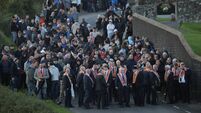
It was precisely in order to take this public stand that members of the John Paul II Society, of which I am the director, travelled to Kilkenny to join with protesting local residents’ groups and members of the Legion of Mary.
Recently we returned again and distributed leaflets documenting the evidence listed above so that people can judge for themselves.
It has often been said the wise learn from their mistakes, but those who are even wiser still learn from others’ mistakes. Right now, we in Ireland have a chance to exercise this kind of wisdom by learning from the mistakes of our neighbours across the Irish Sea, and indeed across the Atlantic.
Michael O’Driscoll
John Paul II Society
154 Blackrock Road
Cork
CONNECT WITH US TODAY



Be the first to know the latest news and updates