Bill Kenneally survivors deserve more than a report left to gather dust
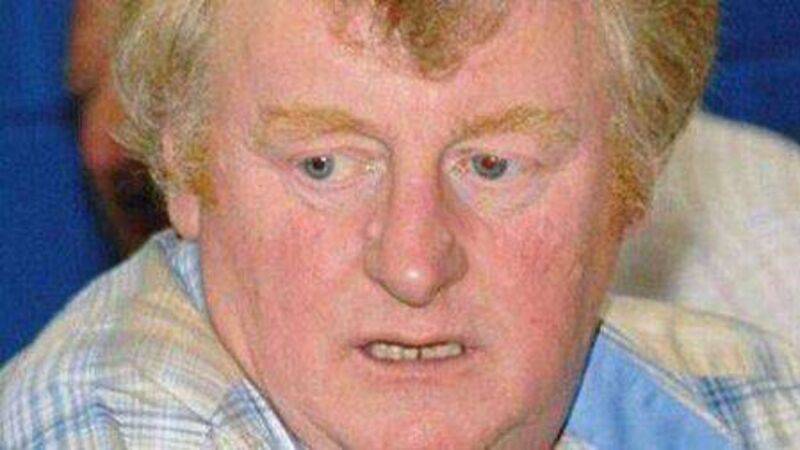
Convicted paedophile Bill Kenneally
Any detailed analysis of the South East Commission of Investigation’s final report into serial paedophile Bill Kenneally is hampered by both its sheer size and a notable lack of firm conclusions or recommendations.
This is not to denigrate the report, which was released on Tuesday. It is diligent to a fault, incredibly detailed, plainly fair-minded, and will be of massive benefit to the survivors of Kenneally — potentially the most prolific child abuser in the history of the State — as they consider their next steps.
It will also serve as a vital resource for those studying Ireland’s dismal history of child protection failures, and for those charged with ensuring such abuses are never repeated.
The report documents, over 419 pages and another 650 pages of appendices, including harrowing victim statements, how agencies of the State engaged with the behaviour of Kenneally in Waterford between 1970 and 2012. However, only a handful of conclusions and one recommendation are made.
Read More
Commission chair Mr Justice Michael White found that:
- The then South East Health Board, the then principal of De La Salle College Waterford, and senior Garda officers failed in their duty by not escalating valid concerns over Kenneally’s behaviour in the late 1980s;
- Members of Kenneally’s family acted, at best, poorly and at worst in self-interest to keep his abuse from reaching public or State attention. They included his cousin, former Fianna Fáil TD and minister Brendan Kenneally; his uncle and former Fianna Fáil TD Billy Kenneally; and another uncle, Monsignor John Shine.
Mr Justice White also recommended that a new offence be drafted to allow for significant dereliction of duty by State agents, to occupy the gap between conduct unbecoming and perverting the course of justice.
Had such a law existed in 1987, some of the Garda personnel involved in the case could have faced such a charge.
The report leaves Fianna Fáil in an awkward position. A mainstay of political life since the State’s foundation, it is steeped in the Kenneally scandal.
The abuser’s uncle, former TD Billy Kenneally, was approached regarding his behaviour in 1987. Bar arranging for his nephew to see a psychiatrist, he did nothing. The abuse continued.
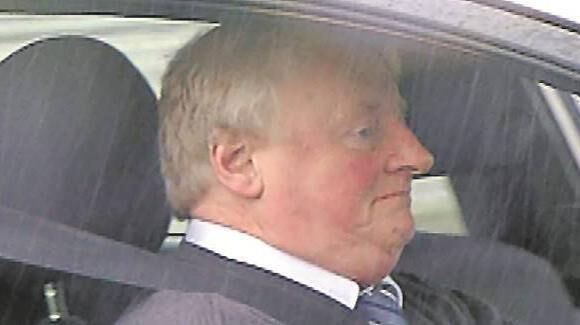
TD and former minister Brendan Kenneally, Bill Kenneally’s cousin and a son of Billy, says he was first told of the abuse in August 2001 by a victim’s partner.
He confirmed the allegations with his father, referred Kenneally to a psychiatrist, and did nothing else.
Bill Kenneally continued to canvass for his cousin — despite the TD being fully aware of his status as an abuser — until 2011, when Brendan lost his seat.
Read More
At least two victims described the trauma as adults of seeing their abuser at their front door canvassing for his cousin.
Bill Kenneally — an accountant by profession — also continued to act as a Fianna Fáil tallyman at count centres for years after his actions were exposed to his own family, but prior to his arrest in 2013.
How was this allowed to happen and is it plausible that Brendan Kenneally had no knowledge of his cousin’s activities prior to 2001?
He had a close relationship with Bill up until the late 1980s. They were broadly the same age and heavily involved in the local basketball scene together, where many of the victims were identified.
His father Billy knew about the abuse from 1987 at the very least, as did Bill’s uncle on his maternal side, Monsignor John Shine, a prominent local cleric.
Witnesses told the commission that the "dogs in the street" knew Bill Kenneally was a dangerous man. He wasn’t subtle in his grooming habits either, transporting scores of young boys around the county in his blue van, plying them with cigarettes, alcohol, and pornography, before abusing them horrifically and incessantly.
But Brendan Kennelly insisted he did not know, and the heaviest admonishment the commission could give him was that he had fallen substantially short of the standards one could expect from a TD by keeping it quiet when he did find out.
It noted that the one constant among the three family members — all of whom held positions of influence — who knew of Kenneally’s abuse was that they did not make it public, to the detriment of his victims.
Brendan Kenneally canvassed for Fianna Fáil chief whip Mary Butler in 2020 and appeared at a party event in June 2024, months after testifying before the commission.

Jim O'Callaghan, the justice minister and a Fianna Fáil TD, outraged survivors this week. He had held onto the commission’s report for seven weeks, only delivering it to them on Monday evening and telling them they had less than 24 hours to digest it before it would be published.
He made no attempt to contact survivors before its publication, let alone meet them.
When they pleaded via their legal representatives for more time, the request was dismissed.
Having handled the matter about as poorly as possible, Mr O’Callaghan pivoted quickly after the survivors cried foul and said he would be glad to meet with them, adding that, in his opinion, they deserve a full public apology.
He said the report had to be published quickly and with little fanfare to be fair to unnamed victims who assisted Mr Justice White and the commission — a claim that, frankly, is unconvincing.
Mr O'Callaghan is due to meet with the six named survivors next week. They are Jason Clancy, Barry Murphy, Colin Power, Paul Walsh, Kevin Keating, and Simon O’Toole. It will be interesting to see if they are impressed by what they hear.
The matter is also set to be debated in the Dáil, at the suggestion of Mr O'Callaghan. If the intention was for the report to be published and left to become a one-day media wonder, the gambit has not worked.
Fianna Fáil had eight years to prepare for the final report of the commission after its inception in 2018. The party must have known there would be a day of reckoning from when Kenneally was first arrested.
One cannot blame the party’s hierarchy for what it did not know. But that defence goes out the window from 2013, when he was arrested.
It beggars belief that the report’s publication could be mishandled so badly as to leave survivors outraged. They have endured unimaginable pain to reach this point.
Waterford journalist Damien Tiernan had followed and reported on the matter since day one. He feared the report would be “left on the shelf” once the initial attention surrounding its publication faded.
As a population, we owe it to the victims of Bill Kenneally to ensure that is not the case.


CONNECT WITH US TODAY



Be the first to know the latest news and updates