What are Polymarket and Kalshi, the two global prediction giants that are now blocked in Ireland?

On Polymarket, $150m of wagers were traded on the Irish presidential election.
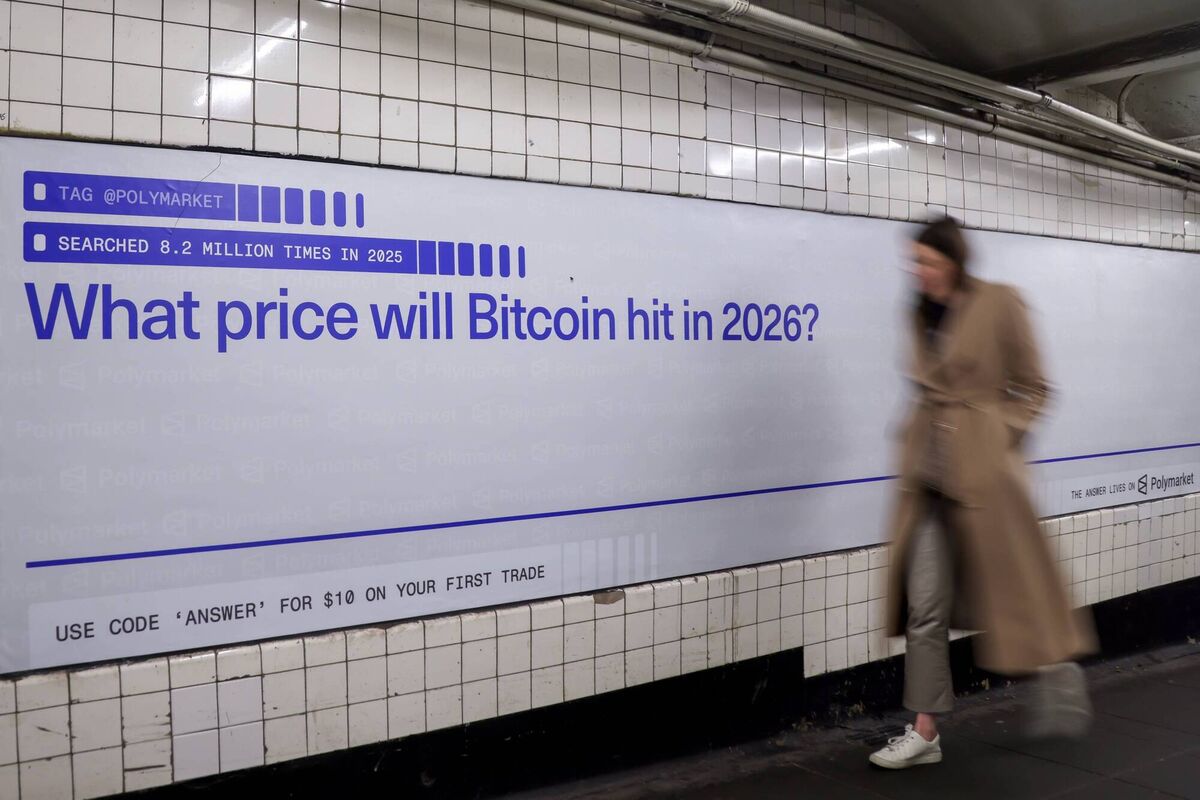
Who will NBA superstar LeBron James play for next? Will Jesus Christ return before 2027? What's the likelihood of worldwide nuclear detonation?
These are just some of the ludicrous and controversial questions being traded on prediction market platforms Polymarket and Kalshi.
The platforms are the insurgent forces in global gambling, attracting massive cash flow — about €5bn was wagered on the World Cup final alone on the two platforms — and mass criticism.
As of July 21, the two platforms are geoblocked here after the Gambling Regulatory Authority of Ireland (GRAI) threatened legal action over their decision to operate in the Irish market without a licence.
Professor Colin O’Gara, head of addiction services at St John of God Hospital, said the move was the first real example of the GRAI “throwing down the gauntlet” since its establishment in 2025.
But how have these platforms become so huge and controversial, and what's been the extent of their impact in Ireland?
Both Polymarket and Kalshi were founded less than 10 years ago by CEOs in their early 20s.
Read More
What these platforms offer is, in theory, not all that different from betting exchanges such as Betfair, which has operated in Ireland for 22 years.
Both are peer-to-peer operators but instead of betting against ‘the house’, users bet on markets for which other users have created odds.
While Betfair’s markets are almost exclusively limited to sports, Polymarket and Kalshi offer marketplaces where users can create prediction markets and bet on pretty much anything, such as:
- Alien invasions;
- US president Donald Trump publicly praising Allah by July 31;
- The number of tweets published on the X account of Iran’s former supreme leader Ali Khamenei.
Perhaps most controversially, the platforms facilitate billions of dollars in bets on markets related to conflicts in the Middle East.
“You're taking events that seem very benign,” said Prof O'Gara. “But there's also a grotesque edge to it… In terms of betting on whether somebody will be alive or dead, or whether somebody will survive a crash.”
The appeal of betting on a near-infinite number of markets has taken hold among some in Ireland, according to Paul, who asked that his surname not be published. He is the public relations officer for Gamblers' Anonymous Ireland.
“We've seen a lot of younger people, 20-25, who are really struggling to deal with the dynamics of the products that both of those prediction markets are offering,” he told the .
“If you look at the mind of a gambler, a gambler wants to be different; that's why he gambles.
“So if you've got people making markets around fairly abstract stuff — ‘Who'll be the first on the moon’, whatever it might be — that appeals to some gamblers,” he said.
Paul said Polymarket and Kalshi both have the ‘magic ingredients’ required to hook on to young users, including the prolific use of affiliate marketing.
Polymarket sponsors the podcasts of internet celebrities like Logan Paul, while Kalshi was the official partner of the Argentina team during the World Cup.
Polymarket deals exclusively in cryptocurrency, while Kalshi is built on the blockchain, a decentralised digital ledger commonly used to record cryptocurrency transactions.
Betting on typically unpredictable markets while using volatile assets like cryptocurrency creates the ultimate thrill-seeking experience, according to Barry Grant, an addiction counsellor and project manager at Extern Problem Gambling.
“Your stake could go up and down quite radically in a very short space of time… young men are risk takers across the board… you look at accidental deaths. It's nearly all young men across the board taking risks in some sort of way. [A prediction market] is supercharging all of that,” said Mr Grant.
Before the sites were geoblocked, activity in Irish markets was limited, but not fully constrained.
On Polymarket, $150m of wagers were traded on the Irish presidential election.
Proponents of the platforms often cite prediction markets as a means of accurately forecasting real-world events, espousing the ‘wisdom of crowds’ theory; that the collective intelligence of a large group of individuals staking money on a prediction trounces the knowledge of a single expert or opinion poll.
But in the eyes of some experts, activity on the presidential election was frankly “weird".
Speaking to the , Karl Whelan, a UCD economics professor who specialises in prediction markets, said it was difficult to decode activity relating to the Irish presidential election.
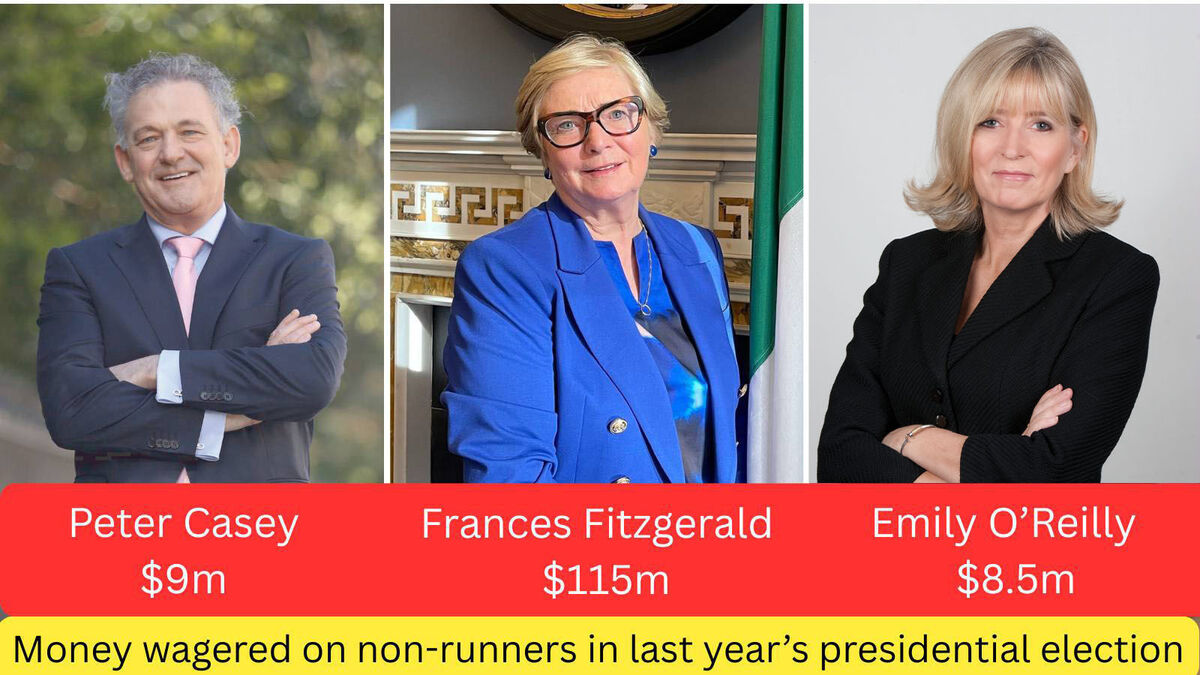
Of the $150m placed on different candidates in the race, $115m was put towards former Fine Gael justice minister Frances Fitzgerald, who had ruled herself out of the race for the Áras in August.
Mr Whelan said the activity may have been ‘wash trading’, a practice in which bot accounts buy shares and sell positions within themselves to create deceiving price signals.
Similarly, $9m was placed on former panellist Peter Casey, who at one point was given an 18.9% chance on Polymarket of becoming president. Mr Casey didn't secured a nomination to run in the election.
Former European ombudsman Emily O'Reilly had $8.5m worth of wagers placed on her presidential chances, even though she never declared intentions to run for the Áras.
For many, the Dublin Central by-election in May was the first event where Polymarket may have entered the Irish public consciousness. About $4.6m worth of wagers was placed on different candidates in the by-election that ultimately saw Social Democrat Daniel Ennis triumph.
However, $1.5m was also gambled on non-runners such as Séamas McGrattan and Gillian Sheratt.
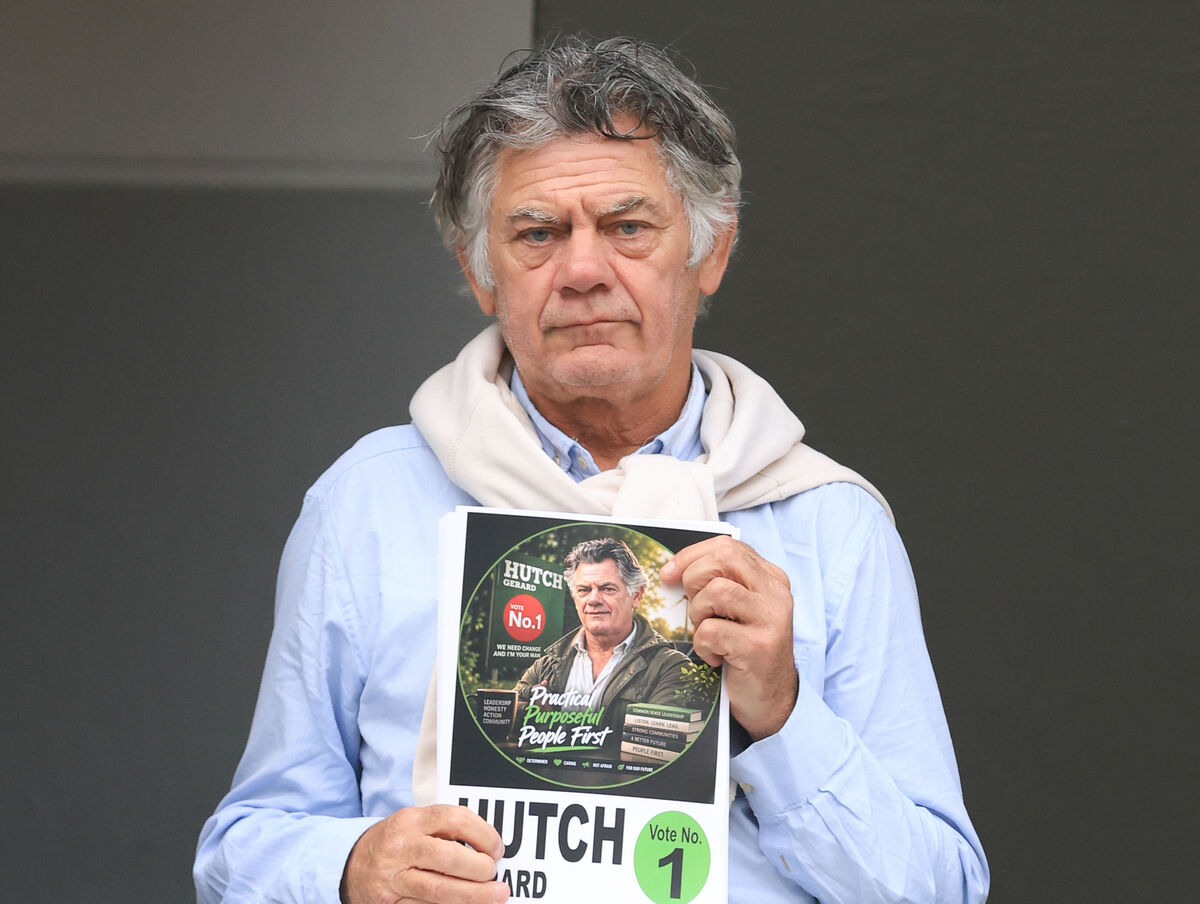
Another 0,000 was placed on Gerry ‘The Monk’ Hutch, in which some analysts noted patterns of money being ‘self-traded’, with positions on the gangland criminal being bought and sold in rapid succession for little or no financial gain.
Mr Whelan said it was nigh-on impossible to tell who was really placing these bets, largely due to Polymarket’s use of cryptocurrency and a high number of users employing VPNs to negate regional geoblocks.
Some have raised concerns activity on these platforms, which can be influenced by outside actors for illicit purposes, could skew public perceptions of elections and other events around the world.
“If you're taking a look at using platforms like this to kind of get a semblance or indication as to what is actually happening out in the world, you're taking a look at the markets, which is then being reported by the media, which ultimately sways public opinion, which then goes back into the market and becomes a loop ultimately or almost like this self-fulfilling prophecy,” said Stephen Treacy, a business lecturer at UCC.
Polymarket activity for the Dublin Central by-election was reported by a swathe of media outlets, including the .
“So it's almost benefiting off its own hype to an extent… so that can be quite interesting or dangerous,” he said.
Activity on Polymarket around the Dublin Central by-election caught the eye of Tánaiste Simon Harris, who said he would be using his office to commission a “deep-dive” analysis of the activity on the platform.
“What seems to be developing at a global scale and, indeed, at a rapid pace now is a kind of wild, wild west where people are placing bets in the form of cryptocurrency in a secretive, murky, and unregulated manner,” he told reporters.
A spokesperson from the Department of Finance said consultation took place with the GRAI, An Garda Síochána, and the Central Bank in the wake of Mr Harris’ comments.
“With regard to activity on prediction markets relating to the May 22 Dublin Central by-election, there was no evidence at the time that an offence had been committed in this jurisdiction by those engaged in that activity or indeed that those persons were located in Ireland,” the spokesperson told the .
“While the recently published national risk assessment has identified the potential risks from remote gambling exchanges, it would be expected that were Irish regulated financial institutions involved in any activity which would have given rise to suspicions of money laundering, the normal anti-money laundering triggers would have been activated.
“Developments in this novel and evolving area will continue to be monitored.”
Regulatory pushback has seen the platforms restricted across a number of EU nations including Spain, France, Belgium, and the Netherlands and are restricted in a handful of US states.
Differences in rules of law, where some nations classify the platforms as providers of event-based financial instruments rather than overt online gambling platforms, have seen global regulators take different tacks.
“In Ireland… primarily more than anything, it is a consumer protection framework. If you take a look at what the actual regulation is, it repeatedly talks about addiction and financial harm and vulnerable users and affordability and all these different things that we associate with gambling,” says Mr Treacy.
“We’re viewing this as gambling, it falls under the gambling regulatory authority here, whereas over in the States, because it is more of a kind of a market-based approach, it falls under the CFTC [Commodity Futures Trading Commission]… they're completely distinct and separate as to what their goal is.”
Both companies continue to grow stronger financially. The combined monthly global trading volume on prediction markets was about $24bn in April 2026. Both are also continually generating controversy for their markets in the Middle East, and a perceived proliferation of insider trading on the platforms.
On April 23, US soldier Gannon Van Dyke was arrested after making more than $370,000 of profit from Polymarket. Van Dyke had placed multiple low-odds bets on the removal of Venezuelan president Nicolas Maduro in January.
As it transpired, Van Dyke was involved with the planning and execution of the US special forces raid on Caracas in order to displace Maduro.
This month, Donald Trump’s long-time teleprompter operator was put on leave after winning over $100,000 of bets based on the content of the president’s speeches on Kalshi.
“[Insider trading] is a feature, not a bug,” said Mr Whelan.

As to where he thinks the platforms will go next, he said they vary wildly in their public relations and methods of expansion, with Kalshi the more presentable of the two. “[Kalshi] have been sued a lot… but at least they play the legal process. They're defending themselves in court and claiming everything is legal.”
Polymarket, he said, had adopted a far more irreverent or gonzo approach, resembling the early days of Paddy Power before it grew into a global betting giant.
“It's almost like Polymarket wants to be the Paddy Power of prediction markets. They're the cheeky chappies, they run funny markets, they run controversial markets, and that's how they get their name out there,” he said.
“Polymarket don't operate with a licence anywhere, and doesn’t look for licences anywhere.”
Mr Whelan predicts if this truly is “the wild west” of gambling, a burgeoning regulatory crackdown could soon see Polymarket and Kalshi become international outlaws.
Neither Polymarket nor Kalshi responded to questions on whether they would seek a GRAI licence to resume operations in Ireland.


CONNECT WITH US TODAY



Be the first to know the latest news and updates