The joyless World Cup: From sportswashing to foreboding
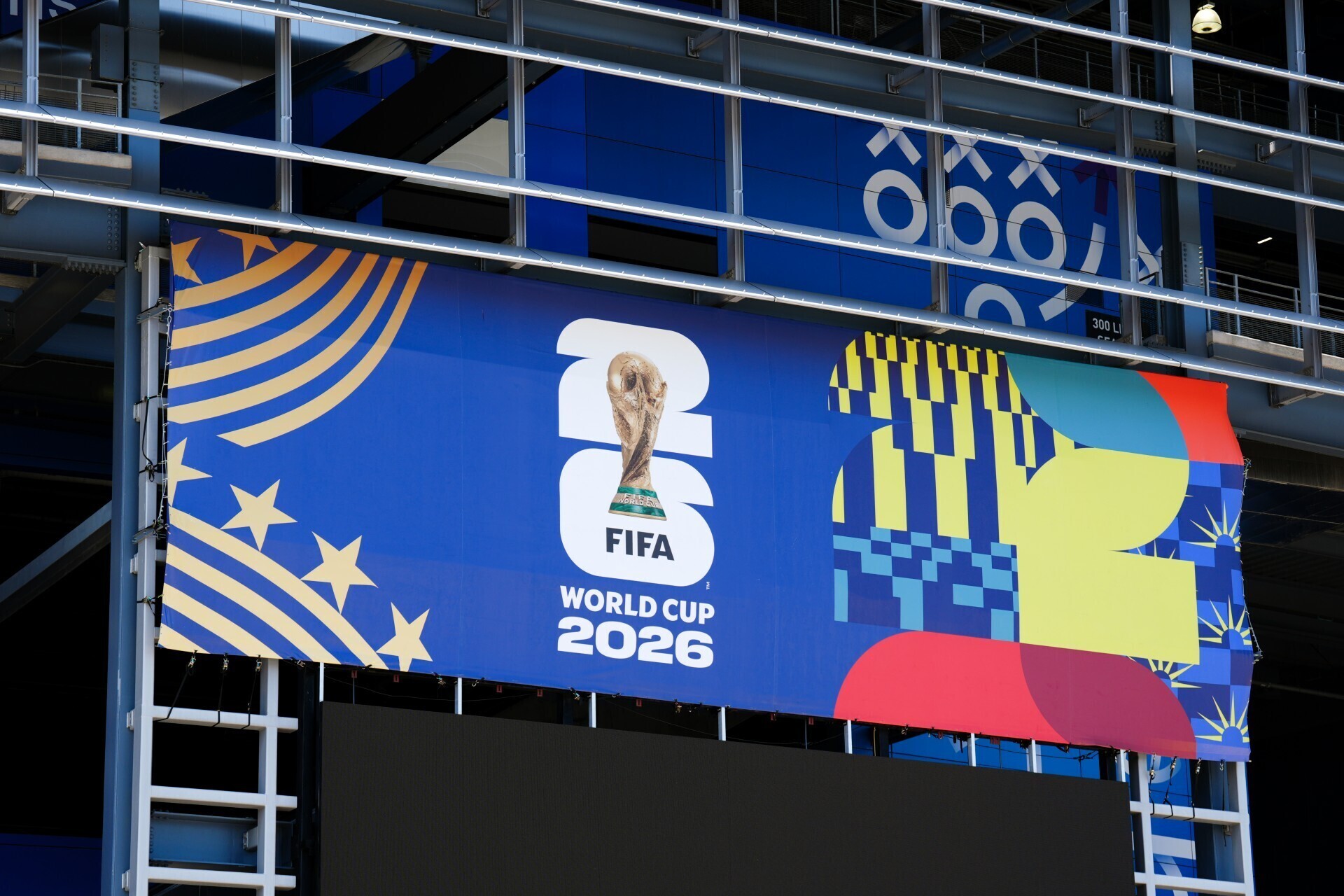
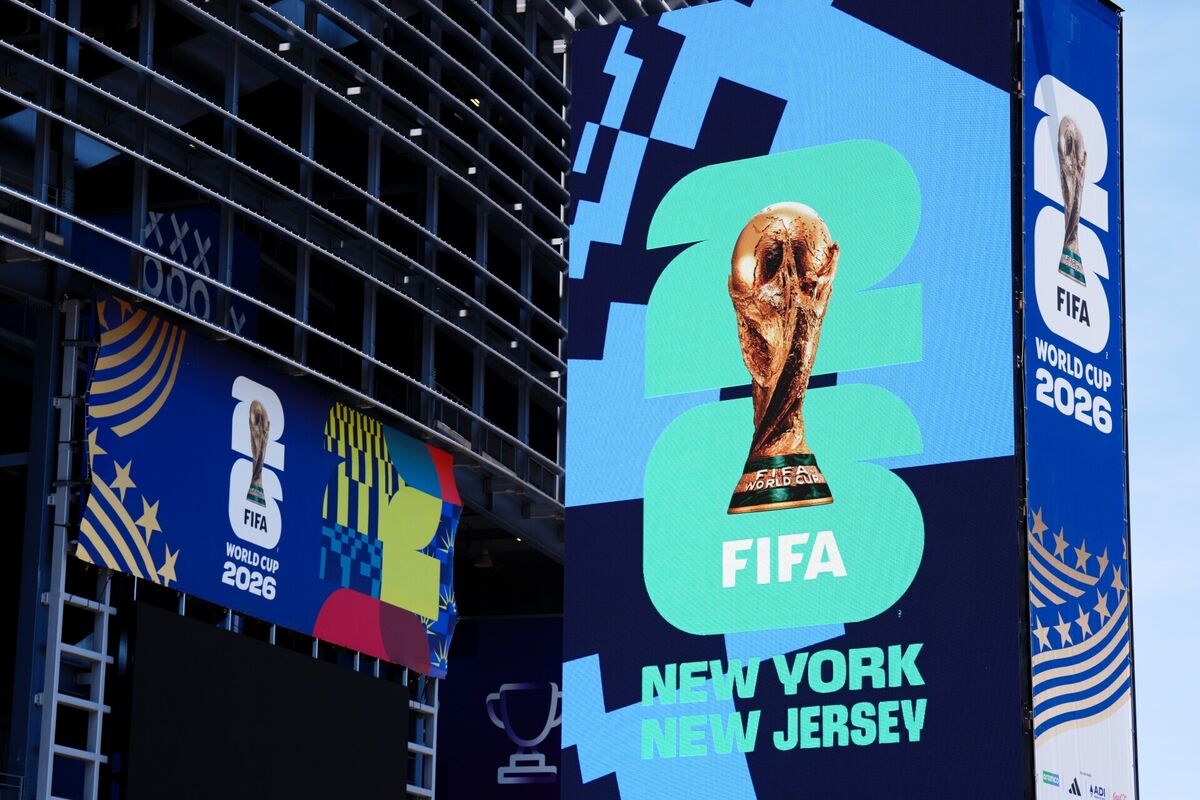
FIFA World Cup sign at the New York New Jersey Stadium in the US. Photo: Andrew Milligan/PA
The World Cup has always demanded a suspension of disbelief. For one glorious month every four years, football asks us to ignore the noise outside the stadium.
Wars can wait. Human Rights abuses can take a seat. Politics can join the virtual queue. Disappeared migrant workers, catastrophic climate change, economic crises — all are temporarily pushed to the margins as the world gathers around a single ball.
It is, to mix a bunch of metaphors, the greatest trick FIFA has ever pulled: Convincing us all that, for five weeks at least, the world is a fine place and worth fighting for.
Six days out from the latest instalment, that sentiment seems as remote as world peace. One host country, the US, is perpetuating an on-again, off-again war with one of the tournament's participants, Iran.
It has also threatened violent interventions on Mexico and Colombia, annexation of Canada, and a sweeping “you’re next” to any country that dared qualify for the World Cup and question America’s manners.
Read More
History is littered with tournaments staged against deeply uncomfortable backdrops. Argentina hosted in 1978, while a military junta disappeared tens of thousands of its own citizens.
Russia used the 2018 World Cup to project an image of modernity and competence to the outside world. Qatar spent more than a decade defending itself against accusations of labour exploitation, migrant worker abuse and sportswashing before producing — perhaps accidentally — one of the most memorable tournaments in history.
Yet all three hosts shared something important. They wanted the world to like them. That, more than anything, is what makes the 2026 World Cup feel different.
As the tournament kicks off across the US, Canada, and Mexico, football's greatest spectacle arrives amid a backdrop of geopolitical instability, trade disputes, immigration crackdowns, Washington-sponsored wars in the Middle East and an American administration seemingly incapable of separating governance from deeply offensive performance art.
For veteran American sportswriter Dave Zirin, who has spent decades chronicling the intersection of sport and politics, this World Cup is unprecedented for a surprisingly simple reason.
"What's distinct is how joyless it is," he says. "In previous World Cups, even in ones staged in autocracies, there was a sportswashing element where countries wanted to show off for the world.
That observation cuts to the heart of a tournament that increasingly feels less like a celebration than a reflection of the world that produced it. So, there is no “washing” then, no attempt to purify a sullied reputation. More, bathing in the outrage Trump gleefully provokes.
The notion that football exists separately from politics has always been a convenient fiction.
Uruguay's inaugural World Cup in 1930 was a statement of national identity. Italy's victory under Mussolini in 1934 became a propaganda triumph for fascism.
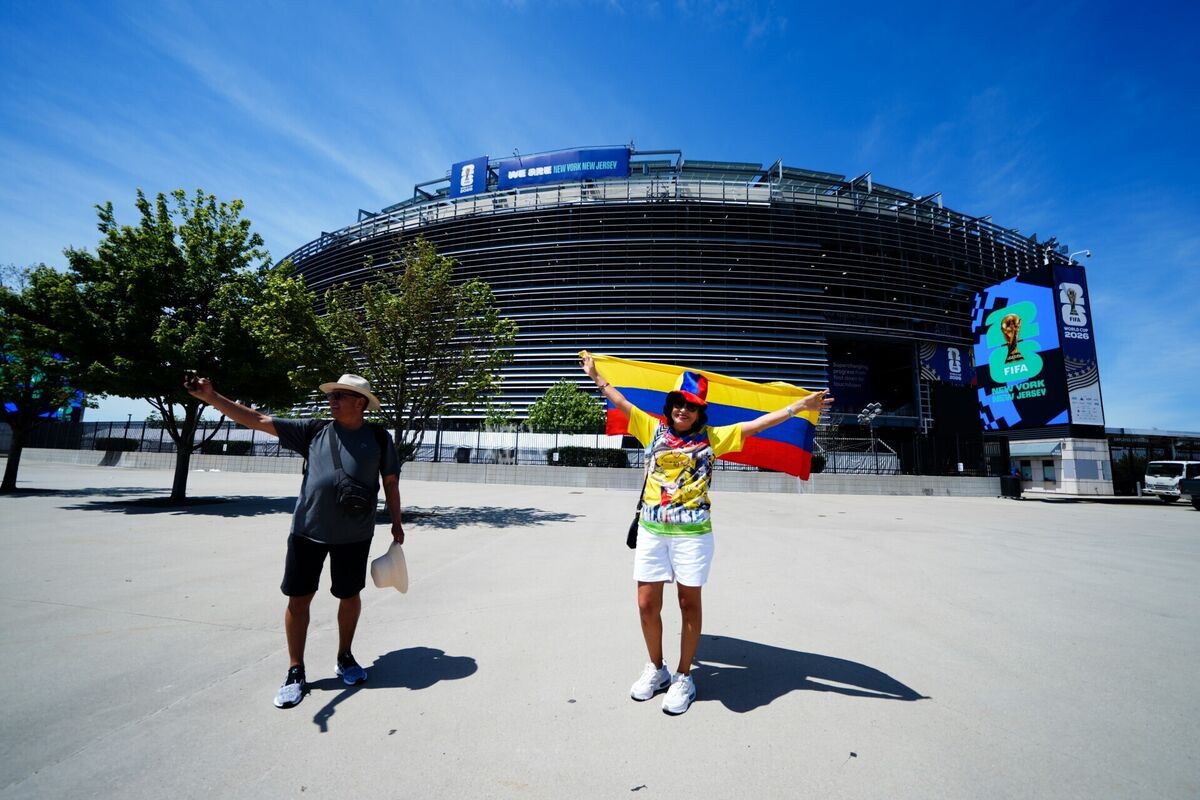
Argentina's military rulers understood perfectly the value of hosting in 1978. Vladimir Putin certainly understood it in 2018, especially in the context of what was to come.
The World Cup has never existed outside politics. What has changed is the willingness of FIFA to maintain the pretence, and even lean into it.
Under Gianni Infantino, the organisation has become increasingly comfortable aligning itself with political power wherever it resides. The sight of Mr Infantino cultivating a close relationship with Donald Trump has reinforced the perception that football's governing body is no longer interested in appearing neutral.
"Gianni Infantino’s FIFA has dropped all fig leaves," says Mr Zirin. "He has declared himself to be an explicit handmaiden to right-wing authoritarianism."
Strong words, certainly, but impossible to dismiss.
This is, after all, the same FIFA president who awarded Mr Trump the FIFA Peace Prize last year, praising his efforts to promote peace and unity while Palestinian babies were being slaughtered with America’s blessing, and while Lebanon was being reduced to a voodoo doll Mr Trump and his cronies routinely stabbed for fun.
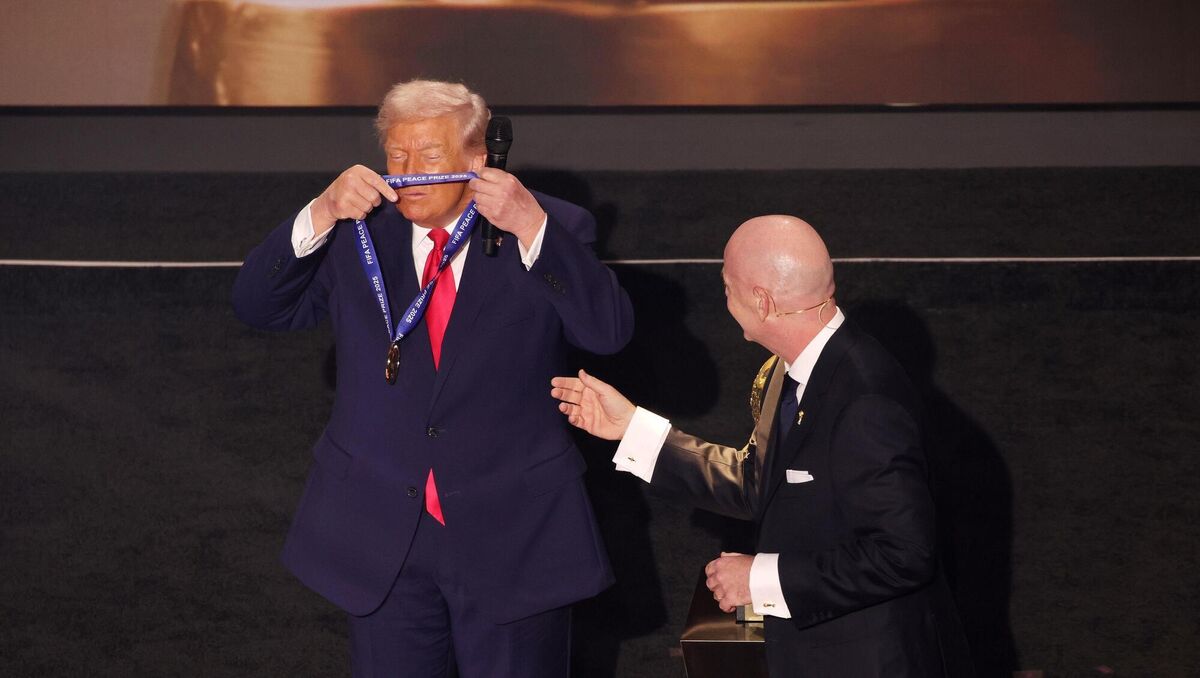
Such grotesque contradictions have become impossible to ignore.
The US enters this tournament not merely as a host nation but as an active participant in some of the most horrific humanitarian crises of the age. Its unwavering support for Israel's war in Gaza has generated condemnation across much of the world, if little by way of meaningful push-back.
Relations with Iran remain excruciatingly volatile. Even the supposedly harmonious partnership between co-hosts Canada, Mexico and the US has been strained by trade disputes and nationalist rhetoric.
All of this unfolds while FIFA continues to market the tournament as a universal celebration capable of transcending political divisions.
The tension between those competing realities has been the defining narrative of the build-up to this tournament. Not the health of Harry Kane or the form of Lionel Messi.
Yet if criticism of the US feels sharper than previous hosts, it is worth asking whether that scrutiny is being applied evenly.
The last World Cup in Qatar generated an extraordinary level of attention around labour rights, migrant workers and the kafala system.
Critics argued that Doha was using football to launder its international reputation. Defenders countered that sustained scrutiny forced meaningful reforms that might otherwise never have occurred.
The truth appears to lie somewhere in between.
Under intense international pressure, Qatar introduced a series of labour reforms in advance of the tournament. Elements of the kafala sponsorship system were dismantled, a non-discriminatory minimum wage was introduced, and workers were granted greater freedom to change employers without requiring permission from sponsors.
Those changes mattered.
Yet one year after the final, Amnesty International reported that progress had largely stalled. Wage theft remained widespread, access to justice remained inconsistent, and enforcement mechanisms weakened as global attention shifted elsewhere.
Academic assessments have reached similar conclusions: the World Cup accelerated reform, but many of the gains appear tied to the exceptional scrutiny surrounding the tournament rather than a permanent transformation of the labour system.
The lesson is not that criticism of Qatar was misplaced. Rather, it is that mega-events often generate temporary reform without necessarily producing lasting structural change.
This is precisely why comparisons between Qatar and the United States are useful — not because the two countries are identical, but because they reveal the inconsistency with which host nations are often judged.
Qatar's failings were relentlessly scrutinised. America's are more likely to be framed as domestic political disputes rather than human rights questions.
Yet both examples point toward the same uncomfortable reality: FIFA repeatedly awards its flagship tournament to states whose political interests frequently collide with the values the organisation claims to represent.
Mr Zirin agrees that liberal democracies have often benefited from a different standard.
"Liberal democracies get a pass on their myriad injustices come World Cup time," he says. "But the US is under tremendous scrutiny. That's because under Trump and a neoconfederate Supreme Court, all pretences of being a liberal democracy are gone."
That scrutiny is already evident on the ground.
Writing in , journalist Brian Dolinar documented how opposition to the tournament is taking shape across several host cities.
In Miami, a coalition of immigrant-rights organisations issued a travel advisory warning international visitors about Florida's increasingly aggressive immigration enforcement regime.
Their concern was not merely undocumented migrants, but foreign visitors with valid travel documentation potentially becoming entangled in a system that has grown increasingly punitive and unpredictable.
In Kansas City, activists have mobilised against the construction of what they call a "World Cup jail" — a detention facility critics argue is being fast-tracked ahead of the tournament.
Campaigners fear the project will ultimately be used to criminalise homelessness and remove vulnerable people from public view as the city prepares for an influx of visitors.
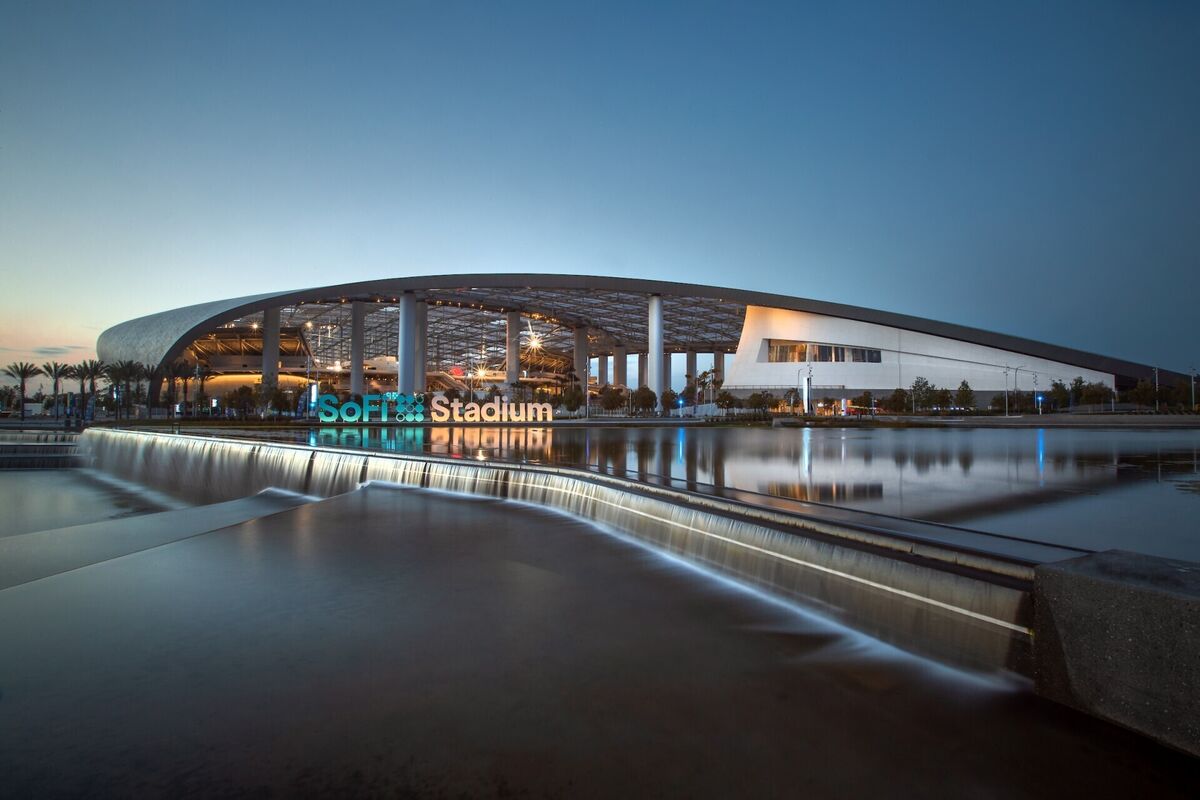
Los Angeles has become another flashpoint. UNITE HERE Local 11, representing thousands of workers connected to SoFi Stadium, has raised concerns over wages, affordable housing, workplace protections and the potential role of Immigration and Customs Enforcement around tournament venues.
Their argument is not anti-football. It is that the benefits of hosting should extend beyond FIFA, sponsors and developers.
Atlanta offers its own cautionary tale. Community organisers there continue to draw parallels with the 1996 Olympic Games, when preparations for the event were accompanied by displacement, gentrification and aggressive policing measures.
They fear that history may repeat itself under a different banner.
These disputes are not unique to the US.
From Rio to London, Beijing to Paris, major sporting events have long been associated with gentrification, securitisation and the transformation of public space.
But the scale and diversity of opposition emerging around the 2026 World Cup suggest something deeper is at work.
For Mr Zirin, mega-events do not merely expose existing inequalities. They amplify them.
"I've been covering the World Cup for decades," he says.
"Debt, displacement, the militarisation of public space. Such pernicious parts of life are turned up, and they rarely, if ever, revert back to what was once seen as normal."
That observation may prove especially significant in a tournament spread across 16 host cities and three countries.
Unlike Qatar, which concentrated its spectacle within a relatively compact geographic footprint, the 2026 World Cup will stretch across a continent. Its logistical demands are unprecedented. So too are its security requirements.
The result is a tournament that increasingly resembles a vast exercise in management and control. And yet there remains another paradox at its centre.
For years, conventional wisdom held that football, soccer, occupied only a peripheral place within American sporting culture. That stereotype no longer holds.
Major League Soccer has expanded dramatically. European football attracts huge audiences. Youth participation continues to grow. Lionel Messi's arrival transformed Inter Miami into a global attraction.
America is not ambivalent to football. Far from it.
"We are not an indifferent soccer country," says Zirin. "We are a joyless country living with a boot on our necks. The tournament is already reflecting that reality."
It is perhaps the most revealing observation of all. Russia wanted admiration. Qatar, legitimacy. Saudi Arabia wants acceptance.
The US appears to want something different entirely. Not affection, nor approval, not even understanding. Merely acquiescence.
As Arrigo Sacchi once said, football is the most important of the least important things.
Trump, America, Infantino and FIFA, through their avarice and ego, have ensured that though the game on the streets remains democratic, the spectacle built around it grows more imperial with every passing nutmeg.
The game may not yet be gone, but it’s soul teeters.

CLIMATE & SUSTAINABILITY HUB
CONNECT WITH US TODAY



Be the first to know the latest news and updates