John Fallon: What a 64-team World Cup would do for Ireland
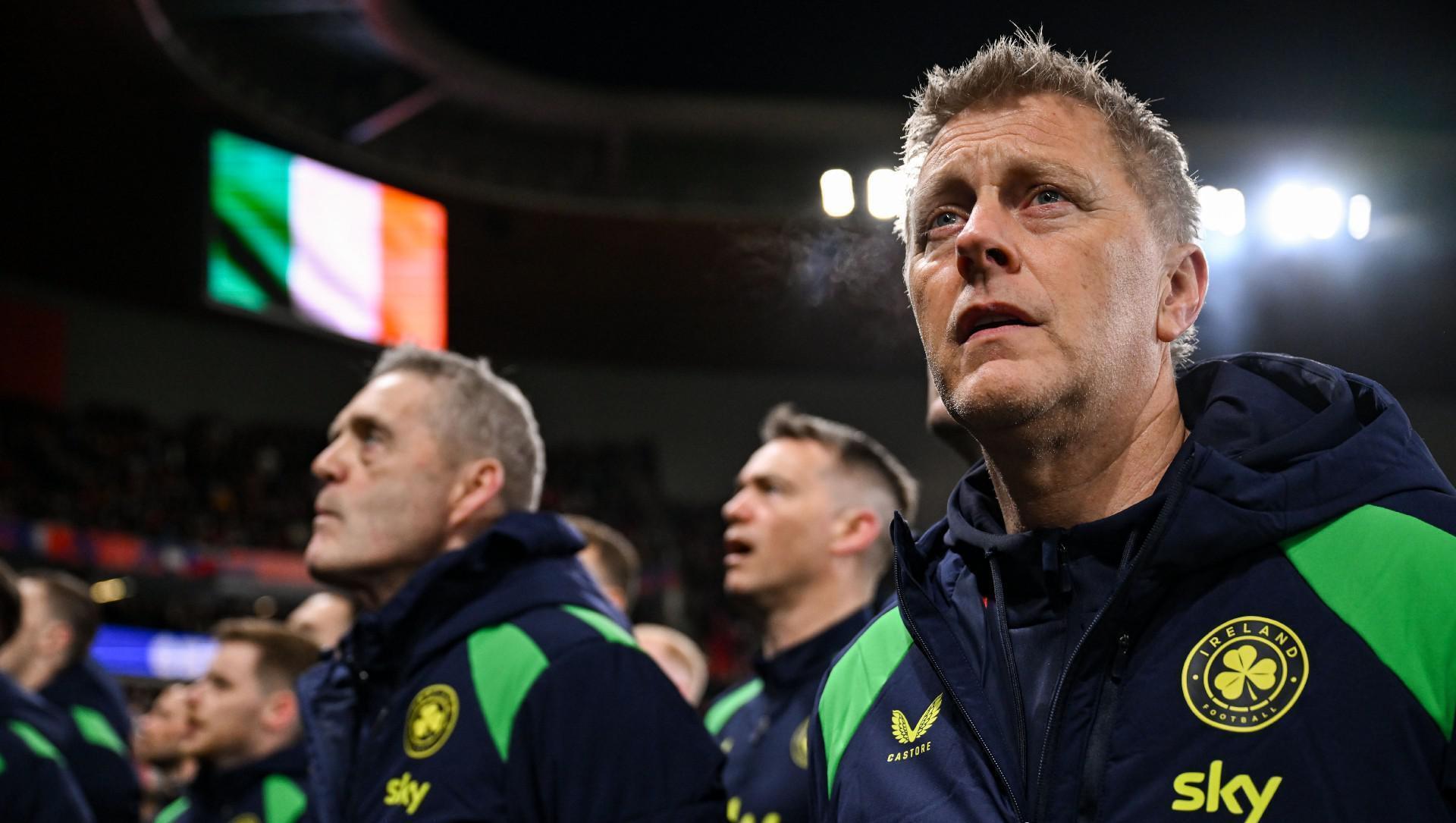
LOOKING FORWARD: Republic of Ireland head coach Heimir Hallgrimsson before the FIFA World Cup 2026 European Qualifiers play-off semi-final. Pic: Stephen McCarthy/Sportsfile.

If John Delaney is to be believed, he had a direct role in Ireland being part of their last European Championships in 2016.
A joint proposal by the Scottish and Irish associations to expand the tournament from 16 to 24 teams was eventually ratified by Uefa in 2008.
Martin O’Neill’s team finished third in their qualifying group behind Germany and Poland but that earned a playoff against Bosnia-Herzegovina they comfortably won over two legs.
There are no Irish fingerprints over the latest enlargement push, that of Fifa swelling the World Cup to 64 nations, but the old adage about beneficiaries of an ill-wind will be embraced at FAI headquarters.
Unquestionably, this latest World Cup instalment was the closest Ireland came to qualification since the 2017 playoff hammering by Denmark.
Prague pain lingered throughout the tournament as the side Ireland squandered a two-goal lead to in the playoff semi-final, Czechia, imploded in front of empty seats.
Popular belief would have fancied the Irish to take out Denmark in the final too.
All hypothetical and annoying in the extreme.
Read More
Ireland are unlikely to be as fortunate in a playoff draw in the future, injecting a grim reality to the fact it will be at least 28 years before they end their World Cup famine.
A first European finals since that French sojourn a decade ago is likely, considering the backdoor route available to co-hosts in Euro 2028, but while attention turns to Uefa matters over the next 18 months, eyes will also be on how the world body address the momentum towards adding another 16 teams for the 2030 showpiece.
By increasing the recent World Cup to 48 teams, Gianni Infantino was not only able to assuage some of his confederations but also boast about financial gains.
More teams meant more games and more revenue. Fifa will shortly announce bumper takings of €13bn, around 20% higher than anticipated for the 104-match extravaganza spread across USA, Canada and Mexico. For all the controversy that surrounded inflated costs to fans for tickets and accommodation, turnout at the greatest show on earth wasn’t impacted.
Fifa’s President will bounce into next March’s congress in Rabat primed to widen the riches to members further by confirming the 64-team format, effectively doubling the World Cup in size over eight years. A similar upsize has commenced for the women’s equivalent, beginning with 48 teams in the 2031 finals, this time hosted alone by the USA.
Bigger is better in the eyes of Infantino and nations on the fringes like Ireland won’t be complaining.
It will be Fifa’s 37-person council who hold the ultimate power to endorse the move but Monday’s declaration by the South American confederation as a done deal is symptomatic of Fifa’s finagling.
As countries will still play a maximum of eight games, dissention from the European powerbrokers isn’t foreseen. They’ll be content at removing the third-place qualifiers and retaining the knockout phase from the last-32 onwards.
Numerically, if similar criteria applies, Europe’s quota would rise from 16 nations to 19. Retrospectively, that would have meant Denmark, Italy and Poland heading Stateside, as the highest ranked three of the four beaten playoff finalists.
We won’t know for a couple of years what format Uefa introduces for qualification but more places will be welcomed.
Europe is the highest represented at the World Cup but for years has felt harshly treated at the paucity of spots relative to overall world rankings.
Asia, for example, gets nine berths, yet accounted for seven of the 12 teams eliminated following the group stage.
Ongoing tensions between Uefa and Infantino – evidenced by European President Aleksander Ceferin boycotting Sunday’s final in New York – will ensure the bare minimum of extra places will be assigned once the inevitable tournament growth is rubberstamped.
All the Ireland team and manager Heimir Hallgrímsson can, and must do, while political machinations unravel in the background, is try to improve their own ranking position of 55.
That’s an upturn on the 62th place after the last regime but still a long way off the 34th they sat in when Mick McCarthy handed over the reins to Stephen Kenny six years ago.
Many scoffed at the suggestion by Nathan Collins after defeat in Armenia last September that Ireland perform better against the bigger nations but the captain felt vindicated after the subsequent games against Portugal and Hungary.
Austria, beaten by eventual champions Spain at the World Cup, are the team to beat in the upcoming Nations League campaign but until a sustained set of results are attained, Ireland will have two higher seeds to overcome in their groups.
Only after that can any indirect assistance or smoothing from the hierarchy be assumed.
Ireland are paddling their own canoe but aren’t positioned to snub those bearing gifts.
Not for the first time, moves are afoot in the Northern Ireland league for a switch to summer football, mirroring the calendar of the League of Ireland.
The FAI are one of 11 members across Uefa’s 55 federations to adopt a summer season and the benefits it has derived in terms of crowds and progression in European competitions has been noticed in Belfast.
Current Bohemians director of football Pat Fenlon was a major proponent of the change during his time as Linfield’s general manager, contending the rustiness from returning to pre-season cost the club a place in the group stages of the Conference League in 2022.
That view wasn’t widely shared among clubs then, leading to the debate shunting to the sidelines.
Yet the topic formed part of the league’s 2023 strategy and it has recently resurfaced, with the league’s chief executive Gerard Lawlor promising an historic choice for clubs on a potential calendar change.
Despite Larne progressing through the Champions League to face Red Star Belgrade, early Conference League exits for Linfield and Glentoran have strengthened the argument for a seasonal switch.
Among the sticking points the league face is resistance against losing the traditional annual fixtures on December 26.
Finn Harps are marooned at the foot of the First Division but top-flight football is the aspiration under a proposed takeover by Filipino entrepreneur Freddy Gonzalez.
A total of 202 members participated in an information evening on Sunday and they will be asked to ratify the bid at a special general meeting in the coming weeks.
Financially, former footballer Gonzalez has pledged the €1.6m that will facilitate the completion of their new stadium in Donegal.
On top of that, €500,000 per annum will be pumped in to cover first-team requirements over a three-year period.
He has already coughed up a fee to engage with the club on exclusive takeover talks while another sum will be paid by way of an advance to meet projected shortfalls while his ownership is being finalised.
Sunday’s meeting lasted 90 minutes, covering a range of queries tabled by members, and the general trend is veering towards the takeover.
The alternative position was laid bare for listeners, painting a gloomy outlook for the viability of LOI football in the county.
john.fallon@examiner.ie.