'Some questions might be ignorant, but they are not racist': Emmanuel Samuel has found his ikigai with An Garda Síochána

Emmanuel Samuel is one of a small number of black gardaí. The lack of gardaí from ethnic minorities is a reality that An Garda Síochána wants to change as part ofits current recruitment drive, writes Cormac O’Keeffe
'Some questions might be ignorant, but they are not racist': Emmanuel Samuel has found his ikigai with An Garda Síochána

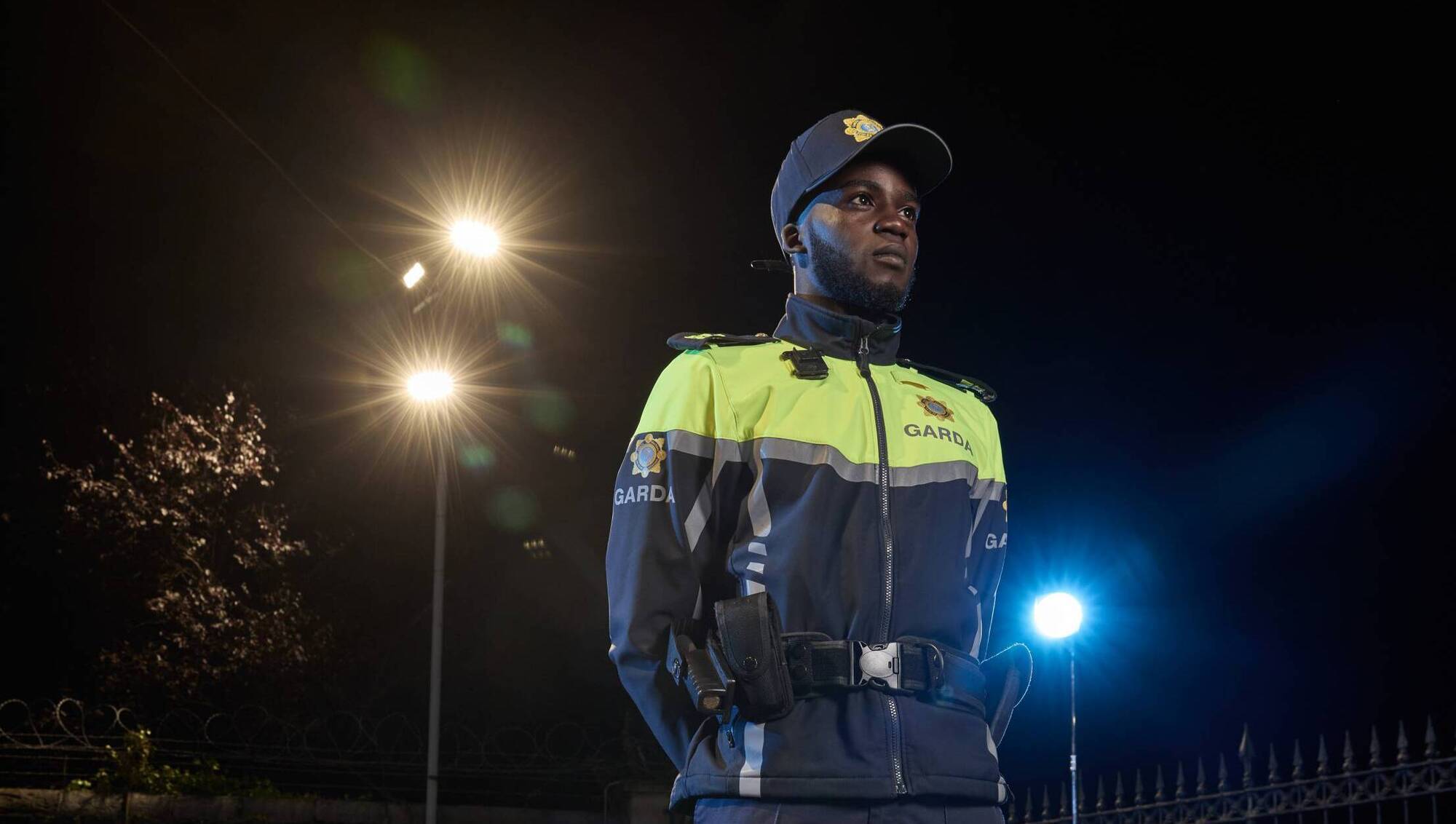
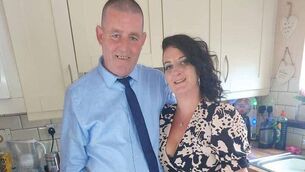
Garda Emmanuel Samuel: ‘In Wicklow, about 98% of the time, the experience is positive. I can tell the difference if someone is just curious or if they are negative.’

On his first day as a garda, Emmanuel Samuel literally stopped pedestrians and motorists in their tracks.

“I still remember the very first interaction on patrol in Wicklow town,” he says.

“A man drove passed me, did a U-turn [a legal one], parked beside me, and got out. He shook my hand and was very happy. He said: ‘Now I know my son can be a garda.’”

Emmanuel’s parents are from South Sudan and when the driver, who was also black, saw him in garda uniform, he must have been pleasantly shocked.

“I get stopped all the time,” he says.

“A lot of people have never seen a black garda before. They are curious. They come up to me and ask questions.”

But Emmanuel displays a good-natured understanding of where people are coming from.

“Some of the questions might be ignorant,” he says.

“But they are not racist, and their questions turn into positive engagements.”

He says he’s been asked if he went to Templemore, the garda training college, or was he “recruited from Ipas”, referring to the accommodation centres for asylum seekers.

“In Wicklow, about 98% of the time, the experience is positive,” he says.

“I can tell the difference if someone is just curious or if they are negative.”

Emmanuel is one of a small number of gardaí who are black.

It’s a reality the organisation under Garda Commissioner Justin Kelly wants to change, progressing to the stage where the organisation more reflects the society it polices.

Garda HQ is hoping for increased applications from people from ethnic minority and religious backgrounds in the current recruitment drive, which ends next Wednesday.

Emmanuel’s story should prove to be of significant benefit to the organisation.

Refugee camp

Emmanuel’s parents spent much of their lives fleeing violence in a civil war in Sudan that ran between 1983 and 2005.

Known as the Second Sudanese War, the conflict claimed the lives of over 2.5m people.

“During the Second Sudanese War, my parents were displaced, moving between towns and villages to escape violence,” Emmanuel says.

“Over the two decades, they spent half their lives as refugees in camps.”

They ended up in a refugee camp in northern Uganda, where Emmanuel was born in 1996.

“I grew up there until the age of 12,” he says.

“Our family was not really safe in the camp, and my parents constantly moved within the camp.”

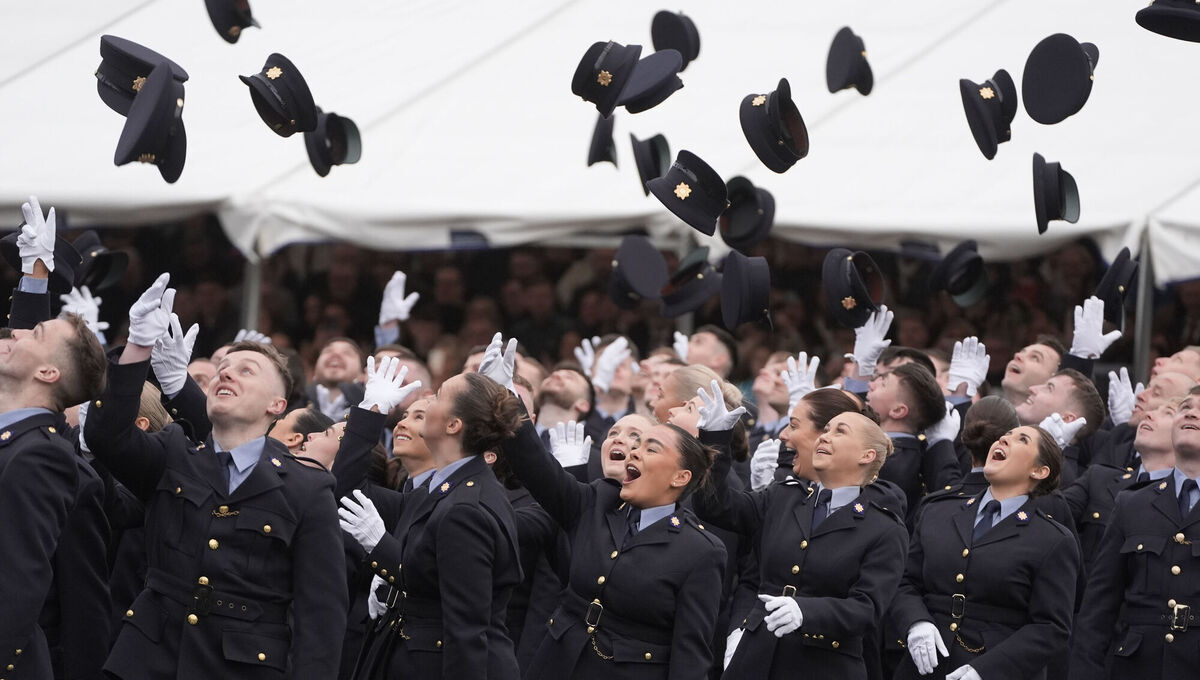
Garda HQ is hoping for increased applications from people from ethnic minority and religious backgrounds. File Picture: Brian Lawless/PA

He says the United Nations High Commissioner for Refugees (UNHCR) ran a programme with participating countries for families who remained in danger in refugee camps.

His parents went through a lengthy process and an orientation programme in Uganda, where they got an insight into Ireland, before being taken in by Ireland in 2008.

Along with himself and his parents, there were three brothers and five sisters. Emmanuel was 12 at that stage, and he found himself in Kilkenny town.

“I played football with local clubs and schools, and we were really part of the community,” he adds.

“I got to know everyone from villages and rural Kilkenny as well. I knew no other place as well as I knew Kilkenny. It was the only place we didn’t have to move around. It really felt like home.”

Bar two of his sisters, who are just finishing or still in school, the rest of the family completed secondary school, going on to college and getting work.

This included his eldest brother, who joined the Defence Forces and has served in Lebanon with Unifil.

One of his sisters is a social care worker, and the rest of the older siblings work either in industry or retail.

Wrong direction

Emmanuel went to college and studied social science in Waterford Institute of Technology, now part of South East Technological University (SETU).

In third year, he says he decided to take a gap year.

“I found myself in a really bad place. I had got caught up in the wrong crowd. I was not happy with the direction my life was heading, and there were a bit of mental health issues as well. I had just lost direction,” he says.

But that decision proved to be a turning point for Emmanuel.

“I needed to step back and look at myself and ask: ‘What do I want to do, what do I want my life to be?’”

He says this was when he discovered his “ikigai”, a Japanese philosophical concept.

“It means where your passions and interests intersect,” he says.

“It’s what gives your life meaning.”

Emmanuel says he was always interested in learning about different cultures and nations, and that’s how he came across ikigai.

Emmanuel says he found his ikigai in joining An Garda Síochána.

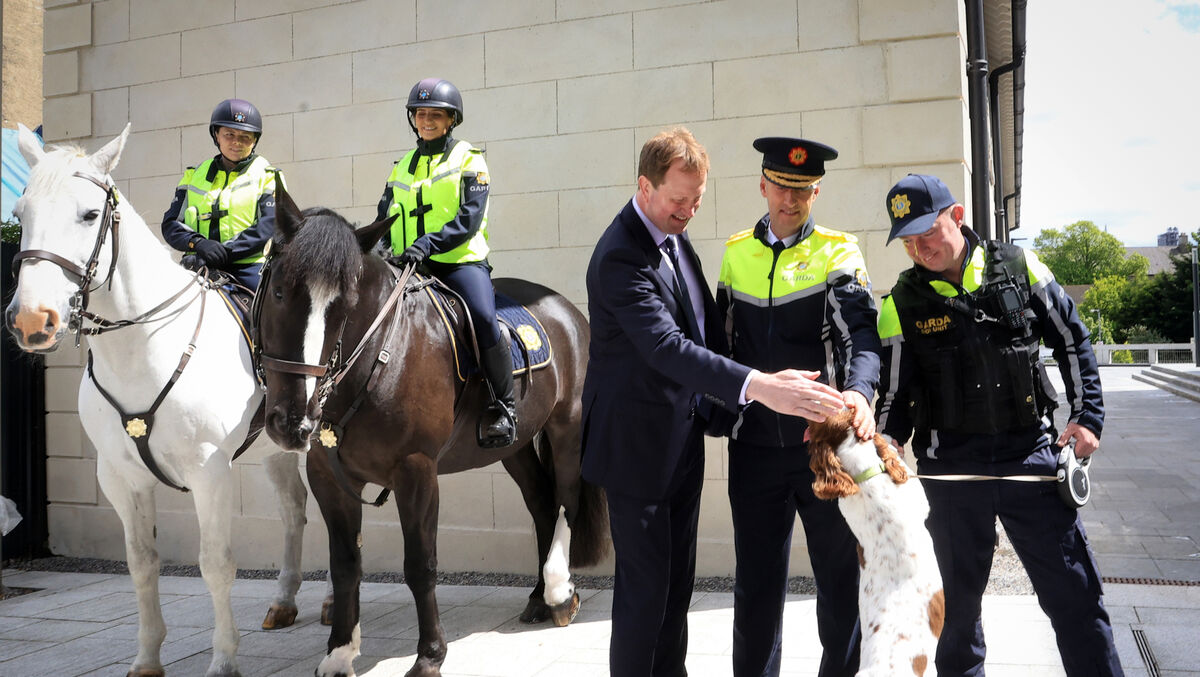
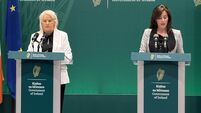
Justice minister Jim O'Callaghan TD, Garda Commissioner Justin Kelly, with Lisa Halligan on Rian and Ciara Larkin on Donnacha from the horse mounted unit, and Garda Alan Cummins with a dog the dog unit in Walter Scott House for the launch of the garda trainee recruitment campaign. The current campaign ends on Wednesday. Picture: Sasko Lazarov/© RollingNews.ie

“I love working with people, I love working with communities, I love doing something exciting, that is not repetitive,” he says.

“Being a garda, there is a balance between being out and in: Out doing patrol or responding to calls and in doing paperwork.”

He feels a duty to the country that took him and his family in.

“I feel Ireland gave my family a lot, it gave us salvation. When we arrived here, we had nothing,” he says.

“We all got education, schooling, and college. I am truly grateful, and I asked myself: ‘What can I do for Ireland to show that gratitude?’

“I wanted to serve the nation, and [An Garda Síochána] gave me an opportunity to serve and give back. I could contribute to its development and cohesiveness. I know from my life what it is like to live in a society with constant conflict. I wanted to uphold the functioning of this country.”

Walking into Templemore, did he see anyone like himself?

“Not at all. I think I was the only one on my intake, though there may have been one other black guy in the college also called Emmanuel, I think.”

He says he was surprised to learn at the college about linkages between An Garda Síochána and Sudan and Uganda.

What I signed up for

It was as a student, while out doing his training in Carlow Garda Station, that he realised the job was definitely for him.

“There was a call from an ambulance that was trying to get access to a building,” he says.

“An elderly woman had fallen and could not open the door. I scanned the perimeter, got over a back wall, and into the back garden. The back door was not locked, and I went in. I spoke out to her. She was very relieved and very grateful. I was very fulfilled and realised that this was what I signed up for: To help people.”

Emmanuel, now 30, says it is important that more people from ethnic minorities apply to join.

“I believe it is important to have a diverse demographic ... not just [An Garda Síochána] but all State agencies and all industries.”

Diversity

While the organisation does not keep data on ethnic or religious breakdown of its staff, data from last year’s recruitment competition revealed that 23% of applications came from people who described themselves as being other than “white Irish”.

With the total number of applications at 11,000, this would suggest that around 2,500 applicants were from other countries or other ethnic groups.

Most of the 23% (13%) were “other white”, as in white people from other countries.

Some 5% (550) were Asian, and 2% (220) were black. A further 3% (330) were “other, including mixed”, while 7% (770) declined to say.

There is no data on how many of these made it through the process and entered Templemore.

Press statements from attestation ceremonies this year and last year stated the graduates have come from as far as Brazil, Guatemala, Mauritius, South Africa, Nigeria, and Pakistan.

Asked if it is important that the organisation attracts more black people, Emmanuel says: “I would encourage not just black people but everyone to bring their talents to the table, their experiences.

 But, most important, is their competence, that they have passed all the criteria and exams, and the individual has a deep understanding of Irish society and culture

Emmanuel politely declines to comment on anti-immigrant protests and racism of the far right.

“I am in no position to comment on that,” he says.

“I’m not authorised to do so [by An Garda Síochána].”

However, he does expand on his basic approach to people no matter what their politics: I have to be impartial, and that is how I go about my business. I don’t base my approach to people on their politics.

Respect

“I deal with all people with decency and respect, whether they are left or right.”

He urges people not to exclude themselves, because of their background, from certain types of jobs.

“That creates a dangerous cycle and feeds into stereotypes and keeps repeating,” he says.

“That has to be broken.”

He says sometimes people might expect him, as a black man, to behave in a certain way, speak in a certain way, or know all about rap.

“I don’t talk like that, and I don’t know about rap. That’s not me,” he says.

Emmanuel thinks “authenticity” is more important.

“I would say to people: ‘Do not mind what people tell you what you can and can’t do,’” he says.

“It’s really down to you. People should not restrict themselves. I didn’t and became a garda, and it is a rewarding job.”

x

More in this section

Lunchtime News

Newsletter

Get a lunch briefing straight to your inbox at noon daily. Also be the first to know with our occasional Breaking News emails.

Cookie Policy Privacy Policy Brand Safety FAQ Help Contact Us Terms and Conditions

© Examiner Echo Group Limited