Meet the Cork biologist risking his life to track cougars and grizzly bears in Canadian wilderness
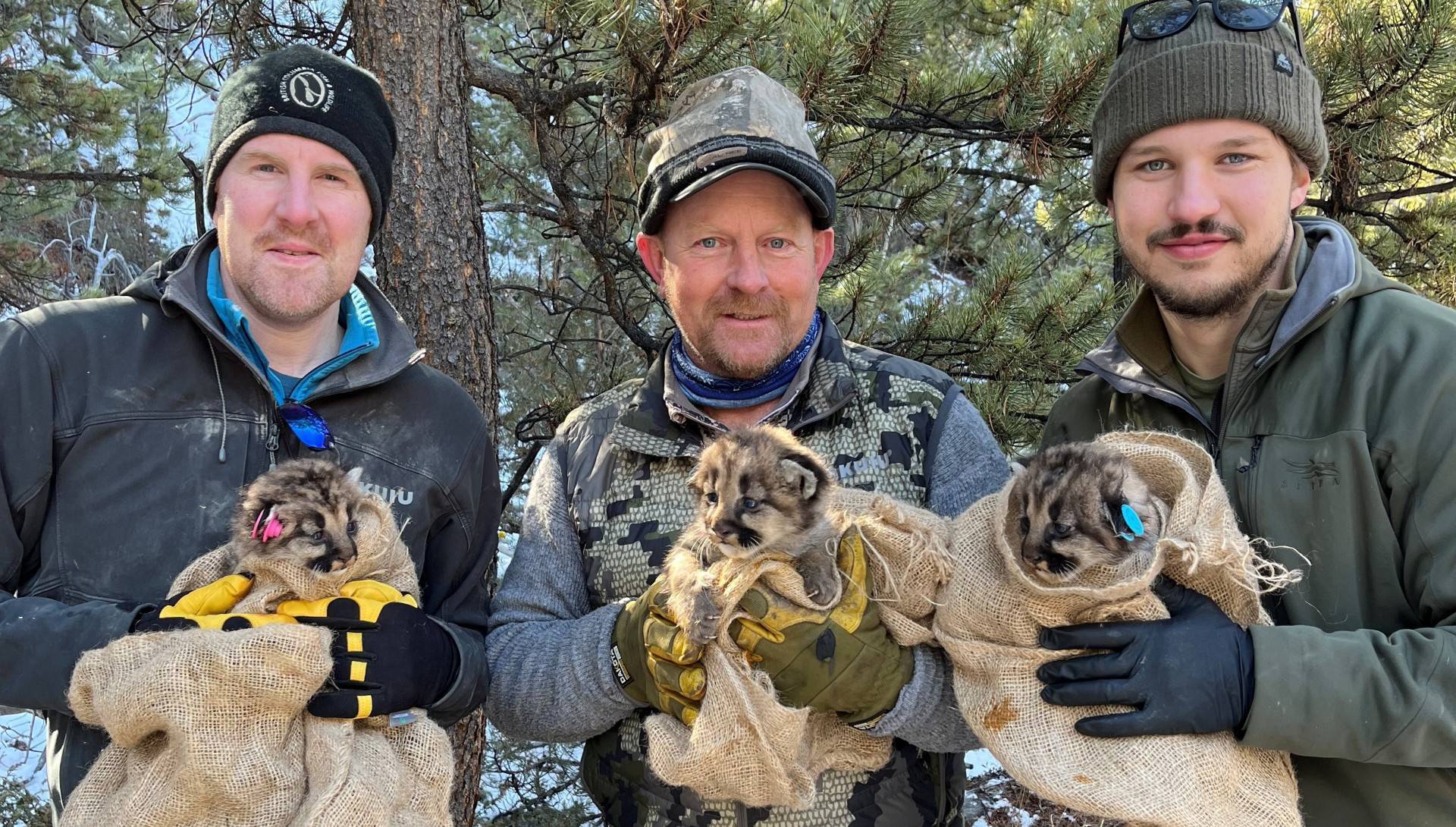
Glanmire-born conservationist now tracks and studies dangerous predators deep in the remote wilderness of western Canada
Meet the Cork biologist risking his life to track cougars and grizzly bears in Canadian wilderness

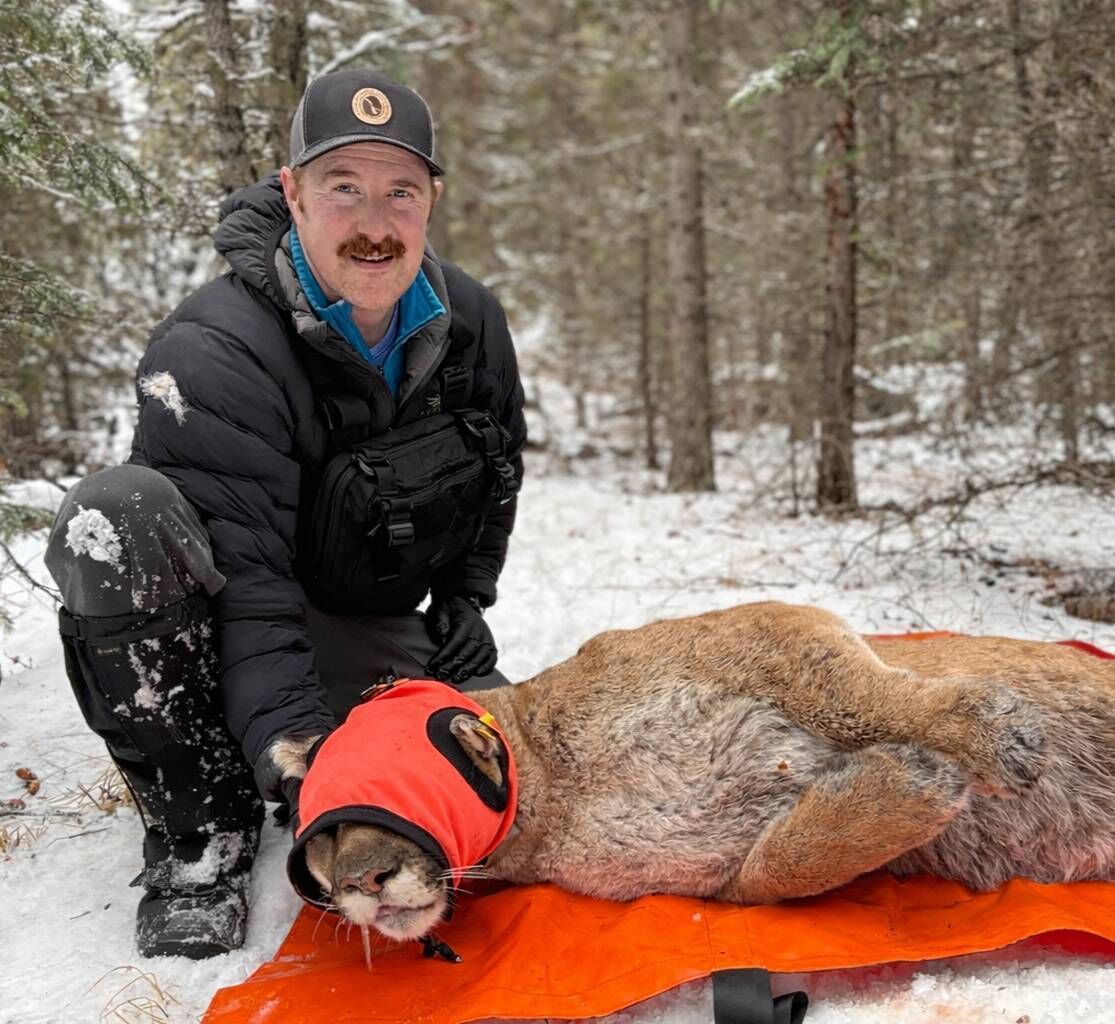
Cork-born biologist Shane White with hound handler Doug McMann and Cullen Sikkes during a typical day collaring cougars in the Chilcotin region of British Columbia, Canada

While many of us run away from danger, Shane White runs towards it, capturing some of the world’s most dangerous predators in the name of research and conservation.

The senior biologist, who was born and reared in Glanmire, Cork, has been known to get up close and personal with grizzly bears, wolves, and Eurasian lynx populations. His work of late focuses predominantly on cougar research in Canada’s Cariboo region.

Having previously worked in the US, White moved to Williams Lake in British Columbia with his wife Carolyn in 2017. The couple share two children, six-year-old Killian and three-year-old Fia.

A typical working day for White entails braving the hostile wilderness of the Chilcotin region to place GPS collars on cougars. The data collected offers an important insight into the animal’s hunting and dietary habits. Capturing a cougar is no easy feat for White and his team.

“The main thing that I’ve been working on the last few years is a cougar collaring project that I’m co-leading with a university partner here,” he told the Irish Examiner.

“It’s getting the collar on these cats that’s the tough part. Once the collar is working as it should be, you are off to the races.”

The father of two described the complex operation, which involves the team travelling via snowmobiles to identify big cats.

“If we find fresh tracks, we’ll try to figure out the direction the cougar is going in. We then try to isolate that animal by driving around in a sled.

“We have contracted hound handlers, and they release the hounds if a cougar is close enough. Because cougars have evolved in an ecosystem that includes wolves, the sound of canines barking triggers a defence mechanism that sees them shoot straight up a tree — just as a domestic cat would.

“It always blows my mind because the dogs are so small and the cougars can be quite big. Once the dogs pick up the scent of that wildcat, they’ll stay on it, and they’re just super excited. All they want to do is chase that cat. You can hear how excited they are from the way they bark.”

Senior wildlife biologist Shane White placing a GPS radio collar on an immobolised cougar.

Time is of the essence for White and his team.

“At that stage, we’ll prep the darts. Once the cat is immobilised, we get it out of the tree. Our main priority is obviously crew safety and the animal’s safety, so we follow strict protocols.

“It can be between 20 minutes and an hour before the cougar is back on their feet and moving again. We’ll usually pull out when we see that the animal is coming around and moving. We can leave it in peace after that.”

White is widely regarded in professional circles for his compassion and personal touch.

“I’ll often put lubricant on the cougar’s eyes just to make sure they don’t dry up while they’re immobilised. This is done before we cover them with a blindfold, as the sight of humans can be quite stressful for cougars. It always amazes me to see just how big their eyes are up close. They are perfectly adapted to seeing movement and spotting prey. I call these kinds of interactions ‘pinch me moments’, because they are so surreal. It reminds me how lucky I am to have ended up in a career like this.

Missing home

“Of course, there are downsides. I definitely miss home and Ireland. At the same time, I’m established here and it’s a lovely place for the kids to grow up.”

Cougar collaring is often a labour of love for White and his team.

“A lot of blood, sweat, and tears have gone into getting these cougars radio collared. I get a location on each collared cougar every two hours. Over time, you build up an idea of their home range size, their territory, and their diet. You know when a cougar has killed something because the prints are all going to be in one area. You’ll then head out with a crew on the ground or fly in if it’s too remote to investigate.

Some of our collared cougars, especially the males, are taking down moose and horses, which is just wild to me

"The risk seems pretty high for the reward but, if they’re successful, then that’s good eating for a week or two.”

He spoke about their habits in the wild.

“I have an app, and I can see where that animal is every two hours. If I see that a cat is in one specific location for eight or nine hours, then there’s a good chance it’s after killing something and it is sitting on its kill.

“When a cougar covers its prey with things like dirt or snow, it is called caching. This is done to prevent other animals, like ravens or crows, from picking it up. They will try to minimise the scent so there is less of a chance it will attract the attention of wolves and bears.

“The cat will sit on the carcass for between a week and 14 days. We’ll then go in and confirm what the prey is. It allows you the opportunity to map out a really good picture of each individual’s diet over the whole monitoring period, which is normally four or five years.”

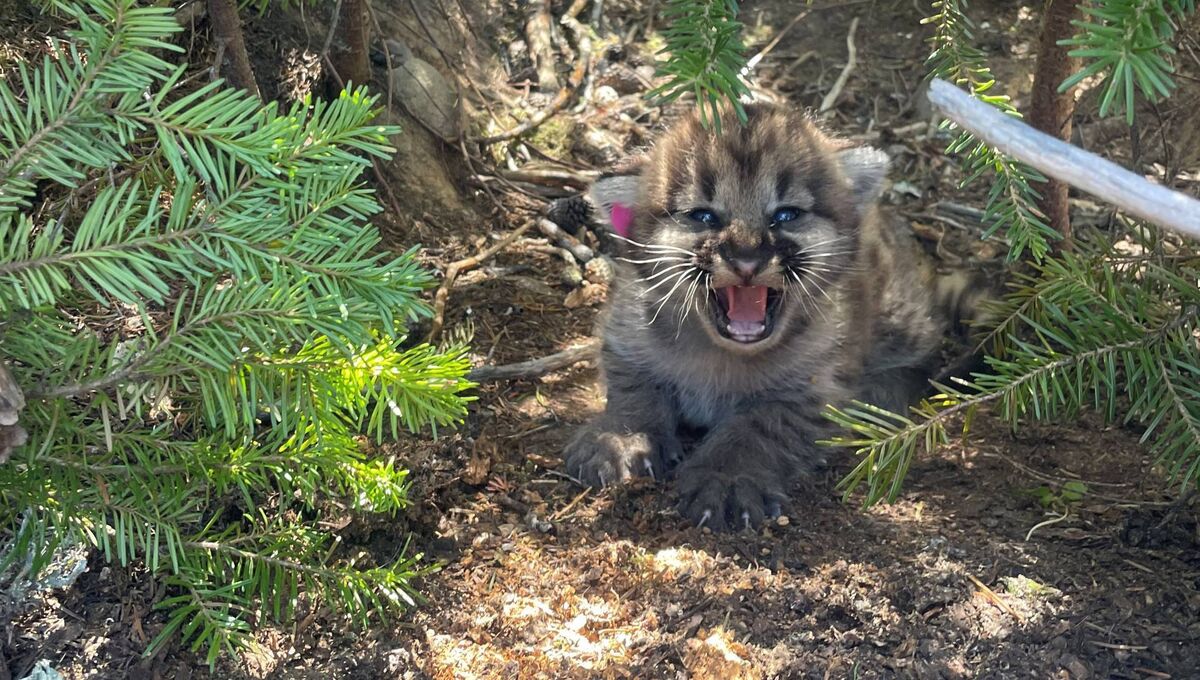
Mr White’s work of late focuses predominantly on cougar research in Canada’s Cariboo region.

White is never quite sure what to expect.

“You sometimes see behaviour that is out of the ordinary. We collared a young male cougar last year that killed a moose.

“A week later, the cougar just upped and left on this crazy walkabout. He went about 1,400km in about six months.

“Like in all our collared cougars, we knew the young animals disperse after a certain age and find their own territory. This animal just kept going north and north. We also radio collared a cougar that killed a black bear.

“Behaviour like that hasn’t been recorded a whole bunch.”

'Shaking with adrenaline'

While White’s career is undoubtedly risky, most close encounters have happened on his days off. He recalled being charged by a grizzly bear while hiking with his wife back in 2017.

“I just shouted to my wife: ‘Grizzly, grizzly.’

“We were fortunate enough to both have bear spray on us. We immediately pulled it out and pointed it in the bear’s direction. It kind of huffed at us and was more of a bluff charge than anything else.

“However, it still followed us for about a kilometre back to the car. We made noise and kept making noise while backing away. Luckily, the bear kept its distance. We just calmly walked backwards with the spray, which we fortunately didn’t have to deploy. Our dog was next to us, wagging his tail, thinking he had just made a new friend. Maybe the bear had a kill or something up there, or just wanted us out. Either way, we were pretty pumped that we managed to do everything right. My hands were just shaking with adrenaline.”

The terrifying experience did little to dampen White’s passion for wildlife.

“I feel really lucky to have the career that I have. It was my grandfather, Pat Casey, and my father and their countless hours with me outside, fishing, hiking, and exploring that instilled this appreciation. My secondary school biology teacher, Eoin Browne at Glanmire Community College in Cork, played a very important role in encouraging my interest in ecology and helping guide my career direction, which helped me get to where I am today.”

x

More in this section

Lunchtime News

Newsletter

Get a lunch briefing straight to your inbox at noon daily. Also be the first to know with our occasional Breaking News emails.

Cookie Policy Privacy Policy Brand Safety FAQ Help Contact Us Terms and Conditions

© Examiner Echo Group Limited