He thought the case was over — until he discovered his former teacher still worked with vulnerable children

As part of Tusla’s assessment of his allegations, Páidí Manning submitted a detailed statement, in which he described 'two years of harassment, assaults, intimidation and walking on eggshells'. File picture
Coming forward as an adult to report a series of allegations of abuse from the early 2000s to Tusla, Páidí Manning described himself as a “vulnerable” child.
Now in his 30s, he submitted a detailed assessment to Tusla, describing his experiences as a former student of John Condon.
Mr Condon had been his housemaster at Good Counsel College, Wexford, while Mr Manning was a boarding student there between 2001 and 2003.
As part of Tusla’s assessment of his allegations, Mr Manning submitted a detailed statement, in which he described “two years of harassment, assaults, intimidation and walking on eggshells”.
He told Tusla his teacher regularly forced boarding students outside in their underwear, socks, and vests as punishment for talking after lights out at 10pm.
He described Mr Condon regularly instructing him and other students to kneel as punishment.
He alleged to Tusla that Mr Condon instructed another older student to assault him with a T-square, where his back was struck with a force that “nearly broke” him.
Among further allegations, he also told Tusla that he had witnessed Mr Condon assaulting two fellow students.
Multiple attempts have been made this week to contact Mr Condon.
The reporting process was “exhausting”, Mr Manning wrote.
“As an adult, I’ve come forward because I believed, and still believe, that no child, special needs or otherwise, should have to put up with the behaviour that I had to endure and that by staying silent, I was potentially allowing history to repeat itself.”
He previously reported his allegations to gardaí. A file was sent to the DPP, who directed no prosecution.
His allegations to Tusla were supported by the late Fr John Hennebry, his former principal at Good Counsel College.
The assessment with Tusla was to determine whether Mr Manning’s allegations against Mr Condon were founded or unfounded.
A finding that allegations are founded means Tusla has established, on the balance of probabilities, that abuse did occur.
When a person comes forward with allegations of retrospective abuse, Tusla undertakes a safeguarding exercise called the child abuse substantiation procedure (CASP).
A spokesman for Tusla said CASP is used “only for the purpose of protecting children who could be at risk of abuse today, and not to decide if a criminal offence has been committed; that is for the gardaí to investigate".
In 2023, Tusla concluded Mr Manning’s allegations were ‘founded’, noting that he provided a “consistent and credible account of having experienced incidences of childhood abuse that were both physical and emotional in nature”.
The assessment said his disclosures were “altruistic in nature and made with due regard for the safety and welfare of others”.
He was also told Mr Condon had the right to appeal the conclusion, and that he may be contacted by the appeal panel if he did so. He wasn’t contacted again.
After the process concluded, Mr Manning was under the impression that Mr Condon was no longer in a teaching position.
“Which is why I dropped it,” he told the this week.
“That’s why I hadn’t looked for him or thought about it.”
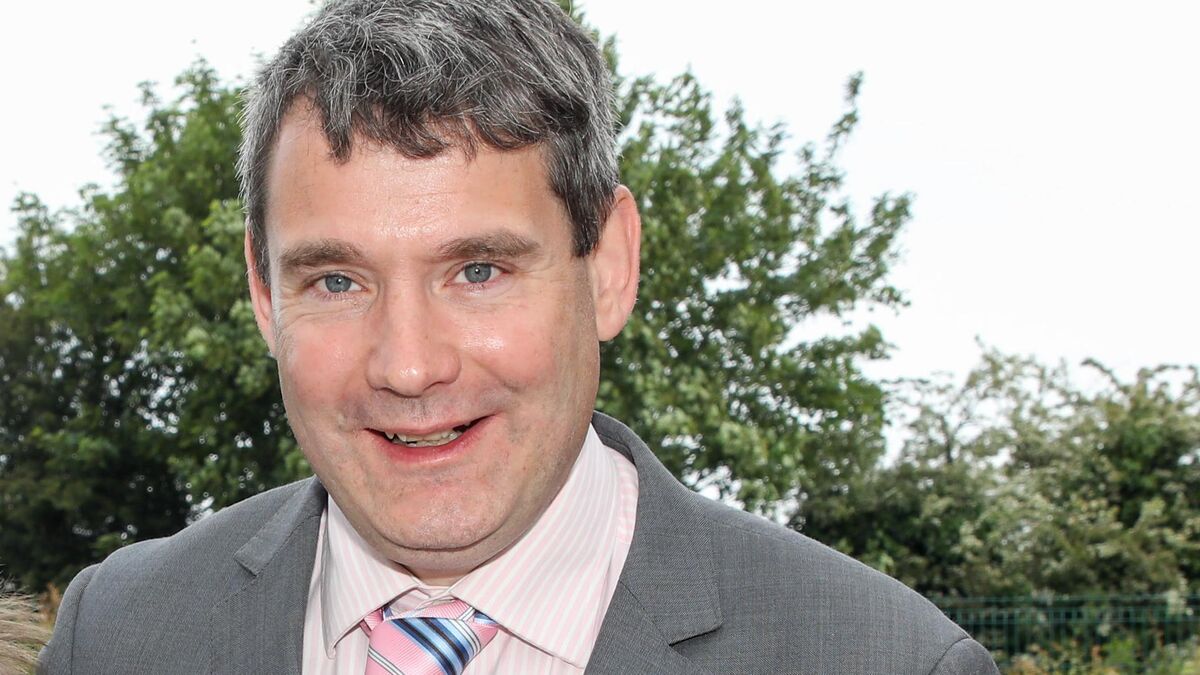
It was his girlfriend’s nephew’s 12th birthday that prompted him to search online for his former teacher. “I saw [her nephew], age 12, and for the first time in 25 years, I got sad. I was that fucking age."
That is when he found out Mr Condon was the head of adult education with Down Syndrome Ireland.
A spokeswoman for Down Syndrome Ireland told the the organisation was not aware of the accusations against Mr Condon.
“At the time of hiring, the individual was subject to Garda vetting and references. No information relating to these matters was disclosed.”
He worked for the organisation between 2022 and 2025.
Mr Manning went public with his testimony last Sunday with a report in the that publicly identified Mr Condon, who is now principal of Belmayne Community Special School in north Dublin.
A special school for students who have a diagnosis of autism and complex needs, it opened in November under the patronage of Dublin and Dún Laoghaire Education and Training Board.
Parents had already raised concerns about the school, including the allocation of special needs assistants, the use of suspensions, and a lack of individual behaviour support plans.
Children attending the school have yet to complete a full day since it opened.
A spokeswoman for Dublin and Dún Laoghaire Education and Training Board said it is “following all appropriate policies and procedures, ensuring supports are in place for the school community and is currently engaging with parents, guardians, and staff".
Parents have been told an internal investigation is under way.
The case has raised questions about the adequacy of vetting and background checks for roles involving children or vulnerable people.
Garda vetting is required for anyone working with children or vulnerable individuals and is intended to disclose any criminal record, as well as any “specified information” held by the National Vetting Bureau.
This includes information considered to reasonably give rise to a “bona fide” concern that the vetting subject may harm, cause harm to, put at risk of harm, attempt to harm, or "incite another person to harm" any child or vulnerable person.
Tusla, the Department of Education, and An Garda Síochána do not comment on individual cases, and have declined to do so in this case.
A spokesperson for the Department of Education said it does not have powers to investigate child protection concerns.
School authorities must ensure compliance with the Vetting Act, she said.
"In cases where no statutory vetting obligation exists, or where the school authority has met its statutory obligation by receiving a vetting disclosure in the past, a school authority must consider, having regard to its duty of care to its students, whether it should seek an up-to-date vetting disclosure in respect of that person."
Wider issues with CASP have also been flagged by Hiqa, which is tasked with inspecting the process.
Its most recent reports across a number of regions have highlighted delays, particularly in how the process links with vetting.
In the Dublin and Mid-Leinster region, inspectors in 2023 noted how substantial delays in the submissions of Garda vetting forms “potentially placed children at risk due to the ability of the alleged abuser to seek and receive clear garda vetting which enabled them to work with children”.
A spokesman for Tusla said: "On foot of Hiqa inspections and generally, we continuously work to improve standards — including addressing delays — to ensure a safe and supportive environment for young people."
Reviews often flag how the practice of CASP is “generally good” but the process, as highlighted by Hiqa , is often “marred by delays”, according to Joe Mooney, assistant professor of social work at University College Dublin.
He said: “It's generally child-centred when we are talking about children, it's generally empathic and trauma informed when we’re talking about interpersonal interactions, but there’s a whole system around this, where a lot of workers themselves would feel a little bit trapped, so to speak.”
He believes there is a lack of legislative infrastructure underpinning Tusla’s ability to assess and investigate allegations of abuse.
"That’s a long-running issue, going way back to the late 80s, early 90s.”
He added: “We essentially have found ourselves in a position where child protection policy and practice has been designed by proxy, by alleged perpetrators."
This is largely due to a “huge series” of judicial reviews taken by alleged perpetrators challenging how Tusla assesses abuse allegations.
The legislation in this area is "extremely vague" and now over three decades old, he said, adding that CASP comes from that space.
“It has been shaped over time in response to these judicial reviews, and we’ve ended up with what is a highly legalistic, highly proceduralised, highly balanced, but relatively cold process, in terms of people's experiences of it.”
For Mr Manning, his case also raises wider questions. “It's possible as well there are others slipping through the net,” he said.
He continues to praise the “phenomenal work” of the social workers he met through Tusla.
“I know there has been a systems failure here, but I am still hugely grateful to Tusla for fighting my case.”
CONNECT WITH US TODAY



Be the first to know the latest news and updates