Brian Cuthbert: Lots of areas in Munster football need support
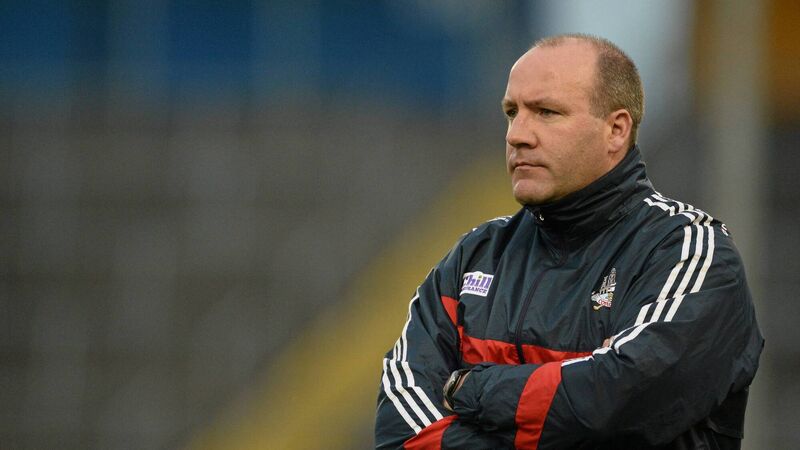
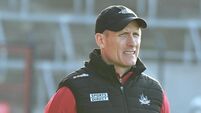
Former Cork manager Brian Cuthbert is heading up a football development committee for Munster GAA. Pic: Piaras Ó Mídheach / SPORTSFILE
A Munster football health check for the week that is in it.
A timely health check too given that earlier this year the Munster Council put together a football development committee to look under the hood of every county in the province.
The committee, headed up by former Cork manager Brian Cuthbert, is not prioritising the inter-county game or being led by inter-county results. The flagship teams and flagship competitions comprise only one pillar of their work.
Their work is primarily focused on the lower rungs of the ladder. The unglamorous and unseen is where they hope to leave their mark and a self-sufficient footprint.
First matter to deal with, though, is the need or otherwise for such a committee. Why now for its formation?
“As an overall governing body for the province, Munster GAA is saying, yes, we have demographic issues, we have rural depopulation, we have structural issues in some counties in terms of the balance between hurling and football,” Cuthbert begins.
“We have a schools game that needs more support at post-primary level. We have universities and third-level colleges that need support. We have another strand in terms of coach education that also needs huge support.
“So, it's not just what we see in terms of our counties performing at adult inter-county level, but across the whole spectrum of Gaelic football in the province, and there are a lot of areas that absolutely need support.”
There’s a lot to chew on there. Cuthbert doesn’t disagree with that sentiment.
The immediate conclusion to draw is that the committee, which also includes All-Ireland winning Kerry boss Pat O’Shea, runs the risk of spreading its remit too wide and ending up not making a tangible difference in any of the many areas they scratch at.
Honing in on one of their four pillars, by way of example, Cuthbert and his committee’s awareness of the issues surrounding the post-primary game would indicate they’ll be doing far more than scratching at the surface.
“To simplify the whole thing, we’ll look at this in four distinct areas: post-primary, coach education, club development, and inter-county. And if we start with second-level schools, we’ll look at competition structures, access to competitions, support for second-level teachers, and maybe amalgamating schools so they can participate at a higher level of football.
“If you look at that alone, you can see there is a vast array of areas that need more support on the ground and need more opportunities in certain counties.”
Increased support for second-level teachers is not intended to be achieved by the obvious approach of sending Munster GAA staff into these nurseries, but rather finding people outside of the province’s full-time employees who carry expertise in certain areas and utilising that across the board in various counties to get them up and running.
At club level, the end goal is to make every club self-sufficient. A sustainability target that will be driven through the simple mantra of coaching the coaches. Execution of that mantra, however, requires outside the box thinking. The coach education pathway that exists at present is not delivering that self-sufficiency at grassroots level.
“Clubs need support. Volunteerism is something that is waning. I do think the GAA has an obligation to simplify maybe a lot of the activity it does in lots of different areas, including administration, but in terms of our committee and self-sufficiency, where you go after that is looking at club structures and supporting clubs in how they go about recruiting, supporting, and educating their volunteer coaches.
“Presently, we have a situation in the GAA where very few coaches will move beyond the introduction to Gaelic Games as the first entry point to coach education. And they never ever go forward into any other form of education in the GAA.
“Munster know that and are very, very cognisant of the fact that maybe what we're offering at the moment obviously isn't appealing to people on the ground,” Cuthbert continued.
“And I think for clubs to be self-sufficient in terms of coaching, maybe we have to offer something different. Maybe we have to offer something that's a bit more bespoke. Maybe we have to offer something that's less formal.
“Maybe we have to offer clubs opportunities where they can have some sort of coach education a la carte menu that aligns to the needs of the clubs rather than trying to paint by numbers and actually fit everybody under one brush.
“Now, that's a very difficult thing to do. It's much easier for a big organisation like the GAA to have a formal approach to coaching ed. But I think we understand that we'll have to do this differently.”
Lots there to be keeping Cuthbert and the rest of the committee busy. There is no timeline for their work. Quick fixes won’t be entertained or sought.
“In a province, you’re not going to do anything in six months, in 12 months. Maybe this becomes something that is in place every year, albeit wouldn’t be the same people involved year after year.
“It is a project that Munster GAA wants to drive and are supporting really well. If there is value to the work, which I think there is, it is something that Munster will sustain over a period of time. This committee and its work can only be good for football.”


CONNECT WITH US TODAY



Be the first to know the latest news and updates