Promises, warnings, and 115 deaths: The air corps toxic chemicals controversy
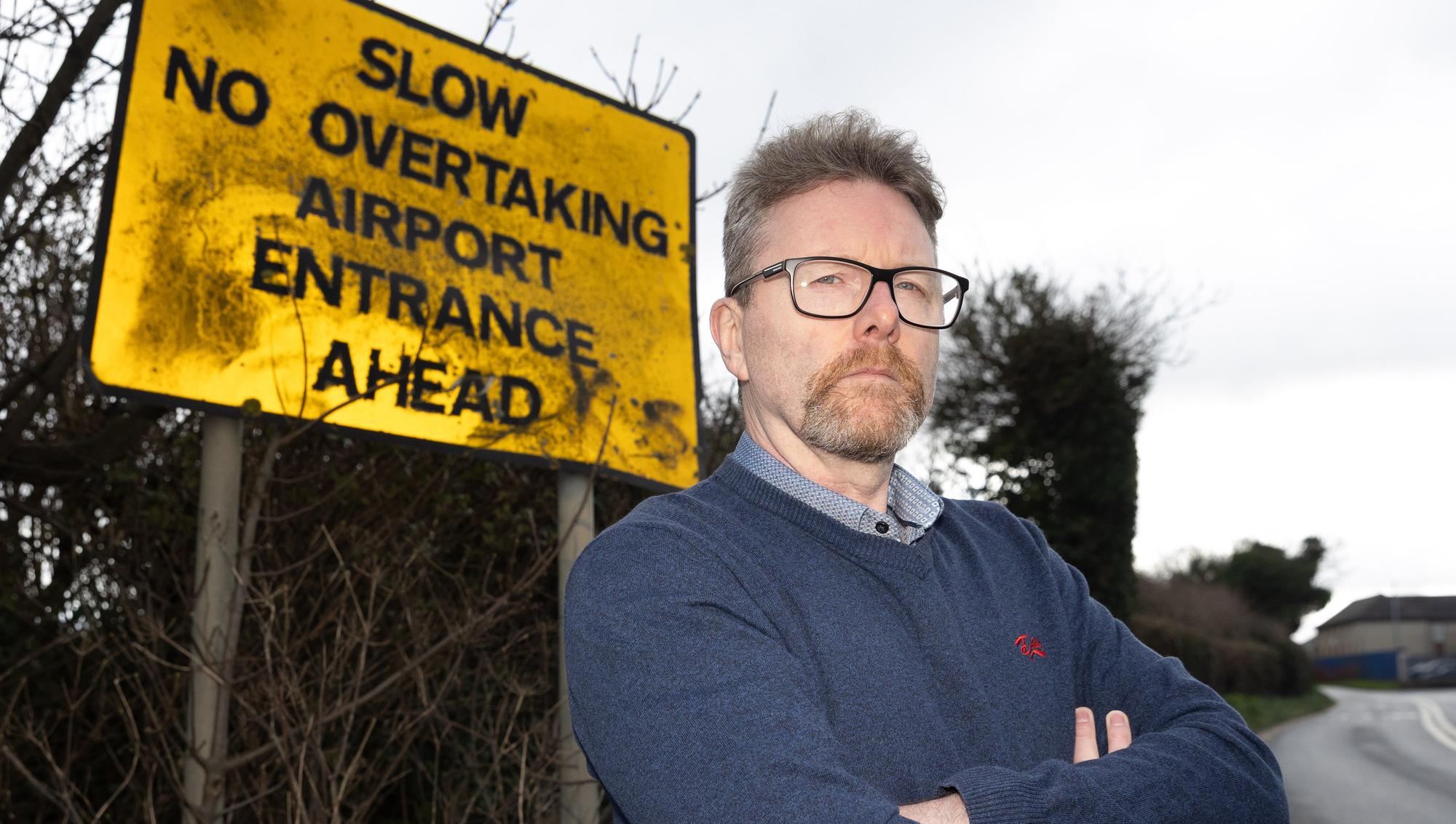
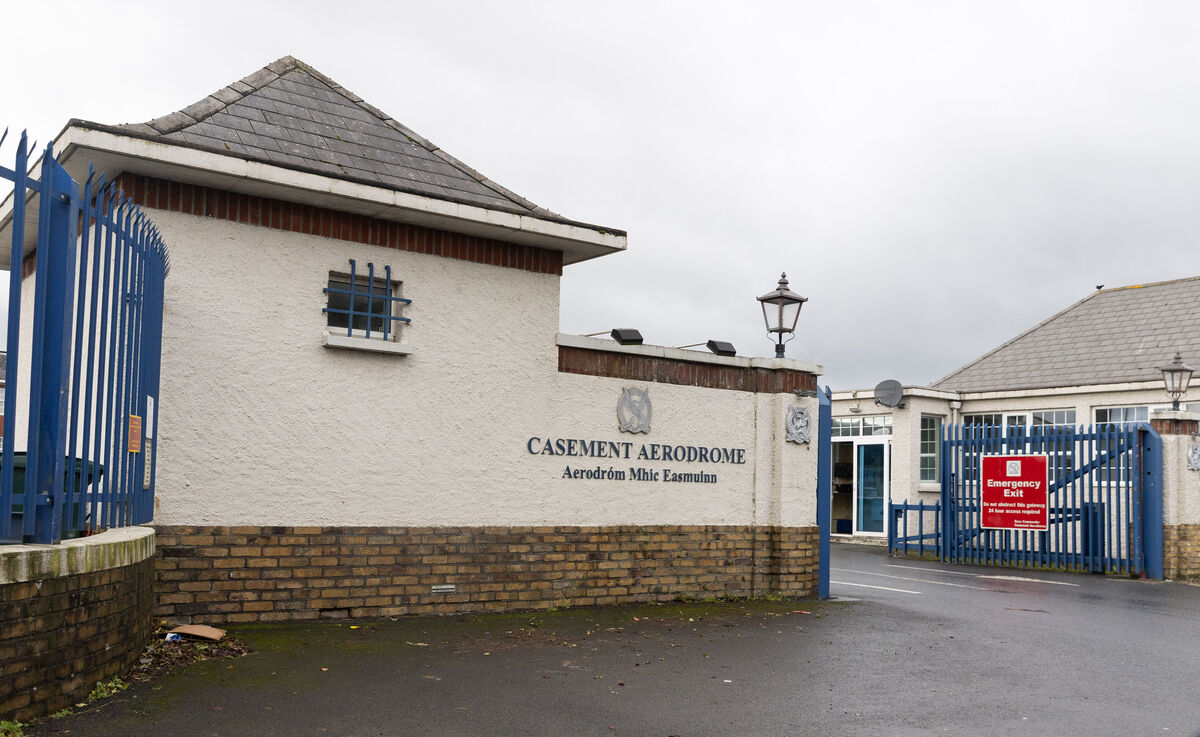
Gavin Tobin at Casement Aerodrome in Baldonnell, Dublin: He was one of three air corps whistleblowers. Picture: Gareth Chaney
On Wednesday, February 1, 2017, the then taoiseach ended a heated debate about air corps personnel exposure to toxic chemicals with five words.
Addressing the Dáil, Enda Kenny vowed: “We will sort this out.”
He was bruised by Micheál Martin's excoriation of him, his government, and his ministers for their “unacceptable response” to “a very serious issue which could represent a serious scandal”.
Days previously, the had published exclusive articles by reporter Joe Leogue exposing allegations around chemical exposure topersonnel in the air corps.
The articles detailed how repeated warnings and complaints around toxic chemicals were either ignored or not acted on, and people either died or fell ill as a result of their exposure.
Mr Leogue’s stories led to a national outcry and questions in the Dáil.
Earlier, in what had been a heated Dáil session, Mr Martin reminded Mr Kenny that not one, but three whistleblowers had warned about conditions at the maintenance shops at the air corps air base in Baldonnel, Dublin, and the degree to which staff there “were exposed to very dangerous solvents and chemicals”.
Those warnings, in 2015, were made some two years after the first case against the State was lodged by Gavin Tobin, one of three air corps whistleblowers.
They also came a year after investigators for the State Claims Agency (SCA) were informed air corps personnel using toxic chemicals did not have access to personal protective equipment (PPE) and had never had access to it, or training on how to handle toxic chemicals.
The SCA found this out because after it received a claim in August 2013, which alleged personal injuries were caused by exposure to toxic substances in Baldonnel, it emailed the Department of Defence’s litigation branch.
The agency asked the department to appoint a liaison officer to prepare a detailed claims report outlining the background and circumstances of the claim the SCA had received in August 2013.
A senior air corps safety officer was tasked with drafting what became known as the Chemical Exposure Report (1994-2005), which specifically related litigation against the defence minister.
The report is understood to have drawn on interviews conducted with about 10 air corps personnel, who were all asked about allegations outlined in the August 2013 claim.
Among the issues raised were whether they had been provided with adequate PPE in the years covered by the report, and whether they had any such equipment at the time of the interviews.
Those interviewed are understood to have stated they had received little or no adequate PPE or training at the time — and had not been supplied with proper protective equipment in the years prior either.
The report was given to the SCA in April 2014. It has remained legally and professionally privileged as it was prepared for a specific court case.
In his attack on Mr Kenny in the Dáil that day in 2017, Mr Martin pointed out “the links of particular chemicals to cancer-causing diseases, genetic mutations, neurological conditions, and chronic diseases have been well-established”.
A precedent for dealing with such cases had already been set in Australia, he said, where the issue was “identified and acted on” by the government in the early 2000s.
He was referring to ex gratia compensation payments made to aircrew who developed depression, gastrointestinal problems, erectile dysfunction, and an increased risk of cancer following chemical exposure.
The Australian government also introduced regular health screening to detect early signs of cancer among serving and former Royal Australian Air Force personnel, with those affected referred for treatment.
Mr Martin emphasised that in November 2015, the then defence minister, Simon Coveney, was informed workers were not receiving occupational health monitoring, as was required by law under the Health and Safety Act 2005.
Mr Martin described as an "extraordinary situation" that they were not provided with protective equipment and clothing despite working with dangerous chemicals. He told Mr Kenny it took until 2016 for the Health and Safety Authority to threaten the air corps with prosecution unless it heeded its safety advice and implemented 13 recommendations.
The HSA had warned “failure to comply with this advice and relevant legal requirements may result in further enforcement action, including prosecution".
The report stated: “Health surveillance should be among the necessary measures to be considered for controlling identified chemical exposure risks.
“The putting in place of a programme to monitor employees’ actual exposure to particular hazardous substances is another measure that should be considered as part of the risk assessment process.”
In response, the air corps promised to comply with the workplace health and safety legislation, and to implement “improved safety standards that protect workers from potential exposures to chemicals and ensure risks are as low as reasonably practicable”.
The reply outlined an eight-phase improvement plan, which would be concluded by the end of 2017.
Regardless of what the air corps had promised to do after the HSA got involved, Mr Martin told Mr Kenny: “The response of the State has been deeply depressing.”
He demanded the government commission an independent health outcome study of air corps aircraft maintenance personnel, similar to that carried out by the Australian government. Mr Martin also demanded an independent board of inquiry of “the entire affair and scandal”.
He later said: “The continual lack of enforcement and protection of health surveillance is quite extraordinary.
“The response of the government is to bury this matter.”
One of the State’s initial responses to complaints from the three whistleblowers came in September 2016, when the Department of Defence appointed former civil servant Christopher O’Toole to review their claims.
However, his suitability for the task was quickly called into question — by O’Toole himself. On the very first page of his 37‑page report, he admitted: “These issues are outside my competence.” He further conceded the review envisaged in the terms of reference was “impractical".
Mr O’Toole still made some telling observations, however. He noted: “Based on the information in the chemicals register currently in use in the air corps, there appear to be products in use which could pose a potential risk to health if they are not subject to appropriate controls and protections.
“It is therefore logical to assume that a number of hazardous chemical substances were in use in the maintenance facilities at the air corps premises at the time of the allegations.
“Whether there is now or was at the relevant time an actual level of exposure which was in fact potentially harmful, I am not in a position to judge.
“I also have no information on what — if any — health surveillance was carried out.”
He added: “All defence personnel are supposed to receive a routine medical at regular intervals, but there appears to have been no special provision for personnel involved in maintenance work or any special alert in relation to persons who may have handled toxic chemicals.”
In terms of whether the air corps workplaces were compliant with applicable statutory obligations, Mr O'Toole said: “I have seen some risk-assessment material but they are not comprehensive enough to provide a clear view of the basis for the assessment made.
“I have no material which would provide a record of any assessment or procedures at the time relevant to the allegations made.
“In the absence of such records, proof of compliance is problematic and establishing the actual situation at the time in question would be a complex task requiring the gathering of evidence and probably taking oral testimony; in effect a forensic exercise which it is not possible for me to carry out.”
One of the conclusions Mr O'Toole came to was that he could not tell if the air corps was compliant with its statutory health and safety obligations because “appropriate records to demonstrate compliance are not readily available”.
A few days after the report was submitted on June 15, 2017, Mr Martin set up a meeting with air corps chemical exposure survivors in Leinster House.
At the time, the list of those believed to have died prematurely as a result of exposure to chemicals had risen to 47. It has since risen to 115.
Along with Mr Tobin, Gary Coll, who worked on aircraft electronic equipment between in 1993-97, was one of those at the meeting. He asked Mr Martin if he would support survivors if he got back into power.
He recalled in a later interview with the that Mr Martin “looked me firmly in the eye, and — as he shook my hand — said he would because it was, in his words, ‘the right thing to do’”.
Today, the 52-year-old, who reached a €2m settlement in his High Court action against the State last February, believes Mr Martin should “hang his head in shame”.
If Mr Coll’s case is anything to go by, the scandal could end up costing the State more than €60m in settlements and another €12m in legal fees.
This is despite the fact the initial approaches to the air corps about what Mr Martin once described as a “horror story” was based entirely around requests by personnel dating back to at least the early 1990s for protection against toxic chemicals.
Added to that, litigation against the air corps has snowballed since 2013, when Mr Tobin lodged the first claim.
Although not all the cases relate to chemical exposure, some 60 cases have been lodged against the air corps since 2013, of which 31 are currently ongoing.
The number of cases specifically related to alleged chemical exposure is believed to stand at about 10, with a further 15 or so expected to follow.
1980s: Air corps personnel begin requesting protective equipment and safety measures for handling toxic chemicals.
2013: The State Claims Agency (SCA) receives chemical‑exposure claim lodged by air corps technician and whistleblower Gavin Tobin. It asks the Department of Defence to appoint a liaison officer and compile a detailed claims report.
Mr Tobin files High Court case seeking records of chemicals he was exposed to during air corps service.
2014: SCA receives Chemical Exposure Report (1994-2005).
2015: First of three protected disclosures made by Mr Tobin to then defence minister Simon Coveney.
2016: The Health and Safety Authority warns air corps it faces prosecution unless 13 safety recommendations are implemented.
2016: Department of Defence appoints Christopher O’Toole to review whistleblowers’ allegations.
2017: Joe Leogue’s reporting in the triggers scrutiny.
O’Toole report submitted in June, days before Micheál Martin meets air corps survivors in Leinster House.
2018: HSA satisfied air corps has implemented the 2016 safety recommendations. It considers the matter closed.
2024: Complaint made about an air purifier in an air corps hangar made to air corps chiefs.
2025: Air corps survivor Gary Coll settles his High Court case for €2m.
Then defence minister Simon Harris tells the Dáil there is “active engagement” between the SCA and litigants to find “mutually agreeable resolutions".
Mr Tobin makes protected disclosure to Mr Harris about issues raised in 2024 around an air purifier.
New defence minister Helen McEntee declines a meeting with Gavin Tobin citing ongoing litigation. Department of Defence examining how an assessment of needs could work. Mr Martin tells the he supports the proposed review and “will have a look” at what emerges.
Mr Tobin, a campaigner for air corps survivors of toxic chemical exposure, said the situation need never have gone as far as it has. “All anybody asked initially for was protection,” he said. “By the time it arrived, it was too late, and the damage was already done.
“Then we started asking for help for those who suffered as a result of toxic exposure while serving in the air corps.
“But the air corps turned its back on us, accused us of being malingerers, and despite their promises to do something, successive governments and ministers did the same.”
The HSA said in early 2018 it was satisfied with the implementations of its 2016 recommendations, and considered the matter closed.
For his own part, Mr Martin has consistently said, ever since he became taoiseach in 2020, that he could not comment on chemical exposure, or meet survivors such as Mr Tobin, due to ongoing legal action.
Aengus Ó Snodaigh, a Sinn Féin TD who has repeatedly raised the chemical‑exposure issue in the Dáil, is among those now pushing for action. As far back as 2019, he urged “an immediate health review of all current and former members of the air corps to ascertain their level of exposure to dangerous chemicals while in the service”.
He has also called for Department of Defence chiefs to be asked to account for their actions, including the treatment of air corps whistleblowers who raised concerns about chemical exposure.
In July 2020, senator Gerard Craughwell raised the issue of air corps chemicals exposure in the Seanad. Pointing to Mr Tobin's struggle to access documents from the SCA that he had been seeking since 2016, he asked whether the agency was hoping people like Mr Tobin would die before any action takes place.
Since Mr Coll’s case was settled by the SCA, tánaiste and then defence minister Simon Harris, in May last year, told the Dáil he had been informed there was “active engagement” with people suing the defence minister.
He made the comment in reply to a question from Sinn Féin TD Donnchadh Ó Laoghaire.
Mr Ó Laoghaire had asked Mr Harris if he had engaged with any of those affected by exposure to toxic chemicals in the air corps or their representative groups, and how he intended to ensure their health was safeguarded and supported.
Mr Harris replied: “I am advised there is currently active engagement between the State Claims Agency and litigants to determine if mutually agreeable resolutions can be found to their cases.
“I want to see that happen and I encourage the State Claims Agency to continue that approach, as I know it will.
“Trying to bring this issue to a resolution that works is important.”
As a former health minister who initiated an ex gratia payment scheme for women affected by the 2018 CervicalCheck controversy, Mr Harris said: “In the past, there have been other areas where even if the State did not accept liability, people did try to meet the health needs of those impacted.”
The asked how many people suing the defence minister over alleged chemical exposure and other air corps issues the SCA had engaged with to “determine if mutually agreeable resolutions can be found to their cases”. The SCA declined to respond.
Mr Tobin has since asked for a meeting with the latest defence minister, but Helen McEntee has declined to meet him. This was due to ongoing legal action, a member of her staff informed him.
Ms McEntee’s officials in the Department of Defence are looking at proposals to review the healthcare needs of sick former air corps personnel.
The review, initiated her predecessor Mr Harris after it was suggested by Mr Ó Laoghaire, was set up last year to see how an assessment of needs could work.
Mr Martin told the last December he was supportive of the initiative, and he would “have a look” at whatever ends up being proposed.
Ms McEntee has said she hopes to have a detailed report in the next month on any proposals for a review of health needs
Mr Tobin has said he is "heartened" by the Taoiseach's response. “I really do look forward to seeing what comes of this,” he said. “Myself and other survivors are well used to setbacks and broken promises by now, so we don’t get our hopes up too easily these days.
“But I do genuinely hope this helps translate into much-needed help.”
The Department of Defence and the Defence Forces were asked for comment.
A Defence Forces spokesperson said: “Given there are several cases before the courts and this issue is also being considered by the tribunal of inquiry, it would be inappropriate for Óglaigh na hÉireann to provide comment on the matter at this time.
“Óglaigh na hÉireann encourages any current or former member who feels they have been affected by this matter to engage with the tribunal of inquiry.”
A Department of Defence spokesperson said: “As there are a number of ongoing litigation claims currently before the courts, it would be inappropriate for the minister to make any comment.
“The minister has been assured by military authorities that the health and wellbeing of members of the Defence Forces is of paramount importance to the Irish Defence Forces and that they are afforded the highest priority.”
CONNECT WITH US TODAY



Be the first to know the latest news and updates