'Like giving to one child by taking from another': Mother's fear for autistic son's future
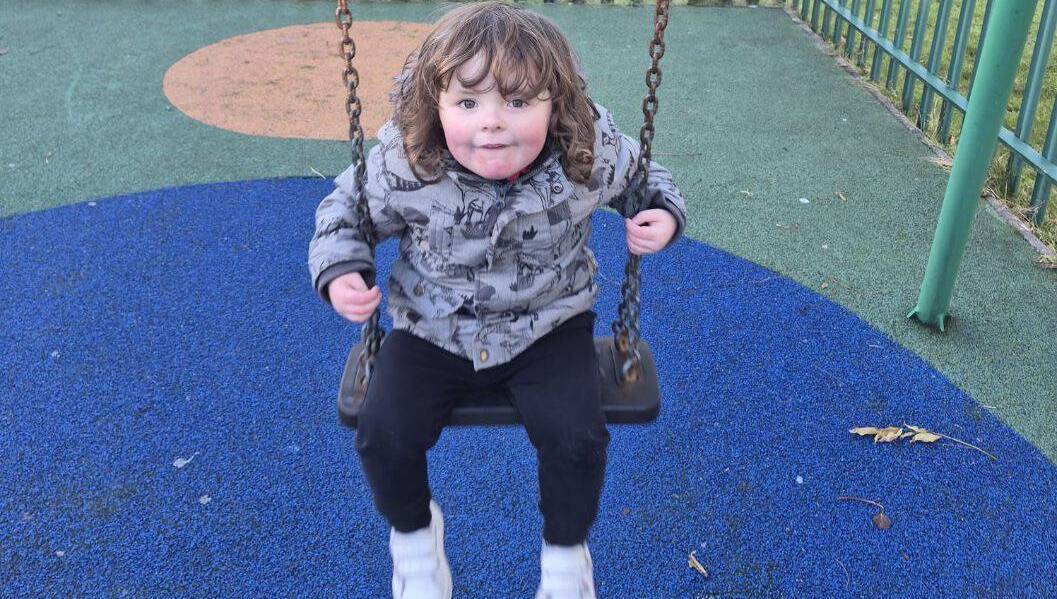
Alfie, 3. In September, Alfie’s ASD pre-school will close, to be repurposed for the upcoming school year as a General Learning Disability (GLD) class.
When Sabrina Dunne started her son, three-year-old son Alfie, in an early intervention class in Waterford last year, she knew it was for a limited time.
Her son needed specialised support, and she was offered a place in pre-school for autistic children at St Joseph’s Special School for 12 months.
What she didn’t know was how difficult it would be to find the support Alfie needs anywhere else in the county when the time came to look for another place.
“I took the 12 months because I needed to get my son into a safe place where he was with his own peers,” she explained.
“I didn’t know they were closing all the early intervention schools in Waterford."
In September, Alfie’s ASD pre-school will close, to be repurposed for the upcoming school year as a General Learning Disability (GLD) class, in keeping with the school’s designation.
“It’s needed for those types of classes, so they don’t have the space then for the early intervention,” she explained.
It means there will be more places locally for school-age children who have a legal right to an appropriate education.
“Parents marched and protested outside the Dáil last year, and they were absolutely correct to, I stand behind them completely,” Ms Dunne said.
“But it's the fact [the department is] taking from the early intervention class to give to primary. It's like giving to one child by taking from another. I don’t know what we’re going to do. I’m now looking at maybe homeschooling next year, for his second year of preschool, because there’s nowhere to go.”
Early intervention classes are preschools for autistic children between the ages of three and five. They are too young to start school, but they need more one-to-one support than is available in a pre-school or creche. An early intervention class has one teacher and two special needs assistants (SNAs) to six students.
Children do not have the same legal right to a place in an early intervention class as they do to be enrolled in school. In recent years, many early intervention classes have been ‘redesignated’ as primary school autism classes, sparking concern that these settings are being quietly phased out.
Early intervention classes around the country are being “slowly but surely phased out, under the guise of inclusivity”, the Dáil heard last week.

Raising the issue, Social Democrats TD Liam Quaide said early intervention classes are being repurposed to meet wider special class demand.
"The Government is getting away with this because it is happening gradually, under the radar, and because the group of children affected at any given time is relatively small," he said.
An early intervention class is redesignated when a “notable need arises” in an area for primary school placements for autistic students, and the students in a class age out of pre-school, according to the National Council for Special Education (NCSE).
But while the number of autism primary school classes has essentially doubled since 2020, from 1,319 to 2,629 in 2025, the number of new early intervention classes opened has barely kept pace with the repurposing of others.
At the start of the year, NCSE figures show 163 early intervention classes for autistic children nationally. This includes 149 attached to mainstream schools and 14 attached to special schools. In 2020, this figure was 156, including 136 attached to mainstream, and 20 attached to special schools.
Some counties have seen increases. Some, such as Leitrim and Meath, had no early intervention classes open in 2020. Leitrim now has one, and Meath has seven. In Cork, seven of the early intervention classes attached to primary schools open in 2020 have since been reclassified as autism classes.
For the current school year, Cork has 21 early intervention classes, compared to 27 in 2020. The last early intervention class in Cork to open was in 2023. In Dublin, there are now 18 early intervention classes, compared to 20 in 2020 and 24 in 2023.
For Alfie, his early intervention class has been “amazing”, Sabrina Dunne said. “He’s come on so much, he’s starting to say sounds, he’s starting to try and say words, he’s started back eating. He loves going on the bus with his friends in the morning. They have been amazing.”
But the worry about next year is playing heavy on her. “I have a list of creches that we had Alfie’s name down, and we haven’t heard from any of them,” she said.
In recent weeks, they have been offered four hours across two afternoons at a creche for children with additional needs.
“I work full time in the HSE, and I’ve had to cut my hours, and I’ve had to come out on carers’ leave,” she said. “I’m probably looking at either giving up work or a career break at my own expense next year if he has nowhere to go.”
Since the Access and Inclusion Model (AIM) was rolled out in 2016, more than 41,300 children have received targeted supports in more than 5,000 pre-schools and creches nationally. It includes universal and targeted supports, a spokesman for the Department of Children said. It does not operate an SNA model, he added. However, additional funding is provided to pre-schools where a child requires extra assistance.
"This funding enables providers to reduce the child-to-adult ratio in the pre-school room or to fund an extra staff member as a shared resource with other children in the ECCE setting."
Teachers of early intervention classes at a school in Cork told the they can see and understand the benefits of a model like AIM. However, they stressed the environment — small class size and one-to-one support — of an early intervention class cannot be matched in a typical creche setting.
"There’s a predictable learning environment here, where the children can feel safe and get plenty of attention and the help they need,” one teacher who asked not to be named said.
“In a creche setting, it can be very overwhelming.”
In an early intervention class, the days are planned out with children’s individual needs in mind. Day-to-day learning usually consists of sensory, social, and communication activities, as well as some basic academics, but is catered to each child.
“We would be looking at what each child needs, and we have the support of two SNAs in each room, so we are able to have the scope to spend the time and individualise it as much as possible.”
“That’s a huge positive, and something that is very difficult to do in a bigger setting with a lot more children.”
There’s a huge demand for places each year, they added.
“Every year we would fill all places. It's different for every child what progress looks like or what areas are targeted, but we would see huge differences from when children come in on day one, to the end of their time in early intervention.”
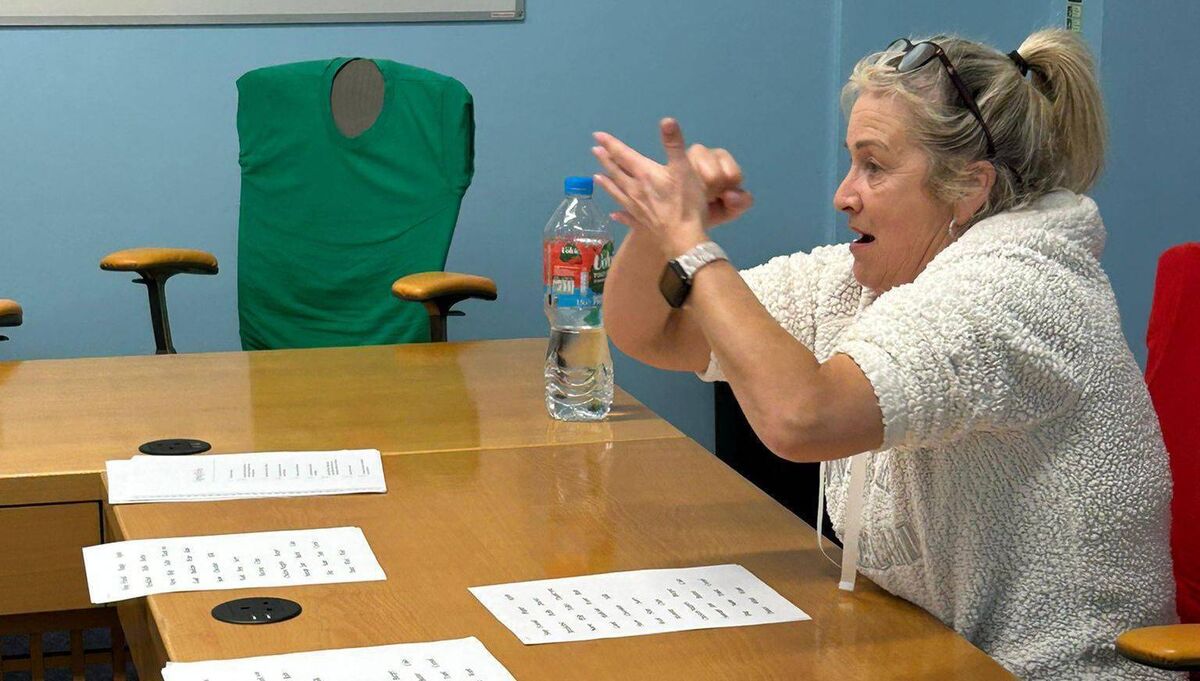
Another early intervention teacher told the Irish Examiner about the time their class spends focusing on Lámh. “It's like a sort of sign language to help children begin to communicate if they have no words yet,” they explained.
“Over the last two years, only one or two students had words coming in [to the class]. You’d really see a big difference from when they would first start towards the end of the year, whether they are doing one year here or two. You can really see they are starting to attempt to say words, and they are really trying to start communicating with you."
“The Lámh is useful, but it is the one-to-one support here, and the more time you can give them that they wouldn’t get in a creche or in mainstream, that really makes it effective.”
Most days, the class will go through the Lámh sign for ‘hello’, as well as more common signs.
“I’ll pass around a poster with small pictures of the Lámh songs. Someone might pick the and so we’ll put that on, and someone is signing along. I’ll get that child then to pass the poster to the next person, so it's about creating small interactions like that.”
“A lot of kids wouldn’t understand at the start of the year that you are asking them to pick a song. They don’t realise they have a choice to make, but definitely as the year goes on, you see that as soon as the poster gets passed to them, they know what song they want.”
Jane O’Keeffe is class teacher of Sonas, the early intervention class at Clondrohid National School. The rural co-educational school is in Clondrohid, just outside of Macroom.
The school’s early intervention class has been open for the last 11 years.
“We saw there was a need for it in our area, we knew children would benefit from it,” Ms O’Keeffe said. “We focus on the individual child and what that child needs. We do a lot around play, social skills, and language development. We would be linking in with their speech and language therapists where possible, and their occupational therapist where possible.”
“We have a lot of pre-verbal children. They are learning how to speak, and children at three, four, and five are like sponges at that age. It's so important, I feel, to keep early intervention, because they learn so much in one or two years, it's amazing.”
Every child is different, said Ms O’Keeffe.
“It's all based on the individual child and what they need," she said. "Some children might come into us, and we’re trying to get them ready for mainstream. We know they will be able for mainstream in two years, but at the moment they need the steps and the foundation put in place. That might consist of them spending some of the time down with me, and I will teach them social skills, we might do speech and language development.
“We might link in with the junior infants class, and we’ll do some of the same maths they are doing, for example, or the same English. When they are able, they might start integrating into those subjects.”
“We’re trying to build it up that when it comes to their time to start junior infants, they might be ready, or they might partially integrate into junior infants.
“Another child might come in, and they have no language, so you’re working a lot on how they communicate. Some children might have an augmentative and alternative communication device, and some children use communication boards. We’re trying to see what suits the child, and helping them to communicate their needs and wants.”
The AIM programme is “fabulous” for the children it does suit, she believes.
“The pre-schools are fantastic, don’t get me wrong, but just sometimes the early intervention class does suit younger children on the spectrum," she said. "The AIM programme does suit some, but, in my opinion, other children need early intervention, and it would be an awful shame if it went.
“It would just be an injustice for children. Parents always seem to have to fight for their children’s basic right to education, an education suitable for their children.
"To take away any early intervention class would just be another blow for children, I think.”
CONNECT WITH US TODAY



Be the first to know the latest news and updates