'I do believe in an afterlife': Meet the Togher man who is custodian for six Cork cemeteries
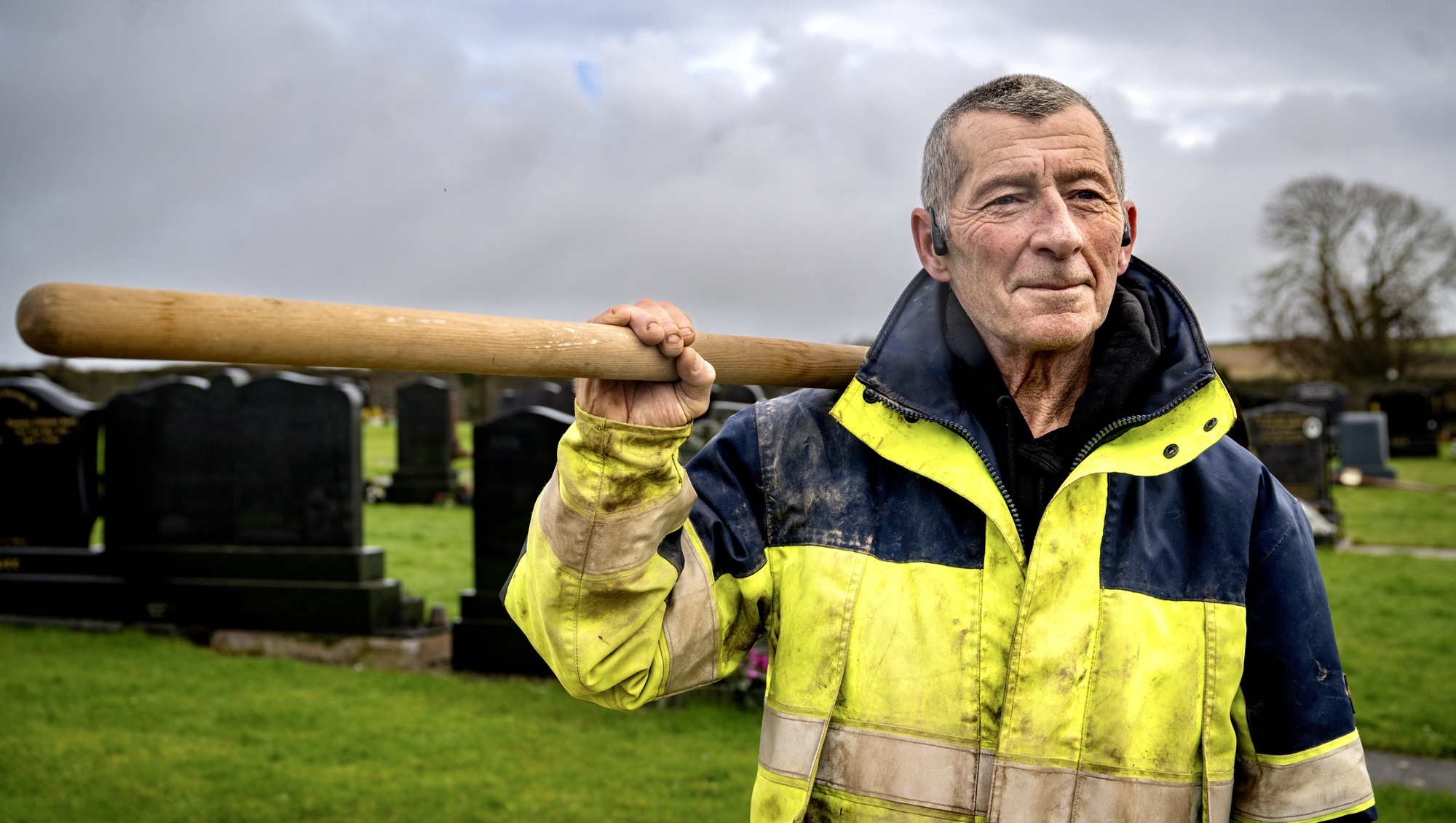
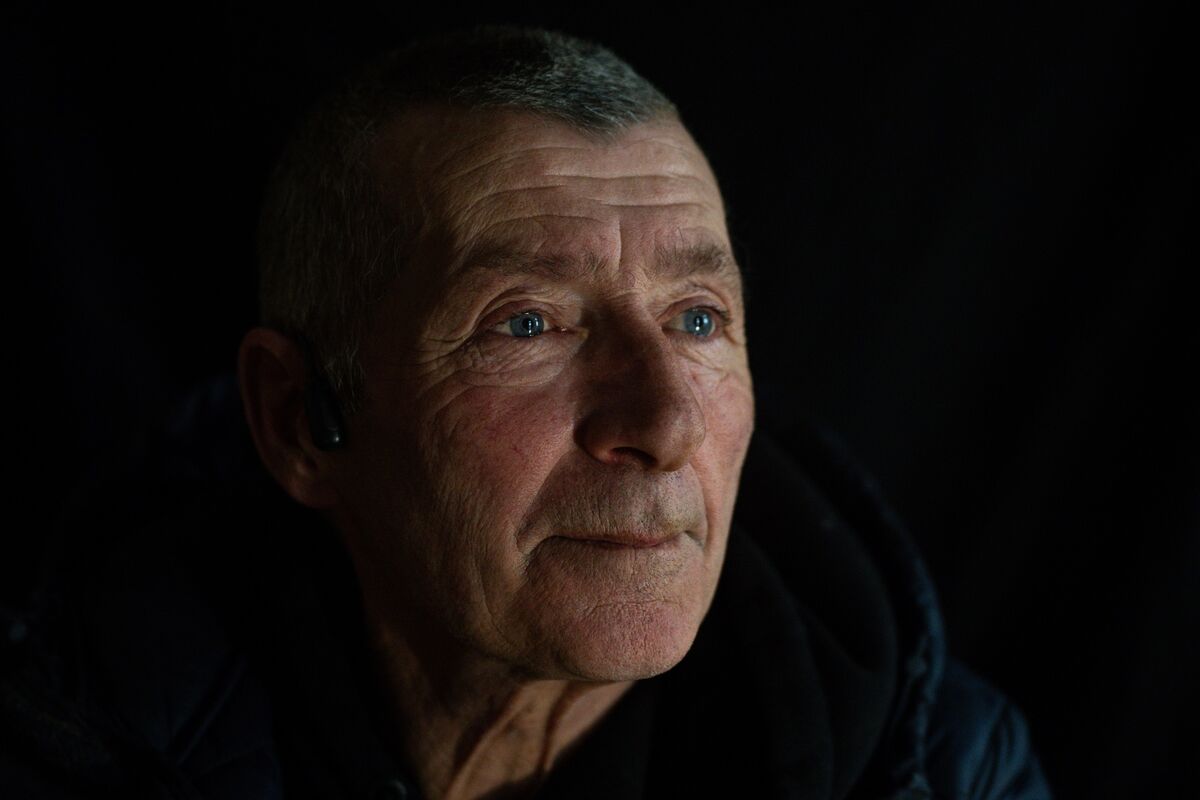
Mick Meade smiles as he works among the graves in Crosshaven, Co Cork. His warmth and easy manner reflects the human touch he brings to the role. Picture: Chani Anderson
"One of the strangest things I ever get asked is, ‘How do you work in a cemetery all day?’ And I say, it is one of the most peaceful places I could work in."
Those are the words of Mick Meade, who has been working as a custodian for six cemeteries in Cork County for nearly 20 years.
After working in the gardening section for Cork City Council in Ballincollig, Mr Meade decided he wanted a change in careers and did not want to be climbing trees and cutting the tops off them well into his 50s and 60s.
He decided to apply for a job that was going at the time, and after passing his interview out of a hundred others, he was given a choice of graveyards to look after. He decided to take over St John’s Cemetery in Ballinrea.
Read More
Two years after he took that over, he was asked to take on two others in Ringaskiddy, after the caretaker, who was 84 at the time, gave them up. Then, in 2010, he was asked to take over another two in Crosshaven, including the one in Templebreedy, which had been around since the 17th century. Later, in 2012, Mr Meade took over Liscleary Cemetery in Ballygarvan.
The visited Mr Meade at St John’s Cemetery, which, according to him, can host 64,000 burials.
“My philosophy of life and death has definitely changed,” the Togher man said.
Mr Meade said he did his first funeral in December 2006, which was for an old man, which he said was “fine” because “that was the way life was supposed to be.” However, in February 2007, he had to do a funeral for a seven-year-old boy who had died from leukaemia.
“It made such an impact on me,” Mr Meade said. “I saw his parents, and his grandparents, they were absolutely distraught.”
“I remember at the time, my youngest child was seven, when this child passed away. So, he was the same age as my youngest, and I remember going home and looking [at my son] and saying, ‘I could not imagine life without that little child'.” Mr Meade said.
He added that it took him a while to get over that funeral.
“Because it wasn’t fair on them, as we know, life isn’t fair on anyone really. I took that one particularly hard, alright,” he said.
“I won’t say the more you do, the easier it gets, but you do get a little bit battle hardened from the kids’ ones, and you become kind of part psychologist and part forensic detective, really.
“People are always looking for answers, but do I have more than the average Joe? Probably not.
“Doing kids' funerals is horrible, because you can see your own kids in it,” he added.
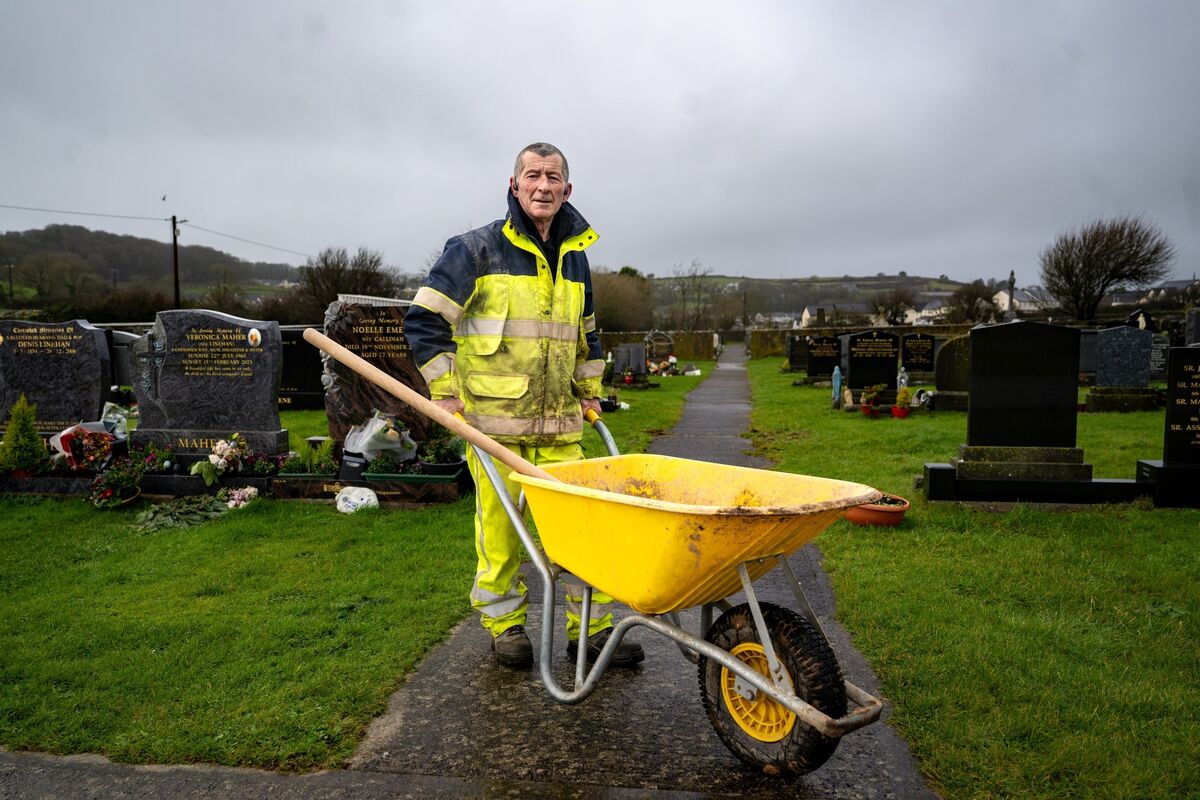
For Mr Meade, working in cemeteries is dependent on one's attitude towards death and the afterlife.
“I regularly go to the pub on Saturday night, and the lads will be like, ‘How many funerals did you have this week? How was it?’
“They’d be asking you those kinds of questions, and then they would ask, ‘Do you really think they have gone somewhere?’ And I would say, ‘Yeah, they have, they’ve gone six feet down under.
“They would then say, ‘I mean an afterlife, do you think they’ve gone somewhere?’"
The custodian said that it comes down to personal belief at the end of the day; some people would believe in an afterlife, and some people do not.
“Me personally, I do believe in an afterlife, but I suppose you get asked all sorts of strange questions,” he added.
"I have always looked at funerals as if you’re meeting people at the worst possible time of their lives,” Mr Meade said.
“I’ve had people come up here who are cranky and sad, and I think that’s the wrong time to judge them, so I always have the mantra in my head that, you’re meeting people at the worst possible time, this is as bad as they are going to get.
“Often, they come back, and they are absolutely fabulous. And I suppose, no matter how cranky they get with me, I don’t get cranky back at them, and I don’t take offence at what they say.
“They can be difficult sometimes, but I’m pretty sure that difficulty stems from the grief at the time.”
He also recalled the strangest things people could get upset about in relation to their loved ones' graves.
“And I go, ‘They don’t mean any harm by it.’ She goes: ‘But they’re still walking on my husband’s grave.’
“I said: ‘Yeah, I would see how this would upset you, but would you do me a favour?’ She said, ‘What?’ 'Don’t call up on a Thursday.’ ‘Why?’, she said. ‘Because I drive a tractor on top of his grave to cut the grass.’
“And she goes, ‘Am I being stupid?’ I said: ‘No, not stupid.’ And you know, people do not mean any harm by it.”
“The strangest funerals that we get here are when you have fractures in the families,” Mr Meade said.
“There might be one where the mother or the father has passed away, and the siblings aren’t speaking. Like what is very evident, there is one set that would be over here, and the other set would be over there. And they are not talking to each other, which is tough on them.
“Even though you’d imagine grief would unite them, it actually doesn’t in some cases.”
The custodian added that one of the “most saddest and most brilliant funerals” he ever had was at the same time.
“It was a schoolgirl who had died in an accident. It was around Christmas time, and all her school pals were there. They were extremely distraught at the funeral.
“But about three weeks later, they hired a bus and all of them came up for her month’s mind, and they sat in front of her grave, singing songs, drinking a few bottles of beer, just having a bit of fun.
“And I walked over, and they immediately thought they were in trouble. But I said: ‘It’s great to see ye lads, but if ye don’t mind taking your bottles back with ye when ye are leaving, I would greatly appreciate it.
“And they did. And now they come back every year, on her death anniversary, spend some time at her grave, singing songs, having fun and always clean up after themselves.”

CONNECT WITH US TODAY



Be the first to know the latest news and updates