Sean Murray: Stardust inquest to get underway

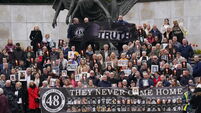
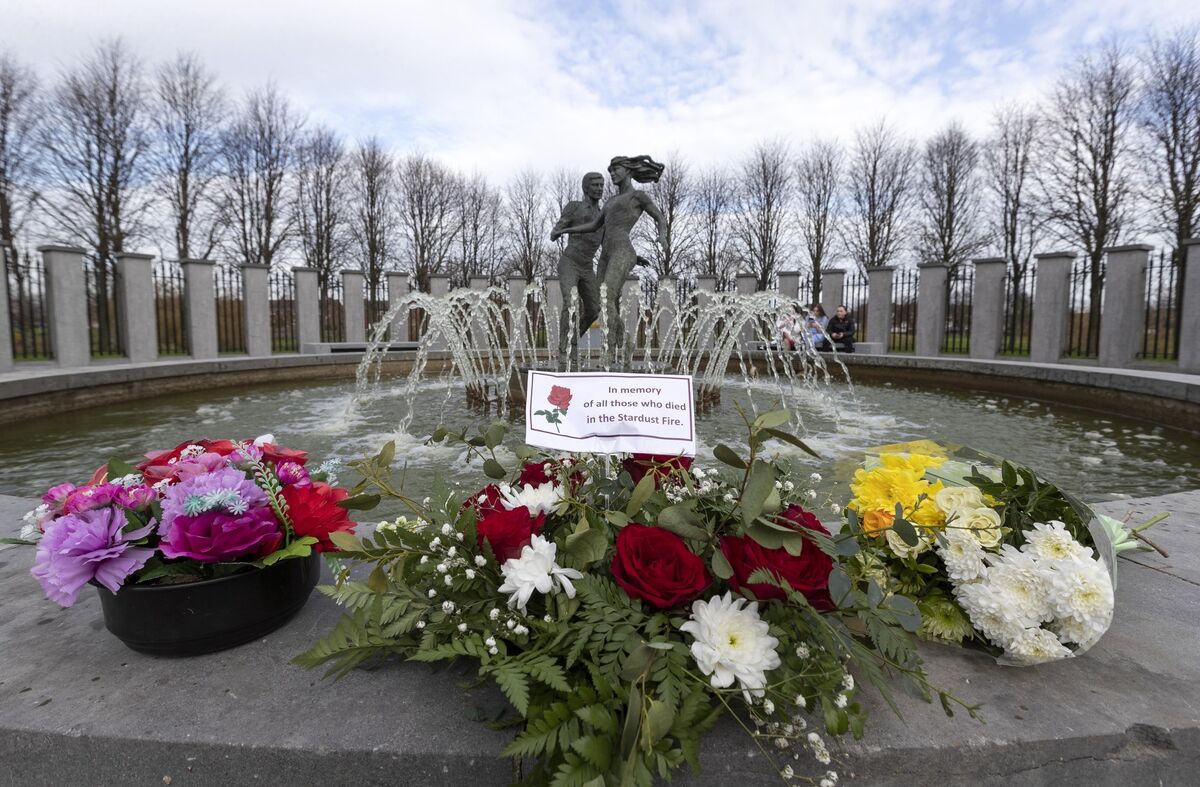
The memorial to the 48 victims at the site of the Stardustnightclub in Artane. The victims perished after a fire broke out at a St Valentine’s disco-dancing competition in 1981. Picture: Colin Keegan/Collins Dublin
As 2019 came to a close, “finally next year could be the year for the Stardust families” might have felt an accurate prospect.
In September that year, the Attorney General had granted new inquests into the deaths of 48 people in the Stardust nightclub in North Dublin in 1981. Most of them were teenagers or in their early 20s when they perished in the blaze.
The average age of the deceased was 19 and a half.
Families had been campaigning for progress like this for decades. False dawns, obfuscation, delays. It had all been thrown their way. It didn’t stop them.
We all know what happened in 2020. With the pandemic, any hope of getting those inquests fully under way in that year was all-but extinguished by March.
The first pre-inquest hearing, where the coroner would set out how this would work and what would happen next, took place in October 2020.
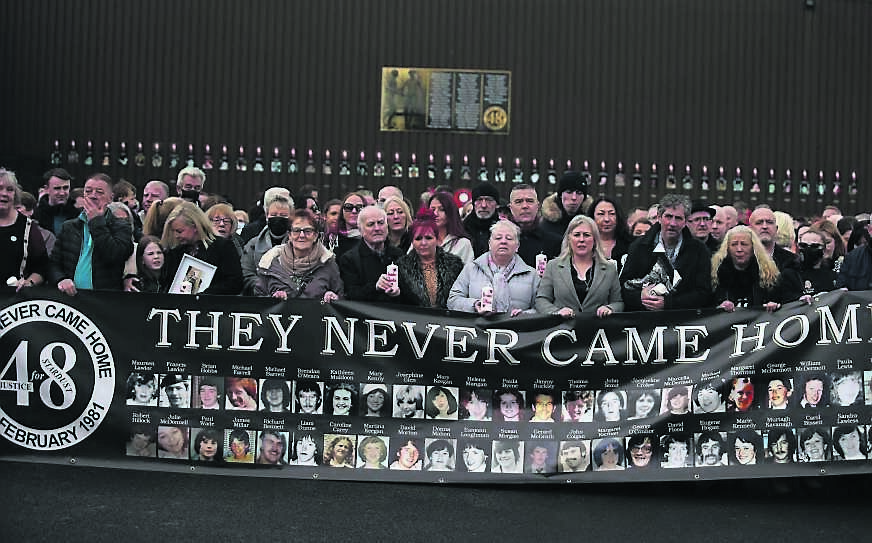
Dozens of the campaigners turned out again at the coroner’s court on Store St — generations of people who had lost loved ones in the fire. They were happy to have got this far. This was real progress at last.
Again, at the end of 2020, you might have felt “finally, next year could be the year for the Stardust families”.
What does such a sentence mean? It simply means that they would finally get their chance to have this horrible tragedy investigated again.
They would hear those inquiries into what caused the fire that killed their loved ones in court.
They would get the chance to speak about their daughters, sons, sisters, brothers, friends, and give them a voice.
More than anything else, they would get a chance at closure.
No one who was there at the St Valentine’s disco-dancing competition that had stretched into the early hours of February 14, 1981, has forgotten — or indeed could ever forget — that night.
Going to the Stardust of a weekend was what you did. Dublin had a few decent-sized venues where young people could go for a drink and a dance, and the Stardust in Artane was one of them.
It had well-known acts playing, as well as DJs spinning the tunes. The Specials played a gig there in January 1981, a month before the fire.
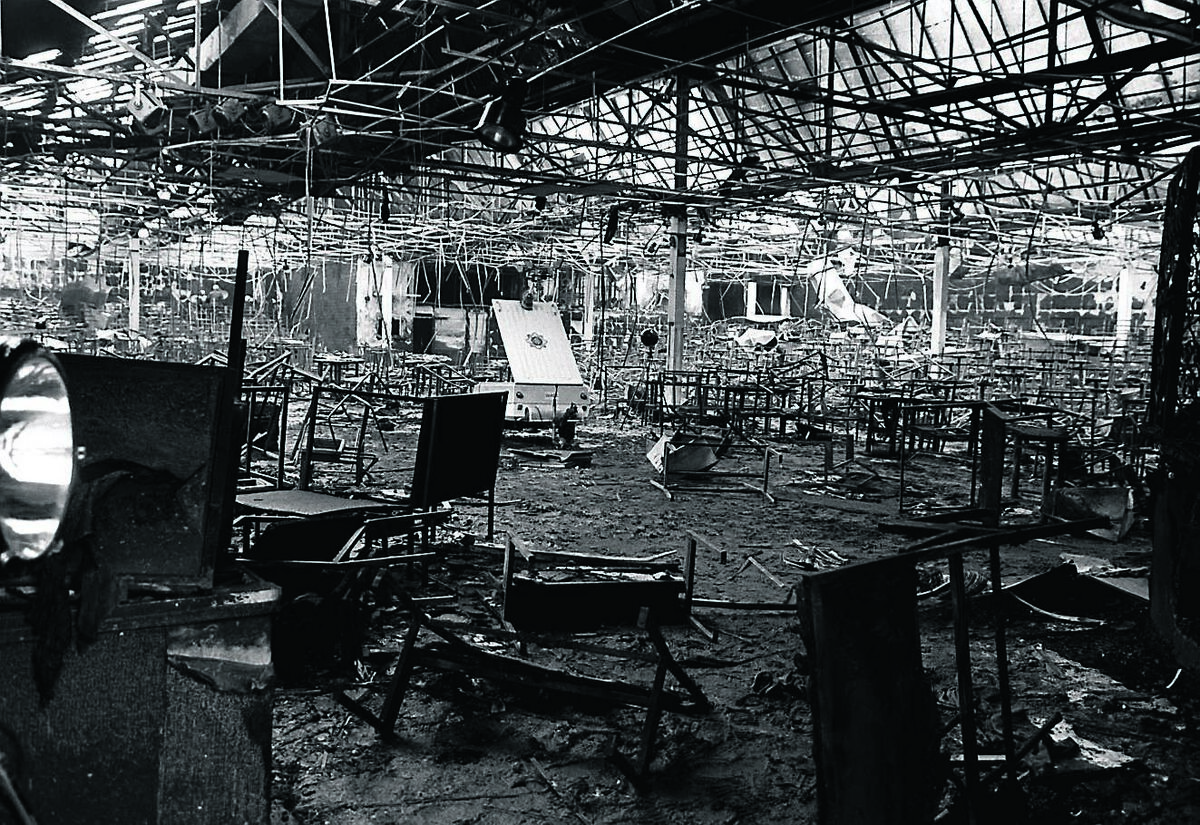
The St Valentine’s disco-dancing competition was going to be a big night. There had been a big build-up to it for weeks. Competitors had participated in heats and were all bidding for the crown.
Here is not the place to discuss the fire and its circumstances. That’s for the long-awaited inquests to do.
Suffice to say that the devastation it left in its wake was incalculable and, for those young enough not to remember that time, it is impossible to comprehend such a thing happening.
That whole north Dublin community was left reeling, with wounds that have never fully healed.
In all, 48 people died. A line in the 1986 report on a tribunal that compensated victims said it received applications in respect of 50 people who had died. The other two were parents of victims who “died as a result of shock caused by the involvement of their children in the fire”.
That compensation tribunal ruled that it could not award compensation for bereaved parents for “mere grief, however intense”.
It is an example of the kind of State approach to these mostly working-class families that they say has continued for decades to galvanise them into action again and again. They felt that if this had happened in a middle-class area, they would have got the answers they sought. They felt it was easy for official Ireland to simply dismiss them.
And they were dismissed, repeatedly, but they did not let it deter them.
Some have come in later, others show their support whenever they can. But the overall aim for a great many has remained consistent: Campaign after campaign, protest after protest, to finally get to the bottom of this once and for all — why their friends and family members died.
However, even with the inquests finally granted in 2019, it took almost four more years to reach the point where they can now at last get under way on Tuesday.
There were a number of reasons for this. Firstly, inquests of this scale have rarely happened in Ireland.
The tragic deaths of so many people in one event is fortunately very rare and it was clear from the beginning that this would be one of the largest inquests in modern Irish history.
An appropriate venue needed to be sourced, and it was, in the form of Dublin’s RDS. The contract on the RDS would later expire and another new venue had to be sourced.
Interested parties all had to make submissions on a variety of topics. The scope of the inquest had to be agreed on.
The coroner expressed her wish to empanel a jury.
On top of all of that, some of the families had difficulty accessing legal aid.
At an inquest, interested parties are entitled to legal representation.
That would mean that the families of all 48 victims would be entitled to representation.
Between the Department of Justice and the Legal Aid Board, this matter persisted for many months before it was eventually resolved.
There was a further bump in the road in 2022 when Eamon Butterly, the man who ran the Stardust back in 1981, took a High Court judicial review to prevent the coroner from conducting the inquest in a way in which he believed would make him “a target for a verdict of unlawful killing”.
This judicial review was lodged in February 2022 and a judgment only came in November. In that time, the proceedings could not progress to the inquests proper.
It was Mr Justice Charles Meenan who rejected Mr Butterly’s claim that the inquest could not make findings of unlawful killing.
“It is for the coroner, having heard all the evidence, who gave the evidence, and considered the submissions of the parties, to direct the jury as to the permissible verdicts,” he said.
The result of it all was yet more time lost.
This legal bid by Mr Butterly has not changed how the inquests will be conducted, but it meant that the inquests proper could not get under way in 2022.
Time is something that a lot of the families do not have. The parents of those who died in the fire in 1981 are advanced in age now. In their homes, photos of the loved ones lost 43 years ago still have pride of place.
Those who were there on the night are in their late 50s and 60s now.
Many may still see each other regularly, meet down the pub. Others might not see each other for a year at a time.
They will see each other again at the annual vigil outside the former Stardust site, which has an industrial estate and a Lidl behind it.
Or they might see each other at the graveyard, as people turn out en masse to visit the final resting place of their loved ones on the anniversary of the fire.
People have literally died waiting for some resolution. At that first pre-inquest hearing in October 2020, Eugene Kelly was there and very much his usual self. He had been on the campaign for years due to the death of his brother Robert in the Stardust.
Robert Kelly was just 17.
He was looking forward to the process getting under way and getting the closure he had long sought. Eugene Kelly died suddenly, a week after that first hearing.
Christine Keegan, whose two daughters, Mary and Martina, died in the fire, passed away in July 2020. A long-time tireless campaigner, she had been a spearhead of the campaign alongside her late husband, John, and daughter, Antoinette, who was there with her sisters on the night and had taken up the campaigning mantle herself.
Now, as we stand on the cusp of these fresh inquests, would it be naive to think that this will finally be the time for the Stardust families to get the answers they have been seeking, after so long?
There is certainly cause for optimism. The inquests open on Tuesday, with pen portraits to be heard early on in the inquests, acting as a powerful reminder of the lives lost.
Used at the inquests into the Hillsborough disaster, pen portraits give each family an opportunity to stand up in court and talk about their loved ones.
This process is expected to last three weeks.
Following that are the inquests proper. The campaigners have long been left frustrated and angry at what they perceive to be Government inaction to support them.
However, the coroner has been clear on what will be investigated once the inquests get under way.
In a document setting out the scope of the inquests, Dublin city coroner, Dr Myra Cullinane, said: “There can be no doubt that [where and how the fire started] is a matter that needs to be re-investigated in these inquests.” To this end, the coroner commissioned experts to examine the case and help to draw conclusions. Counsel for the families have also commissioned similar experts.
Where and how the fire started is obviously a crucial matter for the families. The original Tribunal of Inquiry came to the conclusion that the “more probable” explanation of the fire is that it was caused deliberately.
Families read this as being told that one of the young people there that night started the fire.
In the working-class north Dublin suburb, they were being told “one of their own” did it.
This finding was struck from the Dáil record in 2009. Getting to the bottom of how the fire started will be a crucial step forward.
The coroner has also proposed looking at any “predisposing factors” related to the premises at the time, as well as what happened within the nightclub following the outbreak of the fire, and the response both of those within the nightclub and the emergency services.
In a document given to potential jurors last week, they were told the inquests will “inquire into the circumstances surrounding each of those 48 tragic deaths”.
It is expected the inquests will last for some time, in the region of six months. As many as 350 witnesses will be called.
In granting the new inquests, the Attorney General said there had been an “insufficiency of inquiry” in the original inquests into the deaths of these 48 people.
In their submissions calling for new inquests, Phoenix Law — on behalf of the families — likened the Stardust to Ireland’s Hillsborough, the horrific tragedy that resulted in the death of 97 football fans in England in 1989.
There too, families had to campaign for decades to get answers.
These words from Christine Keegan, to RTÉ News back in 1987 at the close of the Compensation Tribunal and after the death of her husband John, perhaps sum up it up best after all these years; sum up the length and breadth of the pain and grief of those events in the early hours of a freezing cold February night.
“I still feel very bitter about the whole lot,” she said. “I mean, just put it this way: My girls went out to enjoy themselves and never came back. My husband was never sick in his life.
“It’ll never be over. That memory will be in my house for as long as I’m there. I’d like to open the door and let my two children walk in. And have my husband beside me. But that’ll never happen. The Stardust took the three of them.”
Stardust families and survivors have been on a long road. But, as these inquests get under way, the end may finally be in sight.


CONNECT WITH US TODAY



Be the first to know the latest news and updates