Coroner may issue summons for witnesses to give evidence at Stardust inquest
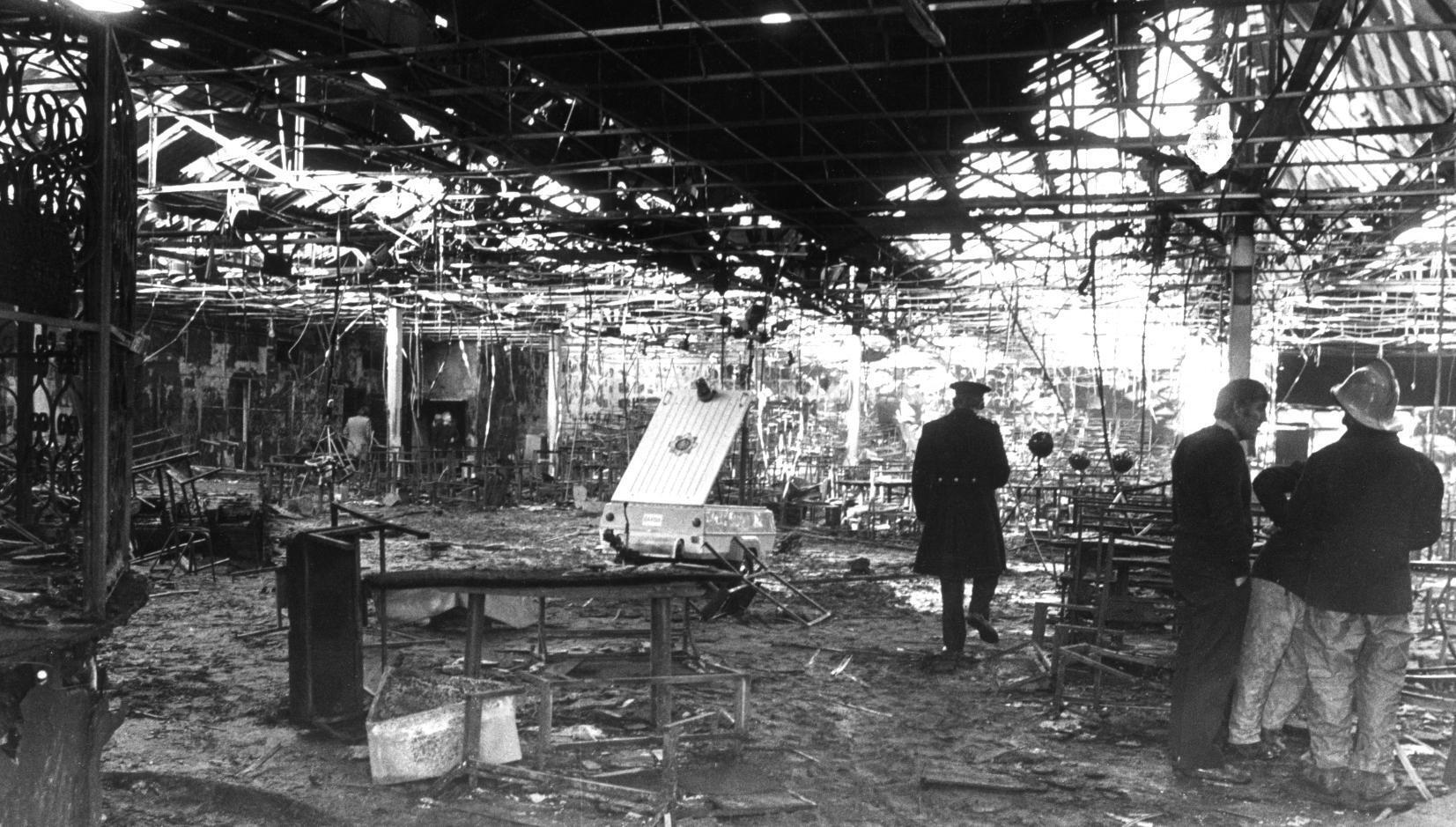
GardaĂ survey the scene of the deadly fire at Stardust in 1981.
The coroner may be forced to issue summons for a number of witnesses who have "expressed an unwillingness" to give evidence before the Stardust inquest.
The long-awaited inquest will finally begin next Tuesday, April 25, and will commence with families delivering âpen portraitsâ to remember their loved ones who died in the tragedy.

The last pre-hearing prior to the inquests starting took place on Thursday, with Dublin city coroner Dr Myra Cullinane saying she would consider a request from counsel for most of the families to change the order in which the evidence would be heard and starting with survivors who were there on the night of the fire.
The new inquests into the deaths of the young people who died in the Stardust fire will be one of the largest in modern Irish history.
In all, 48 people died following the fire at the nightclub in north Dublin in the early hours of 14th February 1981. The initial Tribunal of Inquiry into the tragedy declared that âthe cause of the fire is not known and may never be knownâ.
For many years, families of victims and survivors had campaigned for fresh inquiries into the deaths of their loved ones to try to find the answers they sought. At a number of junctures, attempts to petition the Government to conduct such inquiries failed.
However, in September 2019, the Attorney General granted new inquests and said thereâd been an âinsufficiency of inquiry as to how the deaths occurredâ in the original inquests held at the time.
Now, almost four years after first being announced, the Stardust inquests are finally in a position to get formally underway.
With over 350 witnesses expected to give evidence, itâs expected the inquests could last as long as six months. Jurors will also be permitted to ask questions should they wish of witnesses, after counsel has finished their questions.
Sean Guerin SC, on behalf of most of the families, said it was a âsource of concernâ that the schedule involved staff and management of the Stardust premises being called first.
âThe patrons of the premises, those who went there expecting to be received and accommodated in a safe and hospitable way, those are the witnesses of the first importance in the inquest process,â Mr Guerin said.
He said the ânatural orderâ would be for the patrons to be heard first, as that would form the âcore factsâ of the case related to the fire. Mr Guerin added this would be an approach common in criminal trials.
Dr Cullinane said she instead wanted to adopt a chronological approach to proceedings so jurors could first hear about preparation for the night, any pre-planning, and details of previous events.
âIâll give it consideration,â she said.
Dr Cullinane also made reference to individuals on the list of witnesses who had expressed an unwillingness to give evidence. A witness identified as 311, a staff member, who had âparticular knowledge of staffing on the nightâ may be issued with a summons. Another witness, 176, is âextra-jurisdictionalâ and the coroner said she had no powers to compel that witness to give evidence.
Lastly, she said that witness 20, understood to also be a staff member at Stardust, would be unavailable for âmedical reasonsâ. Describing him as a âsignificant witnessâ, she said this personâs evidence would be read into the record.