Limerick on the Rise: Diverse region developing a diverse talent pool
Diversification key to the huge strides made in the region, writes Education Correspondent Jess Casey
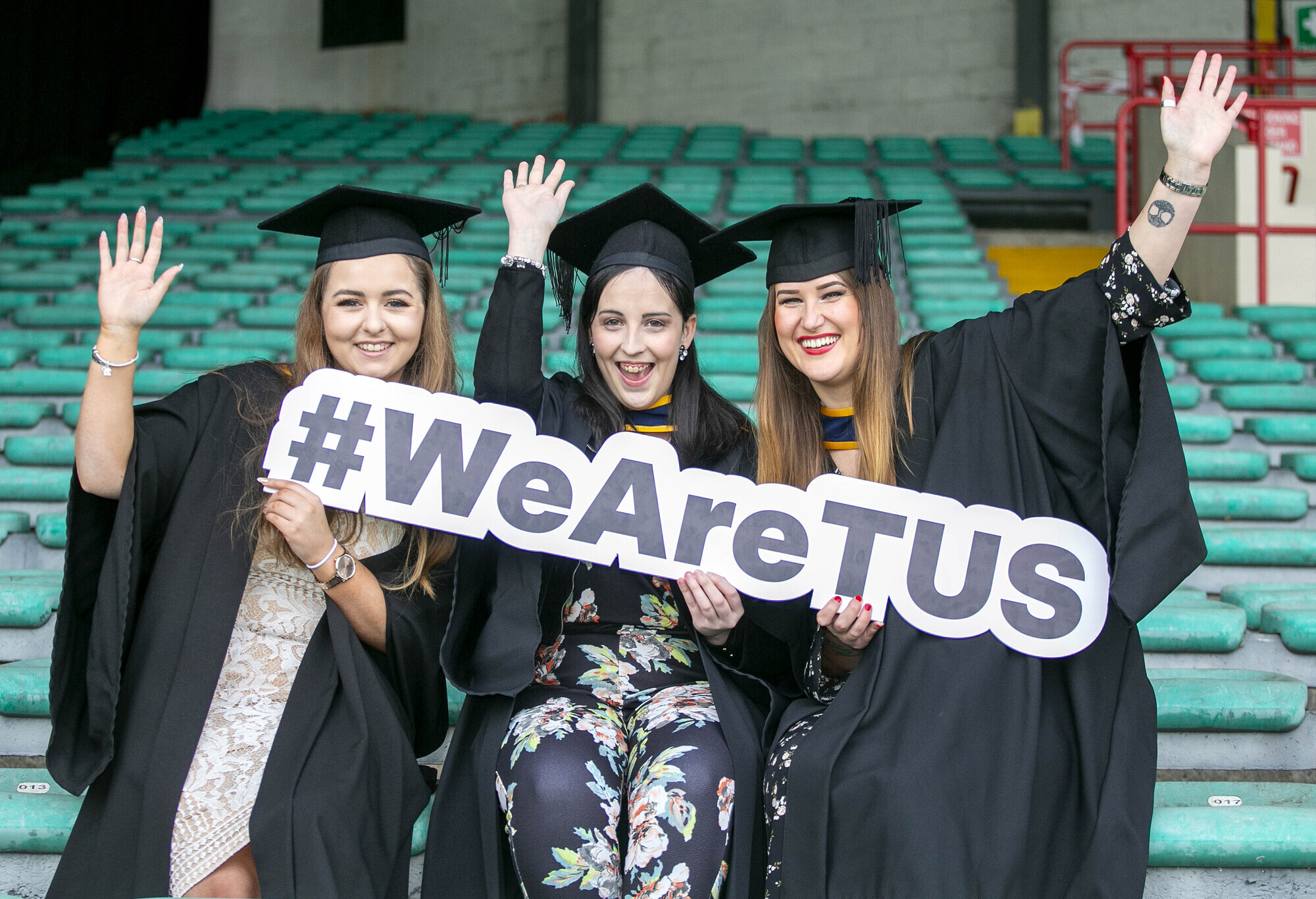
Robyn Stanley, Raheen, Co Limerick; Aoife Kiely, Feenagh, Co Limerick; and Michaela Fitzgerald,Pallaskenry, Co Limerick, all recent graduates of the technological university.	Picture: Arthur Ellis

Robyn Stanley, Raheen, Co Limerick; Aoife Kiely, Feenagh, Co Limerick; and Michaela Fitzgerald,
Pallaskenry, Co Limerick, all recent graduates of the technological university. Picture: Arthur Ellis

Limerick has changed “immeasurably” since Professor Vincent Cunnane first moved here more than 30 years ago.

A native of Donegal, and the inaugural president of the region’s first Technological University, he has seen the city through good times and bad. One of the worst being the closure of the Dell manufacturing plant in 2009.


Dell is still here, employing over 1,000 staff, but the decision to shift what was then it’s largest manufacturing plant in the world to Poland amid the economic downturn had massive ramifications for the region.

“Between direct and indirect jobs, probably close to 4,500 to 5,000 jobs were lost in the region.

“It wasn't just a Limerick thing. People were traveling from many different counties to work for Dell, but its closure had a hugely negative impact,” Prof Cunnane said.

President of TUS, Professor Vincent Cunnane with his new granddaughter Daisy and family, wife Helena, son Connor, and daughter-in-law Amy Freeney at the Technological University of the Shannon official opening.

At the time, as the chief executive of Shannon Development, he was assigned as chief executive of the Midwest task force, under the chairmanship of businessman Denis Brosnan.

“What was clear at that time was the need for change,” he said.

“Part of that was to do with bringing the councils together because they were operating as two distinct entities, at odds, and at loggerheads a lot of the time, and having a single council to serve.”

The two local authorities merged in 2014. “That was the direct result of the Midwest taskforce report. Having a single chief executive really helped to pull a limerick jersey, if you like, on the two together so that people are all working together towards the same plan and the same objectives.” 

There was also an “over-reliance” on a single type of industry, which made the closure of the Dell plant all the more devastating.

“Probably at that time, there was a narrow enough number of sectors that Limerick and the region we were servicing. Now, we have 12, 13, 14 different sectors around who are all doing well.

“We have huge diversification that has taken place since 2009. Whether it's healthcare or biomedical, biopharmaceuticals, financial services, advanced manufacturing, that has been one of the great positives of that. Not only do we have single industries in these spaces, but now we have multiple industries in the space.

“That means you can attract and retain talent, because in your chosen field, and it's not just a company that you're coming to in Limerick and the region, there's now many companies, you can change companies without having to change your location, or your house or your children's schools or whatever it may be," he said.

Another major contributor to Limerick has been higher education.

“There has been much more access to higher education from disadvantaged communities, from new Irish communities, from immigrants.

“This has been a huge change in the years since I’ve been here and it’s only been a huge positive. We need more and more of it,” he added.

During four ceremonies held by the Technological University of the Shannon: Midlands Midwest (TUS) across two days recently 1,571 students graduated at the TUS Gaelic Grounds from the Faculties of Engineering and the Built Environment; Limerick School of Art and Design; Applied Science and Technology and Faculty of Business and Humanities. Picture: Arthur Ellis

Vincent was appointed president of Limerick Institute of Technology (LIT) in 2016. As of last month, that institution technichnically no longer exists, following a merger with Athlone Institute of Technology (AIT).

As president of the new Technological University of the Shannon: Midlands Midwest (TUS) Prof. Cunnane now presides over a diverse student body studying everything from art, nursing and engineering, at six different campuses across four counties.

One of the major opportunities he sees for the region is tied into its shared river. 

“This region is blessed with natural phenomenon. Where we will see huge changes off the Clare coast, and the Kerry coast is in relation to off-shore wind.

“This is a huge opportunity, and for Limerick, and the estuary, it’s about servicing that. The big vision for me would be that we're not just buying in turbines that are made in Spain or Germany or Holland but that we’d have an industry here that develops that technology, that makes those turbines, that makes the motors, an industry where they're being assembled in Foynes and they're taking down the estuary out onto the ocean where they're put together.

“So if you are asking what the next big thing for the region is, it’s offshore wind but policy needs to catch up with that opportunity. This region, the Midwest, in particular, would benefit immensely from a real policy shift towards that.” 

He’s not wrong. In the days since this interview, Norway's Equinor has pulled out of the Irish market due to its dissatisfaction with the regulatory and planning regime. It had planned to build a portfolio of offshore projects in partnership with the ESB, including a floating windfarm off the coast of Clare and Kerry.

For Prof. Cunnane: “I'm not just interested in becoming somewhere where they ship in the turbines, and they put them up, and we produce primary electricity and export that to Europe through interconnectors. That's like going back to the farming side of things.

“Where you know, you’re the primary producer, but the added value is in the secondary side of things, and it’s what you do with that primary produce. It's what we would do with that primary electricity generation, in both pre generation and post generation. That's where we will make a huge impact.” 

Ryan Moore of Caherdavin, Limerick with his daughters Indie (3) Kaia (6) at the technological university graduation ceremony. Picture: Arthur Ellis.

And the intention would be to have students learning and developing this type of technology?

“Absolutely,” he exclaimed. “Absolutely. Jeepers, don't worry about the talent pool for that. We have all those courses, and we will do more and springboard courses, and recognition of prior learning and all that sort of stuff. That’s the easy bit.

“But the policy decisions are the hard bit but that's where we need to get to because it is transformative."

We use that word a lot, sometimes too much, he acknowledges.

“But this is really truly transformative, and it protects the planet. So we’ve got a huge amount of positivity towards that and we would be helping to secure our planet, and make our contribution to climate change as well.” 

Despite the positives, there are some bones of contention. These lie mainly with unfinished or delayed infrastructure projects pledged to the region.

“Obviously, the motorway to Cork linking in the second and third cities hasn't happened,” he said.

“The second biggest port in the country and the biggest one for bulk in Foynes are not linked to a motorway system. Still!

“Imagine the furore if Dublin port wasn't linked to a motorway system or Dublin hadn't motorways to every city in the country, there would be absolute furores.

“Personally I’m just very disappointed about the Northern Distributor Road aspect,” he added.

 Some of the students at the outdoor graduation ceremony of the Technological University of the Shannon: Midlands Midwest (TUS) at the TUS Gaelic Grounds recently. Picture: Arthur Ellis
Some of the students at the outdoor graduation ceremony of the Technological University of the Shannon: Midlands Midwest (TUS) at the TUS Gaelic Grounds recently. Picture: Arthur Ellis

The scheme includes the construction of a road approximately 10km, including a crossing of the Ardnacrusha Tailrace and the River Shannon, with possible crossings of the Blackwater and Mulkear Rivers.

It’s been long promised but was omitted from the recent National Development Plan.

“I see that project as the next generation of future-proofing Limerick and this region, by allowing tracks of land to open up for industrial development.

“We've been very well served by Raheen, and the National Technology Park [in Castletroy] and the Shannon Free Zone, but now those places are now becoming full.

“Where's the next big development line? Where you have hundreds of acres of service land that can attract both fireign direct investment and indigenous companies to, where the State has taken something like a 30 year view?

Dr Vanessa Lacey of Waterford City with her sons Alan (left) and Shane at the recent outdoor graduation ceremony. Vanessa was awarded a Doctor of Philosophy for her thesis "Can I still say Dad?": An Exploration of Loss and Grief experienced by Irish Adult Transgender Women and their Families. Picture: Arthur Ellis

“For me, that opportunity lies along the route of the Northern Distributor Road. To me, it's not just a road. There’s a lot of infrastructure that still hasn’t been delivered," he added.

The Midlands and the Midwest need to become “much more integrated”, he believes. 

“I would be looking towards a single sort of integrated region that will take probably close on 20% of the landmass of Ireland.

“Imagine that as a real region that operates where they are connected, and there’s a shared ambition, where we get into a cycle of developing a talent pool that includes a diversity of industry, and business and social opportunities, artistic opportunities, to get jobs locally and regionally.

“Having people living and working and playing and raising families in the region. That's part of what I'll be seeking to deliver is to increase that, and in turn to improve that interdependency and create that talent pool as well across the most diverse regions.”

x

More in this section

Lunchtime News

Newsletter

Get a lunch briefing straight to your inbox at noon daily. Also be the first to know with our occasional Breaking News emails.

Cookie Policy Privacy Policy Brand Safety FAQ Help Contact Us Terms and Conditions

© Examiner Echo Group Limited