'Was it really worth it, Sean?': How Kinahan cartel lieutenant McGovern was brought to justice
The pursuit of Sean McGovern — a key figure in the Kinahan cartel — spanned countries. Utilising technology as part of a years-long investigation, his landmark extradition and conviction stemmed from a feud-driven killing that shocked the country
'Was it really worth it, Sean?': How Kinahan cartel lieutenant McGovern was brought to justice

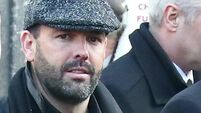
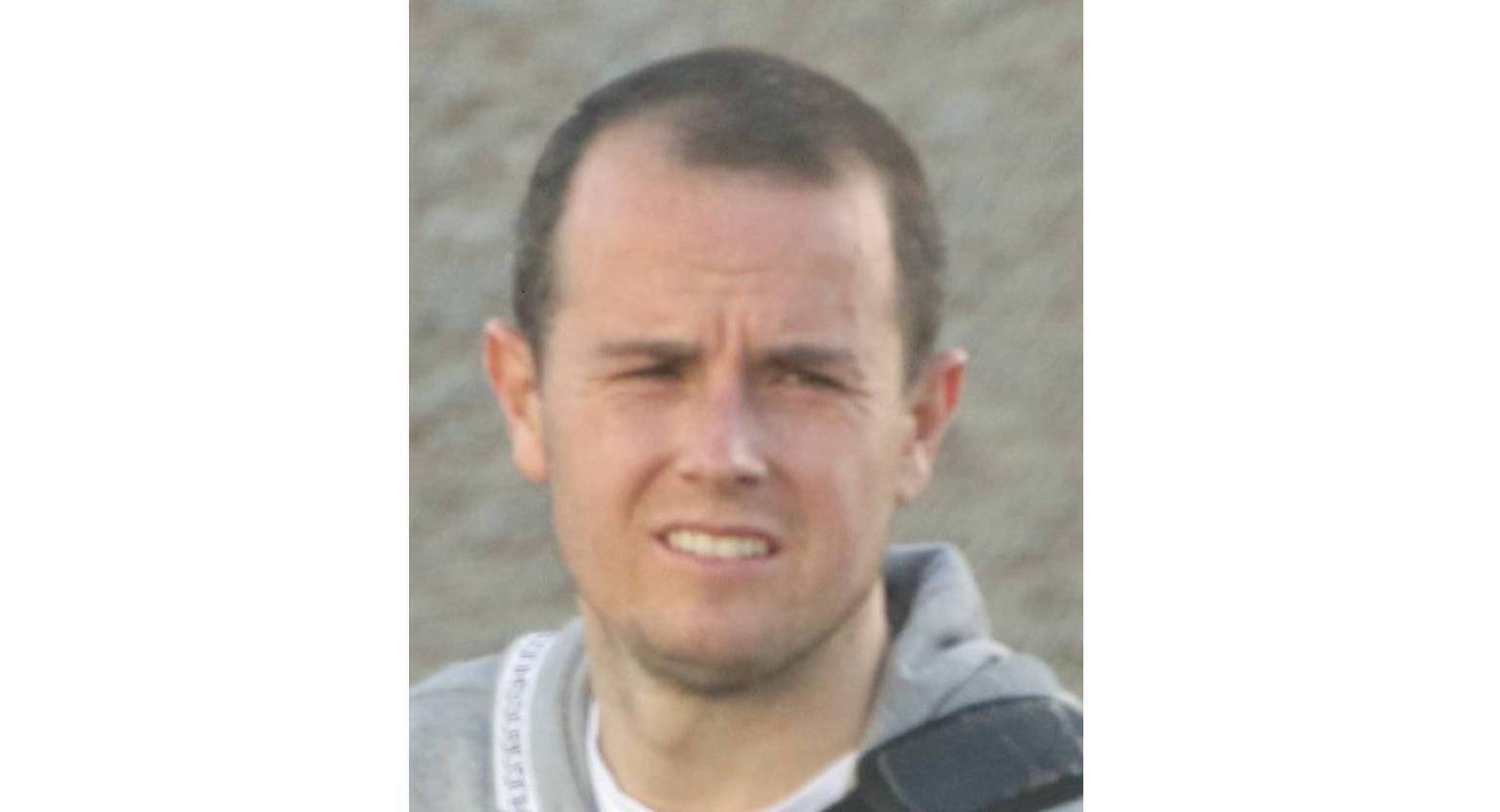
Sean McGovern: Shot and injured during the Regency Hotel attack on February 6, 2016.

Senior Kinahan cartel member Sean McGovern, who directed the gang in the murder of an innocent grandfather and the attempted murder of a second man, has been sentenced to 24 years in prison.

The family of Noel Kirwan on Monday said that international co-operation had made it possible for those involved in his murder to be brought back to Ireland to "finally face justice" and that the case had "in its own way made history".


They noted that McGovern had fled Ireland and, in doing so, lost the chance to stand at his own father's funeral, asking him: "Was it really worth it, Sean?"

Sentencing McGovern at the non-jury court on Monday, presiding judge Mr Justice Patrick McGrath said that the defendant — who he described as a "serious lieutenant and long-term member" of the Kinahan crime group — knew in each instance he was directing the preparations for murder.

The judge added: "It is clear from the evidence that the Kinahan-organised crime group is a particularly large, sinister, and dangerous organisation."

Mr Justice McGrath described McGovern as "a senior frontline officer" who had carried out instructions received from more senior members of command.

"We accept the evidence of the gardaí of his position in the group; while he was not at the most senior level of the organisation, he was an important individual in his own right and a senior trusted lieutenant for the organisation," said the judge.

The 40-year-old, who last summer became the first person to be extradited from the United Arab Emirates to face trial in Ireland, had earlier this year pleaded guilty to a charge of directing the activities of a criminal organisation between October 20 and December 22, 2016, both dates inclusive both within and outside the State, in relation to the murder of Christopher aka Noel Kirwan.

McGovern, with a previous address at Kildare Road, Crumlin, Dublin 12, also admitted directing the activities of a criminal organisation between October 17, 2015, and April 6, 2017, both dates inclusive both within and outside the State, in connection with the surveillance of James Gately in preparation for the commission of an indictable offence.

Gately has survived two attempts on his life, including one attempted hit in which he was shot five times as he sat in his car at a petrol station in May 2017.

Mr Kirwan was sitting in his Ford Mondeo car on December 22, 2016, when a gunman shot him six times with a Makarov handgun which was later recovered at the scene. A Gotek7 tracking device had been put under the victim's car in the weeks leading up to his murder.

'Murderous feud'

Detective Superintendent Dave Gallagher speaking to the media outside the Special Criminal Court in Dublin. Picture: Niall Carson/PA

Detective Superintendent David Gallagher previously told the court that the background to McGovern's offending was a "murderous feud" between the Kinahan and Hutch criminal organisations.

He said the organisations had initially worked as a single criminal network before a falling out in 2014, which resulted in a number of violent acts in Ireland and Spain. In September 2014, Gary Hutch was shot in Spain by the Kinahans, who believed he had been involved in an earlier shooting.

The feud escalated after Gary Hutch's murder before an infamous "watershed moment" when members of the Hutch gang, some dressed as gardaí, stormed a boxing weigh-in at the Regency Hotel in Dublin on February 5, 2016.

They shot and killed David Byrne, a senior Kinahan gang member. McGovern and one other person were also shot and injured, Supt Gallagher said.

The Kinahans then targeted Gately because they believed he was one of the armed attackers at the Regency.

Det Supt Gallagher detailed how the Kinahan gang brought tracking devices from the 'Spy Shop' in Leeds, England, to Dublin. They placed trackers on Gately's partner's car and on a car belonging to his sister. When they later tracked Gately down to an address in Belfast, McGovern and an accomplice travelled North to place a tracker on his car.

The Kinahans then decided to employ the services of Estonian "hitman for hire" Imre Arakas, who arrived in Ireland in early April 2017. McGovern used a secure messaging service for Blackberry users to relay information about Gately's movements in Belfast and the layout of the car park outside his home.

That information was subsequently sent to Arakas.

Gardaí arrested Arakas and found incriminating messages on his phone. After Arakas's arrest, Det Sgt Gallagher said McGovern and others became concerned that there might be an informer or 'rat' in their ranks.

When another person using the handle 'Bon New' suggested they needed to "change tactics", McGovern replied: "100%, or we're all going to jail here."

Det Supt Gallagher said that the Kinahan organised criminal group has engaged in drug trafficking and money laundering on an international scale.

The gang has a hierarchical structure, he said, with a core leadership overseeing cells which divide the tasks of money-laundering, drug trafficking, and violence.

McGovern's only previous convictions are for minor road traffic matters between 2009 and 2011, he said. He was arrested in Dubai in the United Arab Emirates before being extradited to Ireland following a request by the Irish authorities.

McGovern's chief role in the conspiracy to murder James Gately was to direct the surveillance of the target by controlling the tracking device placed on the target's car and pass the information to others.

Text exchanges

The Kinahan organisation used an encrypted messaging service available on Blackberry phones to communicate. Each member had usernames or handles, with McGovern going by the name 'Knife', he said.

In one text exchange two days after the Regency shooting, McGovern told another senior Kinahan gang member identified as 'Cap': "They targeted us, they wanted you," and swore on his baby's life that: "I'm not stopping now."

They also discussed going after other relatives of the Hutch family, while Cap described the Hutch gang as"scum" and said he would not stop until they are "all gone".

In a later exchange when the Kinahans were targeting James Gately, McGovern described Gately as a "weasel" and added: "All weasels get caught out in the end."

With regard to Mr Kirwan, in his direct evidence Detective Sergeant Donal Daly said the Kinahans targeted the 62-year-old after he was photographed in a national newspaper at Eddie Hutch's funeral. Mr Hutch was a brother of Gerry 'The Monk' Hutch.

Det Sgt Daly said Mr Kirwan had no involvement in criminality but had known the Hutch family all his life.

The detective said the Kinahans saw Mr Kirwan as a "soft target" because he had no involvement in the feud, was unaware of any threat to his life, and had taken no measures for his own security.

Det Sgt Daly said that McGovern "planned, oversaw, and directed" the murder of Mr Kirwan.

Gardaí were able to trace McGovern's movements to show that he was present at an apartment in the Beacon South Quarter in Sandyford, Dublin, at all times when a laptop was being used from that location to control devices used to track Mr Kirwan's car.

He said McGovern's DNA was also found on the laptop used to control the tracker, which garda found following a search of the apartment.

McGovern's fingerprint was also found on an instruction manual that came with the same tracker.

Sentencing hearing 

Referring on Monday to the surveillance of Gately, Mr Justice McGrath said various communications involving McGovern showed he was monitoring tracking devices and formulating a plan as to how to "get at" Gately. He said McGovern had also discussed whether "one of the team" could target Gately.

The judge said it was accepted by Det Supt David Gallagher at the sentencing hearing that McGovern had received instructions in relation to this offence from persons further up the criminal organisation structure.

Under cross-examination, Det Supt Gallagher had told the court that McGovern was at the third tier of the Kinahan organisation, with several people above him. While McGovern was directing others, he also received instructions from people further up and part of his job was to feed information up the channel.

The judge said there was no evidence the defendant was involved in the overall planning and decision making with regard to this offence, nor would he have known the persons to whom "the fruits of his surveillance" were passed on.

The judge said it was also accepted that McGovern would have been unaware that Arakas had arrived in Ireland to kill Mr Gately.

It was accepted that those below the top layer end up being the ones that tend to end up in court, answerable for their participation in these crimes.

Thankfully, the judge said, the murder of Mr Gately didn't take place, although he said this was due to Garda intervention and not from any reticence on the part of the defendant.

Mr Justice McGrath said the facts of the case established that McGovern was a "serious, senior member of the Kinahan crime group" and that those in the higher echelons of the organisation had placed a high degree of trust and confidence in him.

With regard to Mr Kirwan, the judge noted that the victim was perceived by the crime group as an easy target. He said the innocent grandfather was targeted "solely as a result of his personal links to" the Hutch family.

Mr Justice McGrath said the evidence established that McGovern had "planned, oversaw, and directed the murder".

He said the settings on the tracking device were changed by the owner or controller shortly before the murder, so that Mr Kirwan's locations were reported every 30 seconds as opposed to every four hours.

"This enabled those to follow more precisely its locations and progress".

Mr Justice McGrath noted it was "particularly sinister and chilling" that a communication from McGovern to another gang member in September 2016 had suggested that a person known as the "Teeth" be assigned to the job of executing Mr Kirwan "with a view to getting his confidence back".

Mr Kirwan was known affectionately to his friends and family as Duck Egg and in one message exchange, McGovern had suggested "putting the Teeth on the duck, to get his confidence back".

Det Sgt Daly said gardaí interpreted this as meaning that McGovern wanted a gang member known as 'Teeth' to be assigned the job of executing Mr Kirwan "with a view to getting his confidence back". The witness suggested that Teeth may have failed some previous assignments.

The judge set the headline sentence at 16 years' imprisonment in connection with the surveillance of James Gately.

However, he said there were a number of factors which distinguished this offence from directing the murder of Mr Kirwan, which attracted a headline sentence of 20 years in prison.

He took into account McGovern's guilty pleas and adjusted the sentences to 12 years and 15 years respectively. He said the two offences did not arise from the same incident, but from separate and unrelated incidents and therefore the sentence for each offence should run consecutively.

The court then took into account McGovern's personal circumstances, including his family situation, previous good record and ongoing effort to rehabilitate.

The court previously heard that McGovern and his partner have two girls, while his partner's dad described the defendant as a "caring and generous" father.

McGovern had also instructed his counsel to apologise to "all those impacted, harmed or hurt as a consequence of his actions".

The three-judge court then sentenced McGovern to 10 years for directing the activities of a criminal organisation in connection with the surveillance of Gately and to 14 years consecutively for directing the murder of Mr Kirwan, backdated to when the defendant went into custody in Dubai in October 2024.

At the sentencing hearing, Michael Bowman, for McGovern, had asked the court to give increased credit for the time the defendant had spent in "onerous" conditions in a Dubai prison before his extradition.

Mr Justice McGrath concluded on Monday by saying that the court did not consider any extra discount should be offered for any further time the defendant had spent in prison there.

Dominic McGinn, for the Director of Public Prosecutions, had argued it was "questionable" whether increased credit could be given to McGovern given he challenged his extradition, prolonging his time in the Dubai prison.

Victim impact statement

In her victim impact statement, Mr Kirwan's daughter had told McGovern that her father would be offended to have been killed by "somebody as stupid as you".

Donna Kirwan suggested that McGovern and five others convicted for their roles in the murder plot must feel "very stupid". Pointing out that McGovern was linked to the murder by DNA, mobile phones, CCTV, and other evidence, she questioned how he thought he was going to get away with it.

"Who put you lot in charge?" she asked. "There's not an ounce of intelligence between you. My dad would be offended somebody as stupid as you killed him."

Noel Kirwan's son Kristopher speaking to the media outside the Special Criminal Court in Dublin on Monday. Picture: Niall Carson/PA

Speaking outside court on Monday, Noel Kirwan's "proud son" Kristopher said it marked the end of a "long and painful journey" for him and his sister.

"For the past 10 years, we have sat in courtrooms and listened to evidence surrounding the brutal murder of our father. Nothing can ever bring him back and no verdict can undo the loss and trauma we have suffered."

He said the family would like to thank their liaison officers and the gardaí of Ronanstown and Lucan for their "devoted work carried out behind the scene" and the sacrifices made "especially during that Christmas period".

"The unwavering commitment demonstrated over the past 10 years — this means more to us than you can ever imagine. The dedication, loyalty, and selfless contribution have been invaluable and we remain profoundly grateful for all you have done.

"We would also like to express our heartfelt thank you to Dublin fire brigade for their hard work, compassion, and every effort they made to save our amazing dad.

To every single witness who stood in that courtroom to testify on all five trials, thank you.

Kristopher said that in recent years, international co-operation had made it possible for those involved in their dad's murder to be brought back to Ireland to "finally face justice".

"We would like to thank everyone involved in this, without their efforts we would not be standing here today. While nothing will bring our dad back, we believe this case has made a difference and in its own way made history."

"Our dad was our safety net, a hard-working family man who spent our whole lives working two jobs so we would never go without. He was all we had. Our home and his arms were always open to anyone who needed help.

"He loved helping; helping the community, helping the elderly, helping anyone who needed it. Our dad was a huge part of the anti-drug movement in Dublin's north inner city in the 90s. The values he lived by — love, sacrifice, and generosity — are the foundation he left behind.

"It is heartbreaking to think that a man who has two children of his own, a man who himself survived being shot in the Regency Hotel, could go on and inflict such pain and torment on any other family. He watched and tracked our dad for nine long months with countless chances to walk away, to change his mind and choose a different path, but he didn't.

"He flew the country shortly after and in doing so lost a chance to stand at his own dad's funeral; was it really worth it Sean?"

"The Christmas of 2016 we had to stand in a bitterly cold morgue and identify our dad, while families at home were celebrating and out buying presents for their children.

"The cruelty of that and the complete disregard for human life and the devastation left behind is something we will carry with us forever. One day, Sean McGovern will be released and get to spend the rest of his days with his family, while we will be out here surviving in a world we never wanted to be a part of," he concluded.

In a statement released after Monday's sentence was handed down, Det Supt Gallagher said the conviction should stand as a lesson to those who glorify organised crime and promote it as a way of life.

"There are no untouchables, and law enforcement is committed to the pursuit and prosecution of those who are the leaders, the decision makers and the facilitators," he said.

x

More in this section

Lunchtime News

Newsletter

Get a lunch briefing straight to your inbox at noon daily. Also be the first to know with our occasional Breaking News emails.

Cookie Policy Privacy Policy Brand Safety FAQ Help Contact Us Terms and Conditions

© Examiner Echo Group Limited