€8.5bn Budget 2027 package ‘totally devoid of ambition’
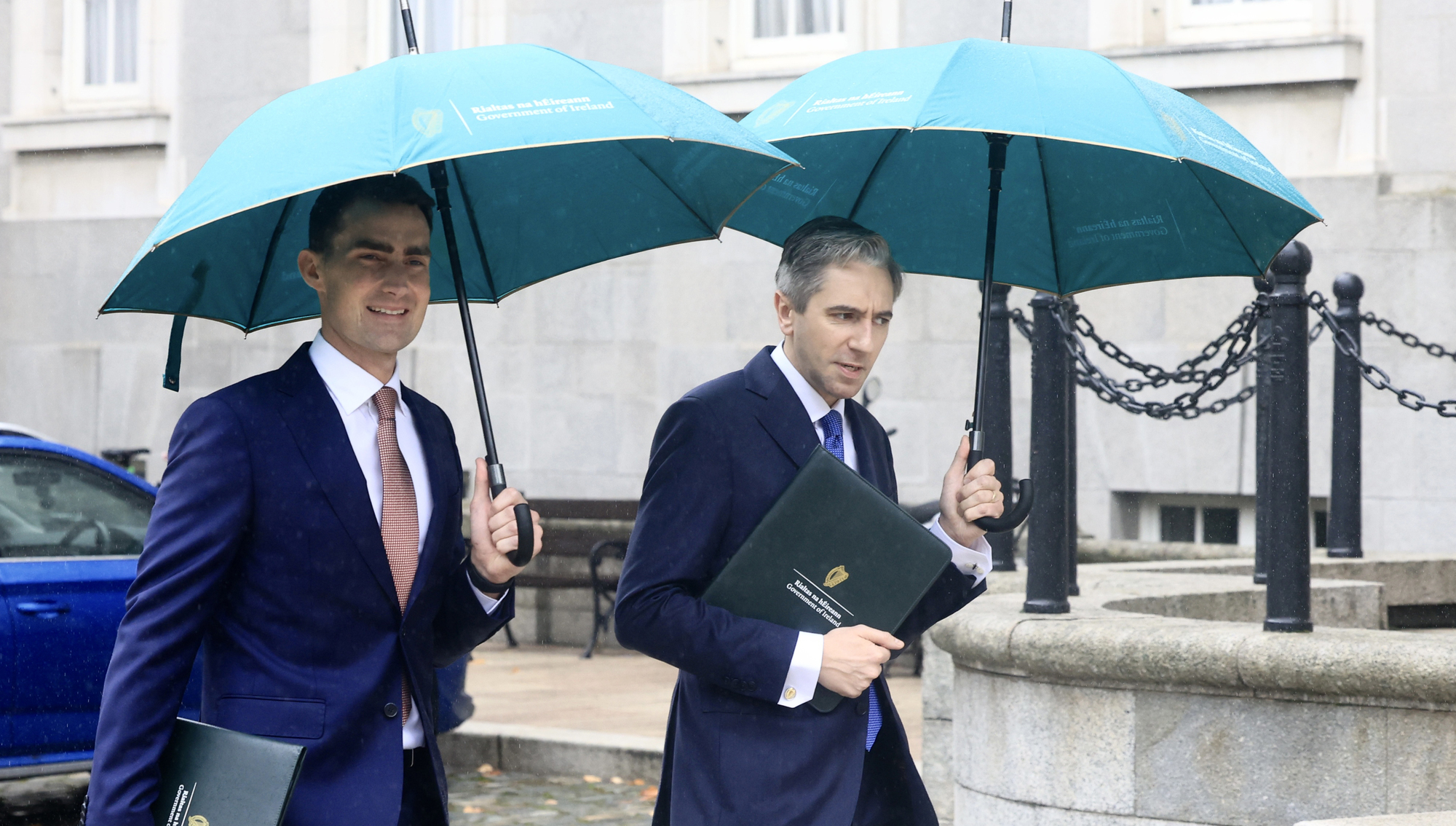
RAINY DAY FUND: Public expenditure minister Jack Chambers and Tánaiste and finance minister Simon Harris at Government Buildings ahead of their Budget 2027 announcement at Dáil Éireann in nearby Leinster House. Picture: Leah Farrell/RollingNews
Budget 2027 has delivered a widespread sprinkling of financial supports, with measures across childcare, income tax, and disabilities, but will leave no one fully satisfied.
The €8.5bn package of tax cuts and extra spending includes a €5,000 increase in the help-to-buy grant, a €10 hike in social welfare payments, an increase in the higher rate of income tax to €46,500, a €550 cap on creche fees, and a jump in the inheritance tax threshold for children to €420,000.
It was delivered against a backdrop of growing disquiet over public sector pay with teachers planning two days of strike action from next week, while those involved in the highly disruptive fuel protests earlier this year have also threatened further action.
Tánaiste Simon Harris defended the measures on fuel, which will see the carbon tax cut on kerosene and an extension of the cut to petrol and diesel levies.
He said the Government has “done more than any other government in the EU to assist with the fuel crisis”, adding that Ireland is not among the most expensive countries in the EU.
While the cuts to levies on fuel are due to be phased out from next spring, Mr Harris said the Government will keep this “under review” and remain “agile and nimble”.
A number of new spending and saving measures have been announced, including:
- A €500 cost-of-disability lump sum payment, which is expected to be delivered in February;
- A savings and investment scheme that will allow people to save up to €12,000 a year tax-free;
- An efficiency taskforce to “build a more resilient public service” which will “deliver more for citizens”.
Changes on the tax side will mean that a worker on an annual salary of €50,000 will get €700 back in their pocket over 12 months.
A person on €25,000 is now €1,240 better off when changes to the minimum wage and tax credits are considered.
However, some in Fianna Fáil expressed concern that 2.2m lower-paid workers, who do not earn enough to reach the higher income tax threshold, will only get between €218 and €400 back.
This compares to someone on social welfare who will get €520 extra next year due to the €10 weekly increase, as well the Christmas bonus double payment.
You can read, watch, and listen to the Irish Examiner's continuing analysis and comment on Budget 2027 online here
Meanwhile, those hoping to get a foot on the property ladder will benefit from a €5,000 rise in the help-to-buy grant, which minister for housing James Browne insisted will not lead to property price inflation.
He said the €35,000 refund will help more people secure a home and pushed back on suggestions that he was disappointed a cut to stamp duty on older homes was not included.
In the Dáil, Sinn Féin’s Pearse Doherty described the package as a “gone before you get it” list of supports that will not make up for inflation. Social Democrats TD Cian O’Callaghan described the package as “totally devoid of ambition”.
The Irish Fiscal Advisory Council accused the Government of “ignoring the speed limit” by breaking the 5% spending rule set in 2021. Ifac said the budget figures “suggest an increase of almost 9% in 2026 if overruns continue at their current pace”.
A €100 culture card for 16-year-olds, floated by minister Patrick O’Donovan, failed to get over the line, which prompted the National Youth Council of Ireland to call it “a tone-deaf budget” that fails to address the challenges facing young people.
- Elaine Loughlin, Political Editor
Read More


CONNECT WITH US TODAY



Be the first to know the latest news and updates