Government to oppose Sinn Féin unity Bill
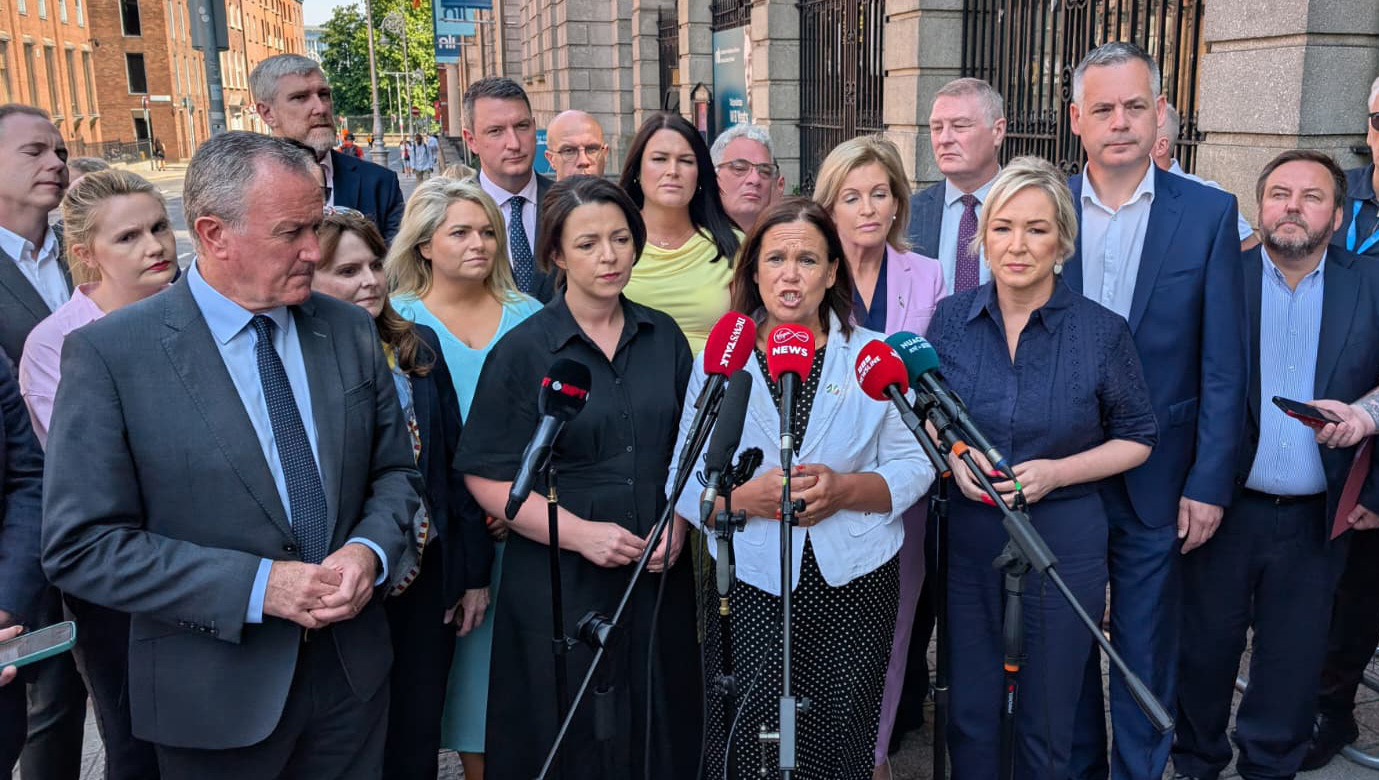
Sinn Féin leader Mary Lou McDonald and deputy leader and Northern Ireland First Minister Michelle O’Neill (Cillian Sherlock/PA)
The Government will oppose a Sinn Féin Bill on preparing for Irish unity, after the opposition party described the legislation as a “political test” for coalition parties.
Sinn Féin leader Mary Lou McDonald is bringing a Bill to the Dáil that would require the Taoiseach to prepare and publish a green paper on Irish unity within 18 months and provide for the convening of a Citizens’ Assembly.
She said bringing the legislation was both an “important milestone”, but also a “political test” for politicians in other parties who support unity.
A Government spokesman said it had agreed to oppose the Bill.
The development came after a Fianna Fáil TD suggested many of his colleagues would back the proposals if there had been a free vote on the matter.
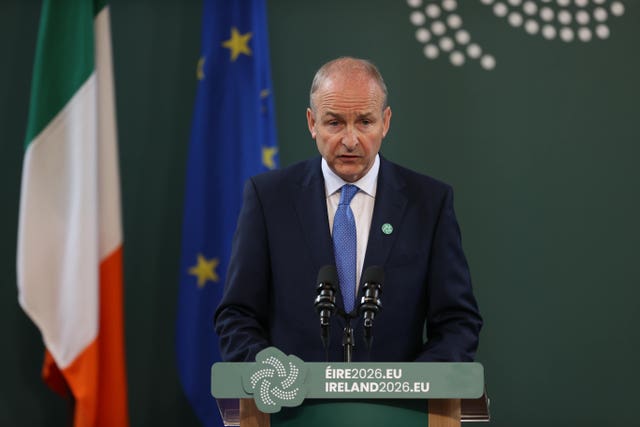
Ms McDonald had called on Fine Gael and Fianna Fáil to support the legislation – but the Government agreed to oppose the Bill, saying that a unity process could only be achieved through a sustained focus on, and investment in, reconciliation.
The Government said it remained steadfast in implementing the Good Friday Agreement and had focused on supporting its institutions, running the Shared Island Initiative, and addressing the legacy of the Troubles.
Read More
She highlighted that Tánaiste Simon Harris said his party would bring forward a “blueprint” for Irish unification by November.
On the other party in the coalition, she said it would be “kind of astonishing” if Fianna Fáil was to vote against legislation “whose sole purpose is to prepare for referendums on Irish unity”.
Earlier, at a briefing for members of the media and elected representatives on the Bill, Fianna Fáil TD Pat “The Cope” Gallagher said he had not been “told officially what we’re doing”, but would support the Bill if he was to be given a free vote.
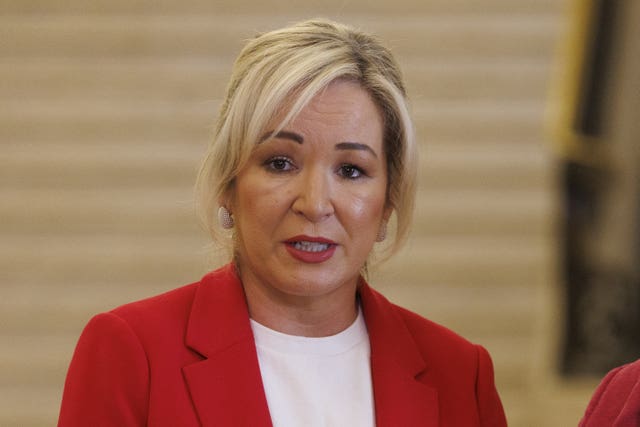
He added: “I would be anxious that we could move forward, that this vote would be carried. I’m not so sure what might happen.
“I haven’t been told officially what we’re doing, but I’ve been loyal since I came in here in 1981 and I’m hardly going to change now – but I will try and use my influence to ensure that we could move on with the green paper within 18 months or 24 months or whatever it may be.”
He said “a lot” of his colleagues would feel the same way, but added: “I’m waiting to hear the statement by the leader of my party, what the views are there, and we’ll wait and see what happens.”
Sinn Féin deputy leader and Northern Ireland First Minister Michelle O’Neill said a vote against the legislation would send a “really negative message” to those in the region and “really set back the project of our nationhood”.
The Good Friday Agreement says that the secretary of state for Northern Ireland shall call a poll on unity if at any time it appears likely that a majority of those voting would support it.
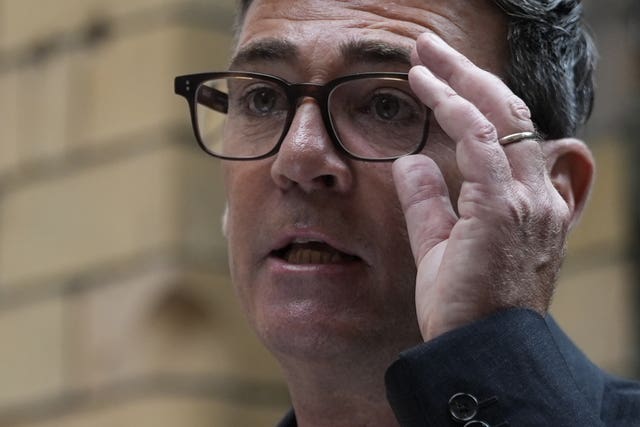
Sinn Féin says that the responsibility rests “on paper” with the secretary, but sits with the prime minister “in reality”.
Its leadership is due to speak to Andy Burnham, widely expected to become the next UK prime minister, in the coming weeks.
Asked if she expected Mr Burnham’s premiership to materially differ from Keir Starmer’s, Ms O’Neill said: “The short answer would be no, I don’t expect anything to be any different.
“This will be my seventh prime minister that I’ve been dealing with in 10 years. It underlines the chaos of Westminster.
“It underlines why more than ever we need this legislation passed and why we need to plan for the future, because I’m very certain that citizens in the North will be much better served in a new constitutional arrangement, a united Ireland, a better future for all of us.”
Sinn Féin senator Conor Murphy said there was a “real prospect” of a Reform UK led government in the UK within a number of years, and that could lead to a referendum for which the Irish Government was unprepared.
He added: “That means both governments need to be talking to each other, and they need to be talking to each other now – and particularly in the prospect of even more uncertainty and erratic decision-making from Number 10 from a (Nigel) Farage-led government, I think you could amplify that very significantly.”
CONNECT WITH US TODAY



Be the first to know the latest news and updates