Mother and baby homes admissions in North 2,000 higher than first estimated
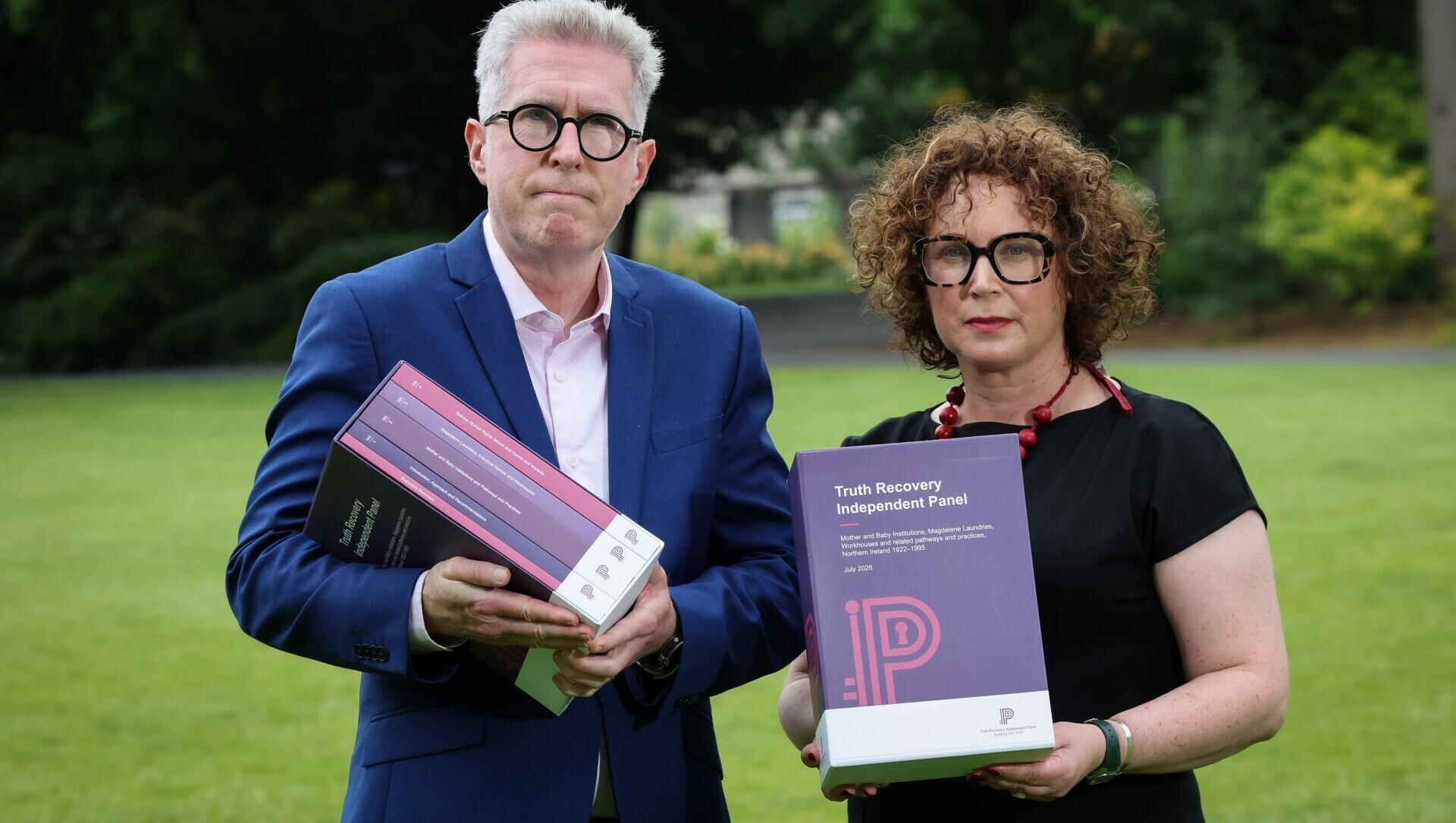
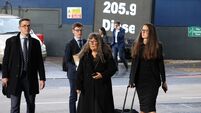
Professor Sean O'Connell and Professor Leanne McCormick with copies of the Truth Recovery Independent Panel's final report, which was set up to look into the workings of mother and baby institutions, Magdalene laundries and workhouses in Northern Ireland. Picture: Darren Kidd/PressEye/PA
The estimated number of women admitted to mother and baby homes and Magdalene laundries in Northern Ireland is some 2,000 higher than previously thought, a report has found.
The co-chairmen of the Truth Recovery Independent Panel found “human rights abuses, degrading treatment, and forced separation of families are recurring and frequent” in evidence from survivors of the homes.
The 10-person independent panel, which includes three victims/survivors, was appointed in 2023 by the Executive Office to look into the workings of the institutions that were run by the Catholic Church, religious orders, some Protestant denominations, and the State, until the 1990s.
Last week, Stormont passed a bill for a public inquiry and financial redress scheme relating to mother and baby institutions.
On Tuesday, the panel published its final report, describing it as “the largest and most comprehensive collection of lived-experience testimony in Northern Ireland in connection to these institutions”.
Revised figures in the report show admissions to mother and baby institutions had increased from the previously estimated 10,500 to 12,062, and admissions to Magdalene laundries and related institutions had risen from 3,455 to 3,753 after access to additional records.
Read More
Magdalene laundries refers to three St Mary’s Homes, which were operated by the Good Shepherd Sisters and Thorndale Industrial Home, which was operated by the Salvation Army.
The panel’s final report draws from the evidence of almost 300 victims and survivors, their relatives and others with experience of the institutions.
The panel identified a series of serious human rights issues that they say will require further investigation by the forthcoming public inquiry.
A theme emerging from evidence of survivors was the sexual abuse of some girls and women before their admission; and of abuse, neglect, and inadequate care in the mother and baby institutions.
The report highlights their experiences amounted to degrading treatment and, in some cases, are likely to reach the threshold of inhuman treatment.
The report makes 70 recommendations, including 28 to the forthcoming public inquiry and 39 to the Northern Ireland Executive.
Recommendations for the Stormont Executive include the immediate appointment of the chairman of the public inquiry, highlighting “synergies that should have been created between the panel and the inquiry have been lost due to delay in establishing the public inquiry”.
The panel also advises that women and girls who gave birth in workhouses and were separated from their children, and the children who were separated from their mothers, should be included in the scope of the payment scheme.
The independent panel co-chairmen, Professors Leanne McCormick and Sean O’Connell, said the report marked “a significant milestone in the pursuit of truth and justice for victims/survivors who spent time in these institutions”.
“They have been fundamental to our understanding of what took place in the institutions and the enduring impacts, enabling us to offer our analysis, revealing the hidden history of the institutions and the associated pathways and practices,” they said.
“The panel’s report includes testimony from almost 300 people who were directly affected by the institutions.
“We hope this, alongside our work with PRONI [Public Record Office of Northern Ireland] to preserve thousands of records for the first time, will help ensure that the work of the public inquiry can be carried out as swiftly as possible and that the goals of truth, acknowledgment and accountability are reached.
“We have greatly advanced our understanding of the issues and now have much more detail about how these institutions were run in Northern Ireland.
“Issues of gender-based discrimination, human rights abuses, degrading treatment, and forced separation of families are recurring and frequent. They should all be examined thoroughly by the public inquiry.
“We have presented our report to victims/survivors and we have shared it with the first and deputy first ministers.
“It is now for the executive and a public inquiry to take this forward.
“Though a chairperson has not yet been appointed for the public inquiry, the independent panel remains willing to meet and engage with them once they are appointed, to assist the inquiry’s work.”
CONNECT WITH US TODAY



Be the first to know the latest news and updates