Government must make the case for increased defence spending, says Taoiseach
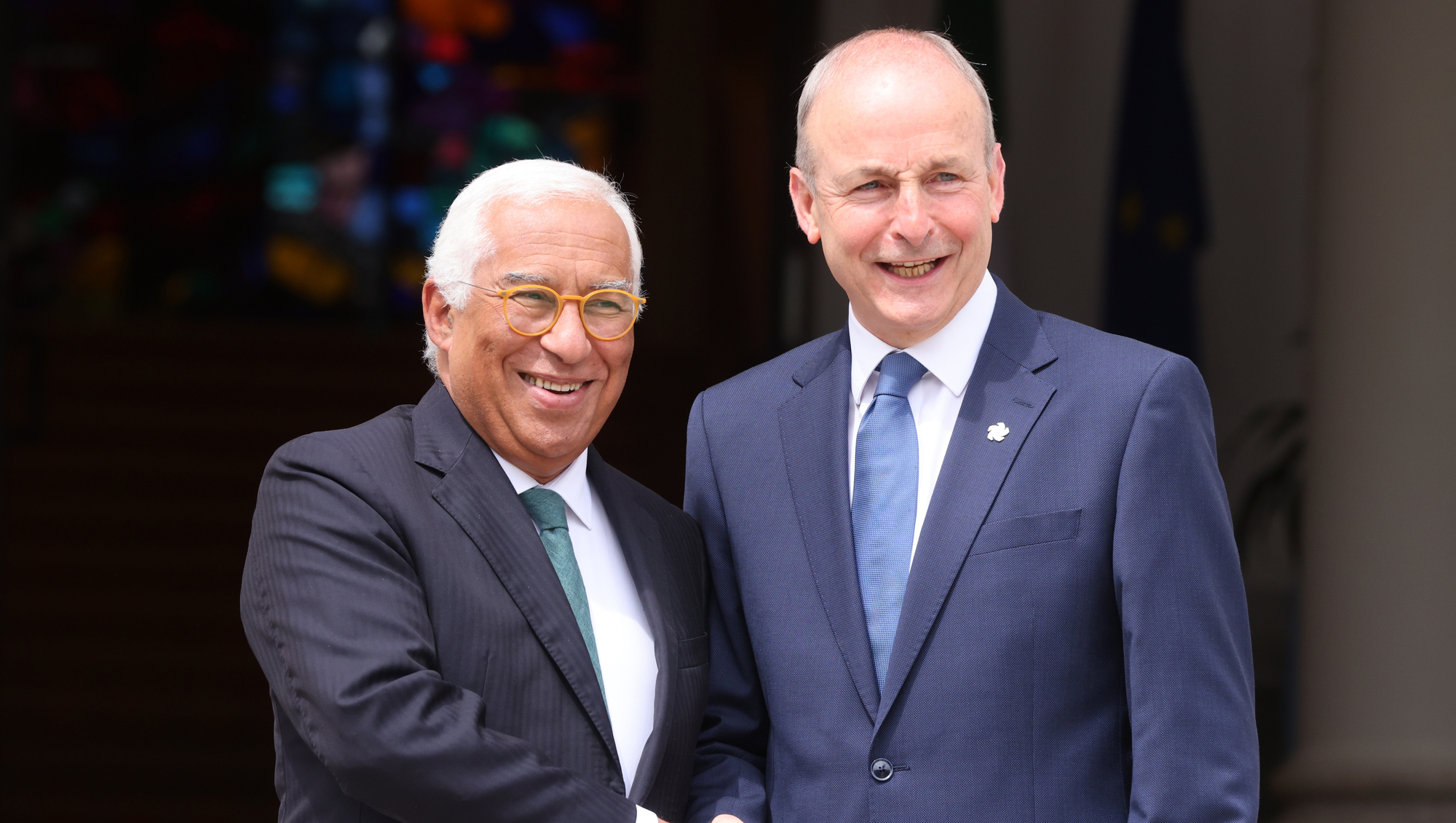
President of the European Council, Antonio Costa and Taoiseach Micheál Martin at Government Buildings. Picture: Eamonn Farrell
The Government must make the case for increased defence spending, the Taoiseach has said, as Ireland's EU presidency kicked off.
At Government Buildings, Micheál Martin was asked by a French newspaper about Ireland's neutrality and "low" defence spending.
Mr Martin said defence of the EU “is a significant issue, particularly for those on the eastern flank [of the EU] who see an existential threat to their way of life from the threatening behaviour of Russia" and that Ireland had an agreement with the EU under various cooperation schemes.
He said that Irish people do not see defence spending in the same way as those countries which border Russia.
“They [countries in the east of the EU] see it very much in existential terms — while many people in this part of the world wouldn’t have that same experience or sense. And it’s important that we communicate that to our own people.
“We’re not members of Nato... but we have been members of the Common European Security Defence from the very beginning.
"We support the enhancement of capability and defence capability across all EU member states, including our own," he said.
Mr Martin said the 2022 invasion of Ukraine by Russia had changed the attitude of many in Europe towards defence.
“That is how the Baltics and indeed Poland and others see this. We’re very conscious of that, and we’ve been constructive at all times at the European Union council meetings in facilitating that security agenda."
Mr Martin was also questioned on the idea that a rejected offer by Ireland to Ukraine of armoured vehicles breached Irish neutrality.
on Wednesday reported that 27 light tactical armoured vehicles, which were first acquired 17 years ago but rarely used, had been rejected by Ukraine.
The vehicles typically have weapons stations on the roof which would appear to go against Ireland's pledge of "non-lethal assistance" to Ukraine.
However, the Taoiseach said that Irish support for Ukraine has taken on a number of guises.
Read More
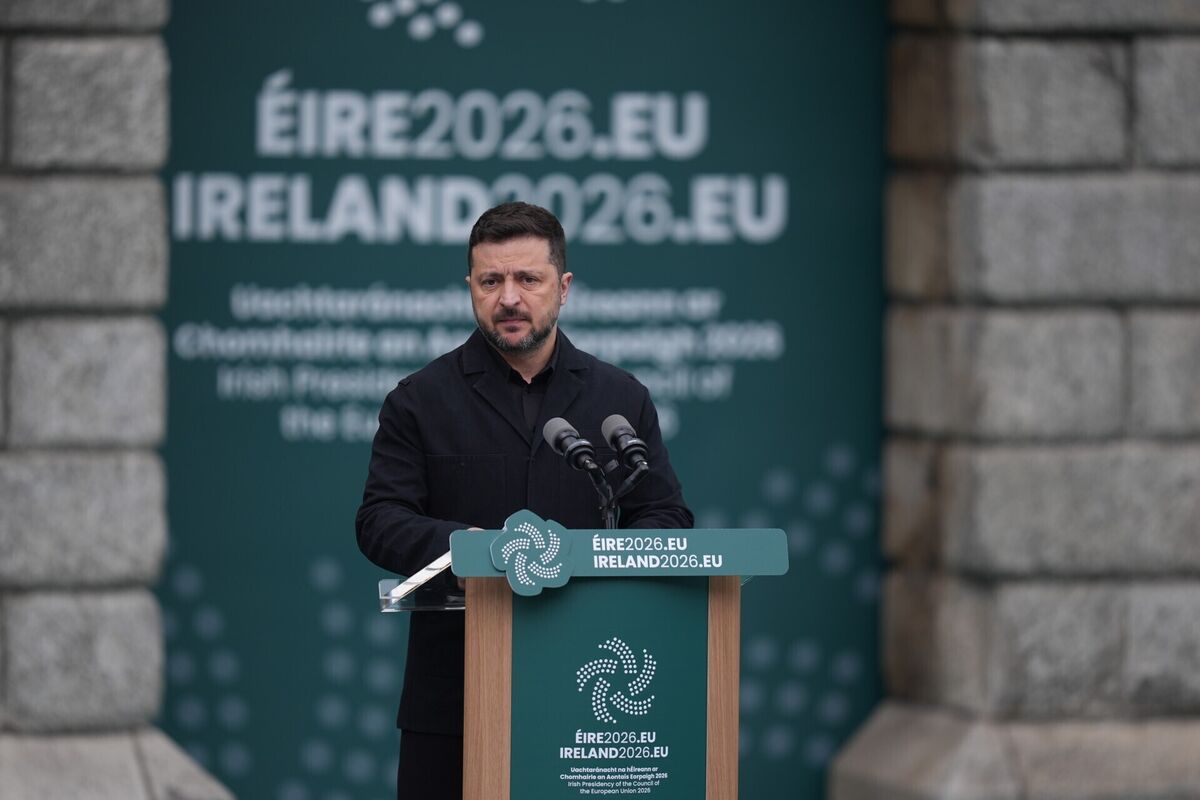
"Our support of Ukraine has been a multifaceted level of support in terms of funding, in terms of hundreds and hundreds of millions, both on a humanitarian basis bilaterally, and also in terms of demining equipment, and a range of other equipment that we have provided to Ukrainians that they've taken on board and have utilised.
"But also in terms of the huge support, 120,000 Ukrainians came to Ireland since the war began, 80,000 are still resident in Ireland, and that has been a very strong financial support over the last number of years since the war began.
"Ireland, from the very beginning, most importantly at the outset, when there wasn't the same level of enthusiasm, we were very supportive of Ukrainian accession to the European Union, and we will continue in our agreement with Ukraine.
"We'll continue to support Ukraine on a number of fronts, and particularly in response to the request that Ukraine had made of us, both on the humanitarian, civil society, and indeed non-lethal military side."
Mr Costa said that Ireland's presidency came at a vital time in the EU.
"In the face of growing external pressures on our prosperity, the European Union has set itself the goal to become both more competitive and more autonomous.
"Indeed, after having defence as a main focus in 2025, 2026 is the year of European competitiveness.
"That is why we have set ourselves an ambitious ‘One Europe, One Market’ agenda.
"Over the next six months, we must deliver on its implementation. And it is hard to think of a better pilot to guide the European Union in this work than Ireland.
"As for Europe’s values and Europe’s security — they are being put to the test in a challenging global geopolitical context.
"But in navigating these difficult waters, the European Union has a clear compass — international law — and a clear map — multilateralism and the rules-based international order.
"That is another reason why Ireland — with its consistent and principled defence of both multilateralism and international law — is the right presidency at the right time.”
CONNECT WITH US TODAY



Be the first to know the latest news and updates