Government keeping ‘open mind’ over fate of Aughinish Alumina
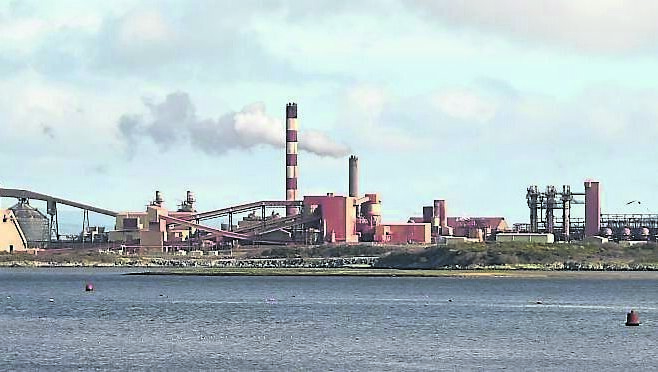
Aughinish alumina on the Shannon Estuary, Co Limerick. Picture Dan Linehan
The Government is keeping an ‘open mind’ over the fate of Aughinish Alumina as it waits for the results of an investigation into whether the Limerick plant is contributing to the Russian full-scale invasion of Ukraine, the Taoiseach has said.
Owned by the Russian metals giant Rusal, Aughinish produces alumina, a raw material exported to Russia to make aluminium.
Once smelted, the aluminium is then used to make harmful weapons such as ballistic missiles used daily in Russia’s war against Ukraine.
In Brussels at a two-day summit of EU leaders, Micheál Martin said: "We have an open mind in terms of how we approach this.”
He pointed out that alumina was not sanctioned by the EU per sé, but officials in Brussels as well as EU states say no country should be selling materials to Russia that can have a direct causal link with the killing of Ukrainian citizens.
“The European Union had never proposed that alumina would be subject to sanctions, There's a reason for that,” the Taoiseach said.
The Government says the plant also provides a significant percentage of the alumina needs for the EU.
The ongoing investigation is due to ascertain how much goes to European markets and how much goes to Russia.
An investigation by the consortium of investigative journalists reported 83% of alumina exports from Ireland went to Russia in the first three months of 2026, while 0.6% went to the EU.
The issue is particularly delicate for Ireland as it prepares to take over the rotating presidency of the European Council on July 1.
The EU is currently negotiating its 21st package of sanctions against Russia, yet so far alumina is not on the list.
Meanwhile, at the summit, the Government is insisting the EU act against Israel for its war in Gaza and the ongoing violent expulsion of Palestinians from their homes in the West Bank.
Read More
Ahead of the summit, the Taoiseach confirmed he wrote to president of the European Council, Antonio Costa, calling for meaningful discussion on the issue.
"I wrote to Antonio Costa in respect of Israel's behaviour, and the shocking atrocities in Gaza, and subjugation of people there," he said.
Three years on from the Israeli offensive in response to the Hamas terrorist attack on October 7, and the EU is still deeply divided over whether it should sanction Israeli for the catastrophic humanitarian circumstances endured by Palestinians as a result of Israel’s blockade of fuel and basic medical supplies to the trapped civilians.
Despite widespread acknowledgement that Israel is breaching EU as well as international law in continuing to bomb and starve civilians, several states particularly Germany, Czech Republic, Austria, Bulgaria, and Italy are committed to blocking any action against the Jewish state.
Without some or all these votes, measures such as ending preferential trade with Israel or sanctioning far-right Settler minister Itamar Ben Gvir won’t pass the threshold required for such penalties to come into force.
The Taoiseach said the credibility of the EU is at stake, given how Brussels easily condemns wars in Ukraine and Sudan as violations of international law and human dignity.
“I think the credibility of Europe is undermined by a failure to take a strong stance in terms of what has been a breach of international law, what have been essentially war crimes on a number of fronts and an apparent sense from Israel,” said Mr Martin.
He defended Ireland’s frequent raising of the matter, saying he hopes it will create a dynamic.
“In my view, if it was put to a vote at some stage, then, that might create its own dynamic in terms of member states' positions in respect of Israel's behaviour in Lebanon and Gaza, and indeed in the West Bank, in particular, and when we go to other countries and we say to them, in terms of Ukraine and the Russian invasion of Ukraine, or what's happening in Sudan.
He said he acknowledged some countries' hesitancy, in particular Germany and Austria, which were central to the Holocaust of Jewish people in the Second World War.
But he said that nothing could justify the actions of Israel against civilians in Palestine or Lebanon.
“I understand fully that not everybody's on the same page, and countries, for historical reasons, have different perspectives,” he said.