European ministers agree to tackle online misinformation in wake of Ceuta crisis
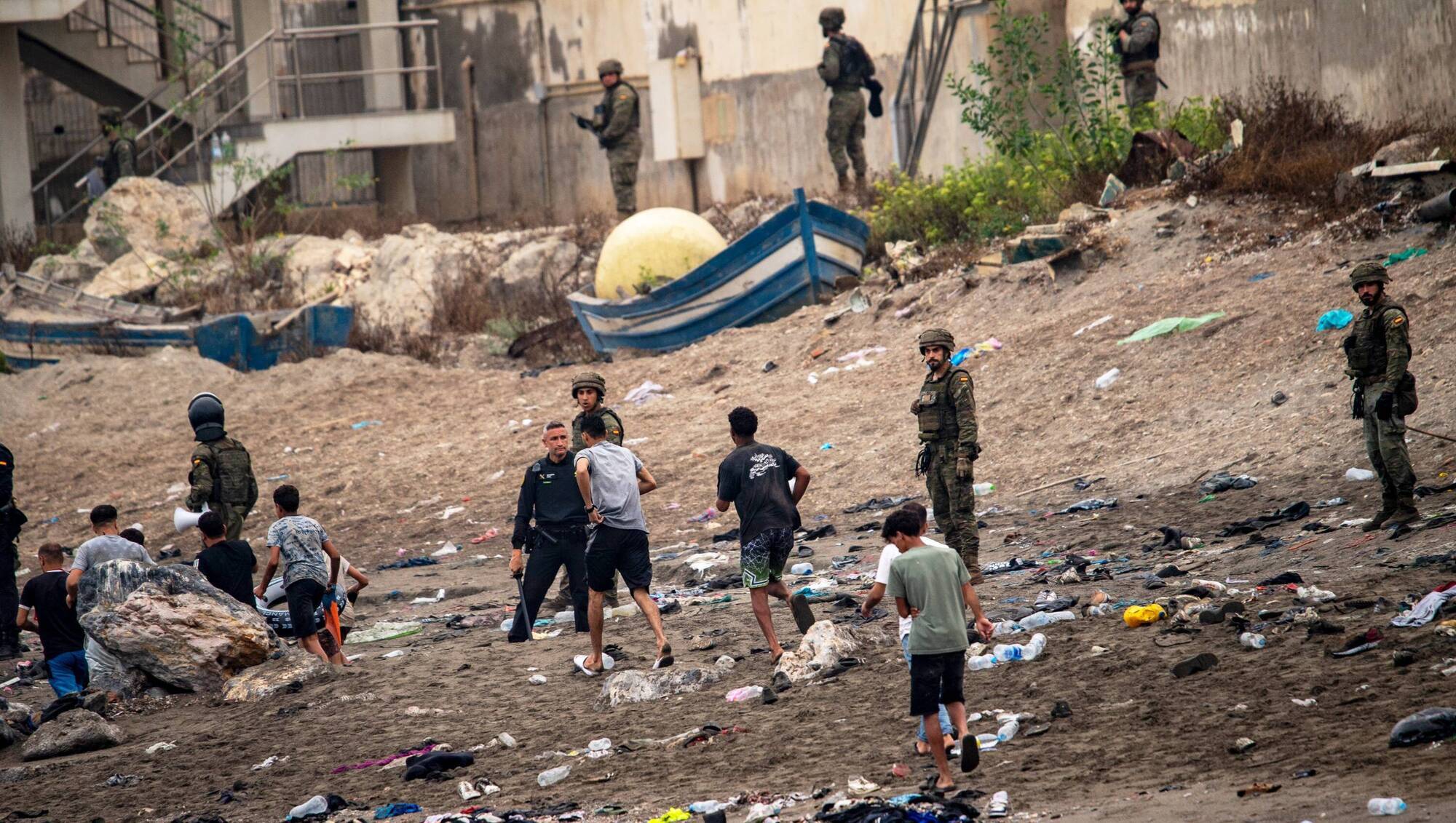
The online meeting of European ministers was called in the wake of last week’s influx of around 60,000 people into Spain's north African enclave of Ceuta. Photo: AP/Antonio Sempere
Tackling online misinformation is one of five measures that European ministers have agreed must be addressed during an emergency meeting on migration.
The online meeting was called in the wake of last week’s influx of around 60,000 people into Spain's north African enclave of Ceuta. At least 72 people died after thousands began moving, mainly by sea, across the border.
Speaking after the meeting, the EU's commissioner for Internal Affairs and Migration, Magnus Brunner, said there had been "interference" from smugglers and human traffickers adding that social media and misinformation resulted in tens of thousands of people crossing the border.
Asked about 2,000 fake articles and over 6,000 fake social media posts that reportedly came from Russian actors about Ceuta, Mr Brunner said it was "too early" to determine the full facts. However, he said that Europol and other agencies are assessing misinformation that was spread online.
Mr Brunner said the level of involvement of Moroccan authorities is also being assessed.
Read More
He said that strengthening external borders, implementing early warning systems and ensuring swift returns of migrants were cited at the meeting, which was chaired by Jim O'Callaghan as part of Ireland's presidency.
"Going beyond migration management, we need to use our leverage in a more effective way, be it trade, be it visa policy, be it development assistance," Mr Brunner said.
He added that part of the strategy must include international co-operation to dismantle powerful smuggling networks across the world.
"We urgently have to adopt the global sanctions regime against migrant smugglers," the commissioner said, pointing to the work of the Global Alliance Against Migrant Smuggling which was established three years ago.
While the majority of migrants have now been returned across the Moroccan border, addressing migration across the EU will be a key item on the agenda when the Taoiseach and his fellow European leaders meet in Brussels in October.
Mr O'Callaghan said that control of Europe's borders is a shared responsibility which requires a united response from all countries.
He stressed that the EU is united and stands ready to support Spain and protect external borders from illegal migration.
"The meeting which I convened provided an important opportunity for member states to assess the tools already at our disposal, identify where further co-operation is needed, and advance our collective preparations ahead of the next ministerial meeting and the European Council in October," Mr O'Callaghan said.
During the meeting, which was held over video conference, the Spanish delegation and the European Commission shared their assessment on the events over the past days and the current situation at the external border in Ceuta.
Member states united in expressing strong solidarity with Spain; however, ministers stressed the need to improve shared situational awareness, which could be achieved by further developing early-warning systems such as pre-frontier intelligence and social media monitoring.
Ministers highlighted the importance of co-operation with third countries and of further developing partnerships that create the right opportunities for people in their home countries and strengthen migration management.
Finally, it was pointed out that communication during moments of crisis could further be reinforced through timely co-ordination and should be more coherent, especially to counter malicious external actors engaged in foreign information manipulation and interference.
CONNECT WITH US TODAY



Be the first to know the latest news and updates