University staff working 'full-time' to implement sexual violence framework, committee hears

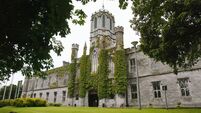
The committee heard that while work has been carried out to implement protocols to foster a safe campus culture, there is 'still a lot of work that needs to be done.' File picture
There are currently 16 full-time managers dedicated to responding to and preventing sexual violence and harassment across Irish higher education institutions.
The Oireachtas Higher Education Committee heard these managers are “key actors” in implementing the national framework dedicated to ending sexual violence and harassment from the Higher Education Authority (HEA).
It also heard that, while work has been carried out to implement protocols to foster a safe campus culture, there is “still a lot of work that needs to be done.”
The committee heard that the current framework needs to be updated to include image-based sexual abuse, to focus on the “importance of institutional culture,” and to support embedding a “whole-of-institutional approach” so that universities would be aware of what an appropriate response is.
The HEA's Sheena Duffy told Oireachtas members that while these full-time managers do bring their own expertise in working with the framework, they are not “the sole person responsible” for its implementation.
“We know they are working with different sizes of campuses, different types of institutions, but what is really important is that their work is not siloed,” Ms Duffy said.
“They are not the sole person responsible for the implementation of this framework, nor are they responsible for eliminating sexual violence and harassment in their institution.
“It is really important that institutions put supports in place — around those key roles as well and have them leading, managing and really supporting this work. It is a whole-of-institutions approach what’s important,” she added.
She added that the updated framework will bring recommendations for raising awareness, and it will show what procedures and processes are in place.
“That they are not just the remit of one individual and an EDI (equality, diversity, and inclusion) office, and that the procedures and policies that are in place integrate a trauma-informed approach,” Ms Duffy added.
The committee also heard that while the HEA provides national guidance and support to higher education institutions, individual universities have their own policy guidelines.
“[We] set out a framework under which they must report and comply, but their individual reports can be different because it is unique to the institution as to how their policies and processes are put in place, but they should adhere to the outcomes of the framework,” Ms Duffy said.
“We work closely with the institutions in that regard; we do get annual reports from them as to their progress on this,” she added.
Separately, a survey carried out by the HEA looking into staff and student experiences in relation to sexual violence and harassment garnered responses from 2,200 students and about 1,900 staff members across the country. The data from this will be published later in the year.
CONNECT WITH US TODAY



Be the first to know the latest news and updates