Leo Cullen made right decision to leave Leinster, says ex-captain Reggie Corrigan
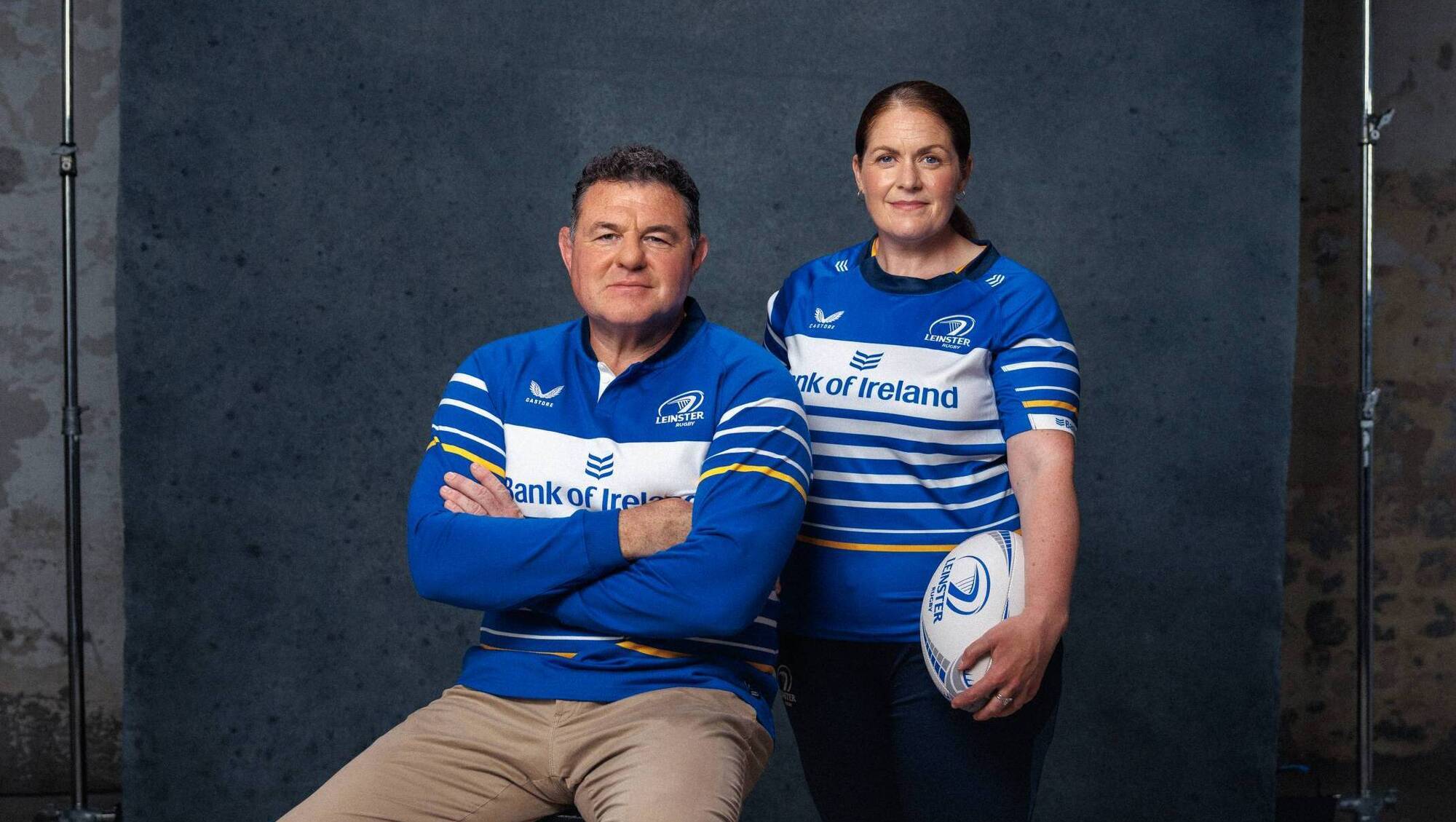
The new Leinster jersey pays tribute to the iconic design worn by the greats of 2001, 25 years after they claimed our first ever trophy in the professional era.
Leinster are hoping for a fairytale ending to Leo Cullen's final season at the helm. The reality, according to the province's former captain Reggie Corrigan, is that the province will face an enormous challenge if they are to deliver it.
Corrigan recognised early in Cullen's career that he possessed the qualities to reach the very top, first as a player and later as a coach.
What most impressed the ex-Ireland prop most was his young team-mate's decision to leave Leinster for Leicester Tigers in 2005.
"You knew he had something about him," said Corrigan. "He was a quality player. He just happened to be up against quality opposition, the likes of Malcolm O'Kelly, Bob Casey and others in the second row. It was difficult enough for him.
"It was a real measure of his ambition, rather than sit on the sidelines and not attain the goals he wanted to, he went to Leicester to learn his trade. At that time, a lot of players didn't have the guts to go overseas and take on a challenge like that because they were probably afraid of getting lost in the ether and never being heard of again.
"He brought back different methodologies, different ways of looking at things, maybe a different attitude and certainly a different level of professionalism to Leinster. When he came back, you could see how important that was in his leadership role.
"You knew Leo was somebody who was meticulous in the work that he did and would do whatever it took to be successful. I think that's translated into the way he has managed Leinster as well."
Next season will be Cullen's 12th and final campaign as Leinster head coach after the province announced, in the aftermath of last season's Champions Cup final defeat to Bordeaux Bègles, that he would step down at the end of the year.
Corrigan believes Cullen has chosen the right moment to move on and views the decision as part of the natural cycle of elite sport rather than a reaction to another European disappointment.
Read More
"I wasn't surprised," Corrigan said. "I think the way rugby works, or any sport works, is that a coach has a tenure. That happens in every sport and with every coach. It's not a bad thing. Players get to see different ways of thinking from different coaches.
"He's probably got one of the best CVs with all of the success Leo has had, but that's not to say that after a while it doesn't need to be freshened up.
"It's good that he made the decision himself and decided to go out on his own terms. That also gives Leinster the opportunity to look at who they might want to bring in, somebody who fits Leinster.
"That's the biggest issue you have with appointing a coach. You've got to find somebody who fits the ethos of the environment they're going into. You look at football or any other sport, how many coaches have we seen come and go because they don't fit the style of play or the type of club they're joining?
"Him being there for that final year to oversee the transition will be very valuable for Leinster."
Cullen's reign has delivered sustained domestic success, including back-to-back URC titles over the past two seasons, but it has also brought five Champions Cup final defeats since Leinster last lifted European rugby's biggest prize in 2018.
Corrigan believes those repeated near misses have created unrealistic expectations around a team that has become a victim of its own standards.
"People think because they've done it before they should just keep doing it," he said. "It happens with great teams. Look at Manchester United, Kerry footballtarget="_blank" rel="noopener noreferrer"> or Dublin football. People think it's not a successful season unless you win the biggest prize.
"The expectation is always going to be there because of the success they've had in the past. People think, 'If you've done it before, why can't you do it again?' But the Champions Cup is incredibly difficult to win.
"I think it's a big ask to think they'll send Leo off on a high in his final year. All they can do is put themselves in the best possible position, work as hard as they can, prepare as well as they can, have the players in the best possible condition and then hopefully a few things will fall into place.
"I think people have fallen into the trap of thinking, 'Well, they have to win it. They've got the facilities, they've got the players.' But it doesn't work like that."
To underline his point, Corrigan turned to this year's All-Ireland football championship.
"Just look at Kerry," he said. "They were All-Ireland champions and it didn't happen. Look at Mayo - 75 years waiting to get it across the line and 11 finals. Along the way you need that bit of luck.
"If David Clifford had landed that two-pointer for Kerry and we'd gone all square, who knows? You'd put any amount of money on Clifford being the one to get it."
The 25th anniversary of Leinster's first Celtic League title is being marked by the launch of a modern version of the province's iconic 2001-02 jersey.
"It is absolutely crazy," Corrigan smiled. "We had a reunion at 20 years and that seems like yesterday. Now, all of a sudden, it's 25. It's insane how quickly time has gone.
"It was an unbelievable season. We went through 15 games undefeated, which was kind of unheard of at the time."
Leinster's victory over Munster before almost 40,000 supporters at Lansdowne Road proved a landmark moment in the province's professional journey.
"The atmosphere was unreal," Corrigan recalled. "The blue and the red around Lansdowne Road that night was just unbelievable."
He also believes Leinster's imminent return to the redeveloped RDS, now the Laya Arena, can provide another timely lift.
"A full stadium, even if it's 20,000, creates a much better atmosphere than playing in a half-empty one," he said. "It'll be a huge success. It'll bring people back and create that sense of home again."

CONNECT WITH US TODAY



Be the first to know the latest news and updates